



In honor of Native American Heritage Month, the Office of Environmental Management is highlighting its enduring partnerships with tribal nations across the U.S. Department of Energy complex.
Office of Environmental Management
November 17, 2026 Estimated Read Time min
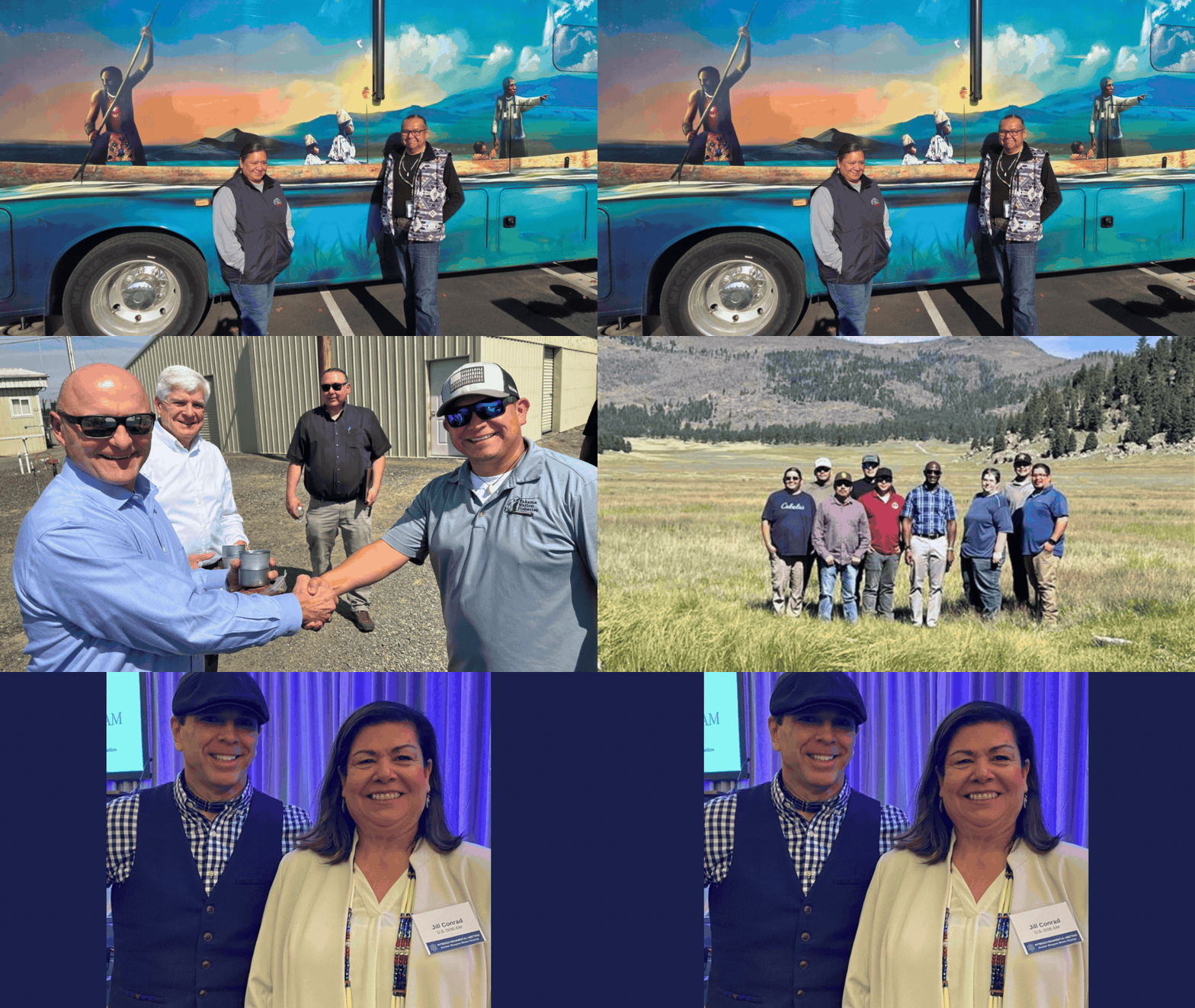
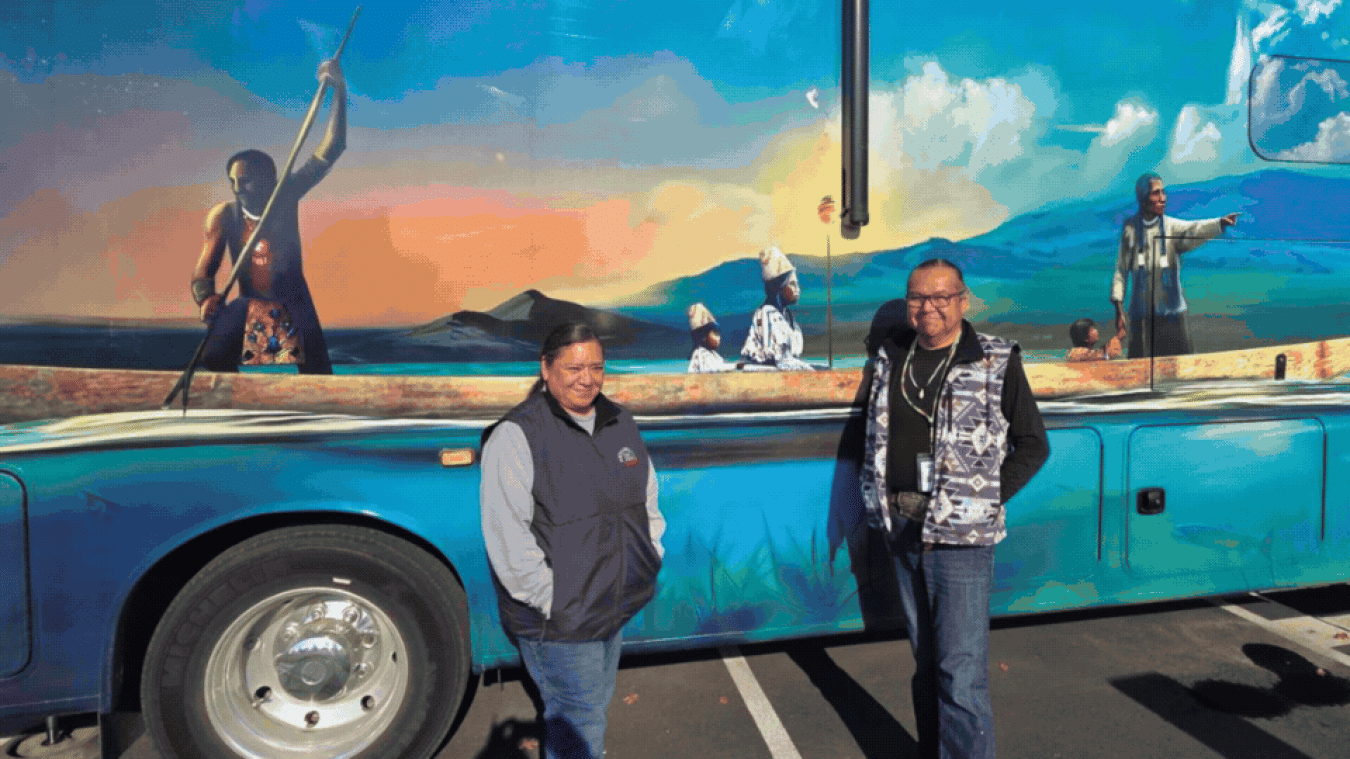
In this photo series, the traveling Wanapum Heritage Discovery Unit opens its doors to Hanford Field Office employees during Native American Heritage Month; Office of Environmental Management (EM) Chief Operating Officer David Brunnert shakes hands with Yakama Nation Fisheries Manager Dave Blodgett; Stanley Pyram, acting manager for EM Los Alamos Field Office, takes part in a tour with Pueblo of Jemez leadership and the pueblo's Natural Resources Department staff, with Redondo Peak in the background; and EM Tribal Affairs Program Manager Jill Conrad is shown with Mike Sobotta, a member of the Nez Perce Tribe and EM’s State & Tribal Government Working Group.
In honor of Native American Heritage Month, the Office of Environmental Management (EM) is highlighting its enduring partnerships with tribal nations across the U.S. Department of Energy (DOE) complex.
Tribal leaders oversee sovereign governments, and view themselves as protectors of cultural and natural resources across their lands for future generations. Several EM cleanup sites are located close or adjacent to sovereign tribal nations and impact Indian lands and resources. Improving the protection of tribal sacred sites — and access to those sites by tribes — through enhanced interdepartmental coordination, collaboration and action is an EM priority.
Consistent with DOE's American Indian and Alaska Native Tribal Government Policy, EM maintains cooperative agreements with tribal nations to enhance their involvement in cleanup decisions while protecting relevant tribal rights and resources. Tribes are involved in pertinent cleanup decisions and site activities through cooperative agreements, agreements-in-principle and memoranda-of-understanding.
Many EM sites have cooperative agreements or engage with tribes and pueblos, including:
- Energy Technology Engineering Center and the Santa Ynez Band of Chumash Indians;
- Idaho Cleanup Project and the Shoshone-Bannock Tribes;
- Hanford Field Office and the Yakama Nation, Confederated Tribes of the Umatilla Indian Reservation, Nez Perce Tribe and Wanapum Band of Indians;
- Environmental Management Los Alamos Field Office and the Pueblo de San Ildefonso, Santa Clara Pueblo, Pueblo of Jemez and Pueblo de Cochiti;
- West Valley Demonstration Project and the Seneca Nation;
- Environmental Management Nevada Program and 16 tribes near the Nevada National Security Site; and
- Carlsbad Field Office and several tribes along Waste Isolation Pilot Plant transportation routes.
EM’s State & Tribal Government Working Group is the oldest working group advising DOE — since 1989. It meets regularly and in person twice yearly, enabling robust discussion among tribal nations and EM headquarters and field office leadership on issues and priorities.
A DOE order and policy specify requirements for consultation and interactions with federally recognized Indian tribes and Alaska Native Claims Settlement Act corporations. DOE must invite the tribes and corporations to consult early and throughout the planning process whenever a departmental action has tribal implications.
EM field office officials meet regularly with tribal staff to keep them informed on topics such as cultural and natural resources management, records of decision and land management activities.
Recently, Hanford Field Office Manager Ray Geimer took part in a day devoted to tribal perspectives and stories at the Wanapum Heritage Center in Washington state. EM leaders met with Yakama Nation leaders at the Hanford Field Office.
EM Chief Operating Officer David Brunnert toured a sturgeon hatchery this year while visiting the Yakama Nation in Toppenish, Washington, to talk with tribal council leaders and learn more about their energy initiatives.
“This visit was very impactful,” Brunnert said. “I learned so much about their culture and why certain resources such as the sturgeon are so important to their lifestyle.”
Earlier this year, the Pueblo of Jemez in New Mexico hosted Stanley Pyram, acting manager for the Environmental Management Los Alamos Field Office, for a tour with pueblo leadership and Natural Resources Department staff.
EM Tribal Affairs Program Manager Jill Conrad believes collaboration, coordination and consultation with tribes and pueblos around EM sites is critical to success.
“As EM advances cleanup of its remaining sites and converts former Cold War weapons production facilities into centers for nuclear energy, advanced computing infrastructure and advanced manufacturing, tribal partners offer a unique historical perspective that can support the best outcome for our future workforce and future generations,” she said.
To receive the latest news and updates about the Office of Environmental Management, submit your e-mail address.