



The Hanford Site’s tank-side pretreatment system set a new record, processing more than 222,000 gallons of radioactive tank waste in September during its latest run — the largest batch processed since the Tank-Side Cesium Removal System began operating in 2022.
Office of Environmental Management
October 27, 2026 Estimated Read Time min
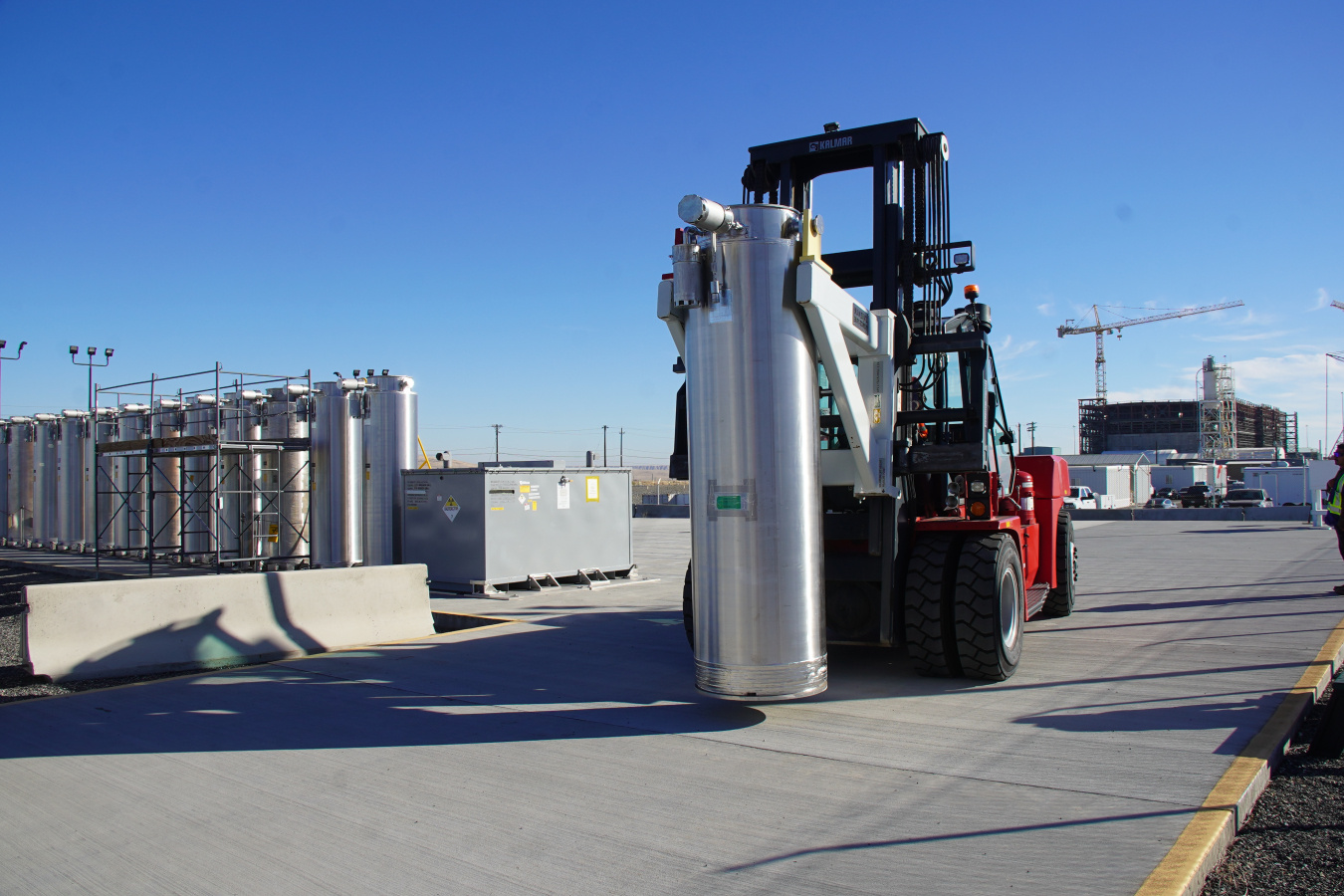
Workers move a used ion exchange column from the Hanford Site’s Tank-Side Cesium Removal System to a storage pad. The columns are replaced after they become full during waste pretreatment operations.
RICHLAND, Wash. — The Hanford Site’s tank-side pretreatment system set a new record, processing more than 222,000 gallons of radioactive tank waste in September during its latest run — the largest batch processed since the Tank-Side Cesium Removal (TSCR) System began operating in 2022.
The system removes 99.9% of the radioactivity from the waste before it is stored in Tank AP-106. From there it is sent to the Waste Treatment and Immobilization Plant (WTP), where it is mixed with glass-forming materials and heated to 2,100 degrees Fahrenheit. This process, called vitrification, transforms the waste into a stable glass form for safe disposal.
“This record-setting run reflects the skill, persistence and professionalism of the TSCR team,” said Mat Irwin, assistant manager for tank waste operations. “Crews worked through challenges, stayed focused on safety and kept this important cleanup mission moving forward.”
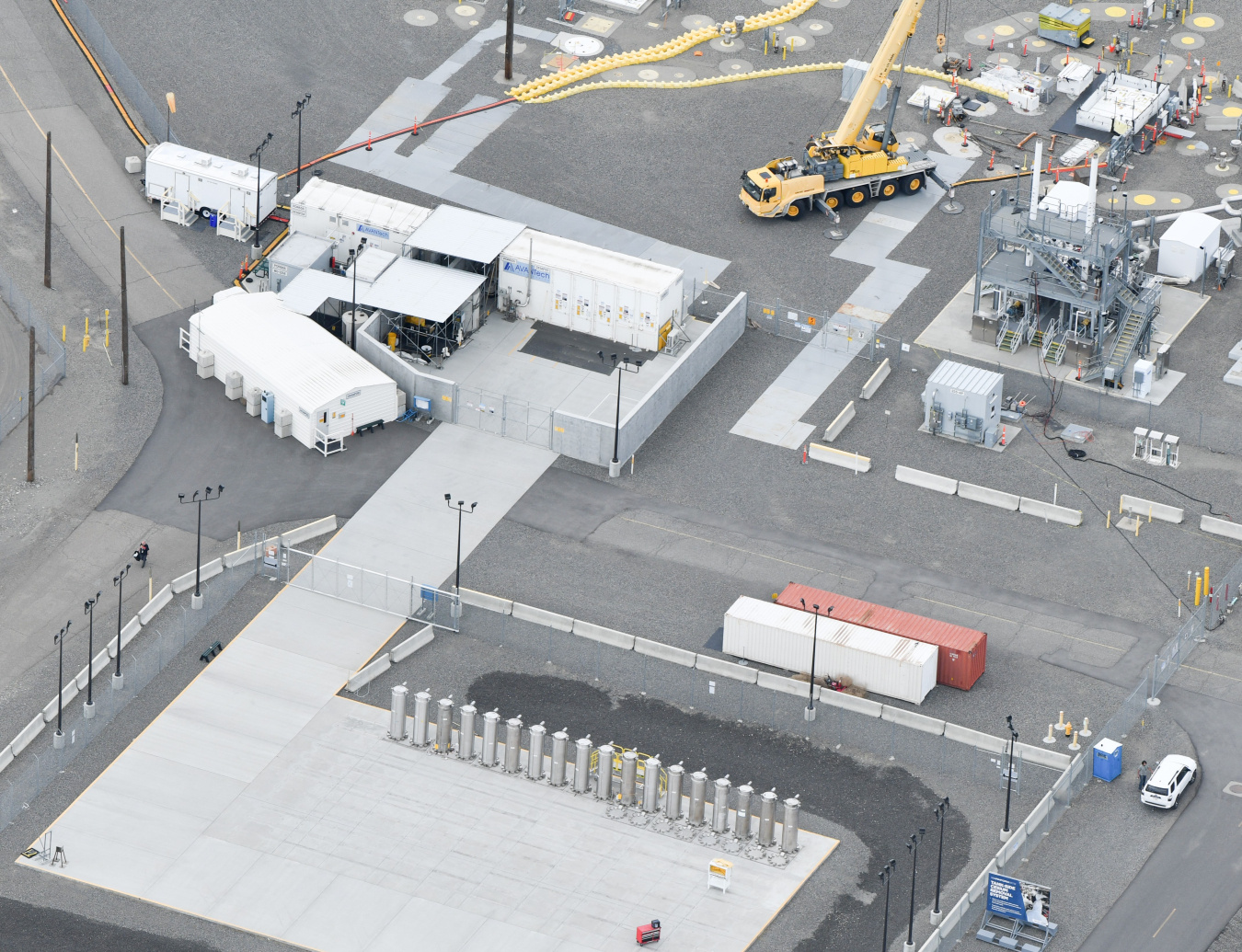
An aerial view shows the Hanford Site’s Tank-Side Cesium Removal System and the ion exchange column storage pad outside AP Farm in the 200 East Area.
After TSCR processing ended, crews with contractor Hanford Tank Waste Operations & Closure (H2C) moved to a planned maintenance outage. Workers removed the full ion exchange columns used to remove cesium from the waste, installed new ones, completed leak checks and finished the turnaround in about two weeks, preparing the system for the next processing run.
“This was a demanding run, but our Operations, Maintenance and Engineering teams kept working through the issues and safely delivered the largest amount of pretreated waste TSCR has processed in one batch so far,” said Ken Langdon, H2C president and program manager. “They also completed the outage on schedule and positioned the system to run again as soon as space is available.”
TSCR is now ready to restart, but operations must wait until the WTP takes enough pretreated waste from AP-106 to create room for more.
The delay underscores why Hanford is advancing the U.S. Department of Energy Office of Environmental Management’s dual glass-plus-grout strategy for appropriate waste streams. Workers are retrieving and pretreating waste faster than it can be immobilized through vitrification alone. The strategy pairs vitrification and grout as complementary waste treatment pathways, providing opportunities to accelerate tank waste cleanup and supporting continued progress in cleaning up the legacy of Hanford’s Manhattan Project and Cold War era defense programs.
To receive the latest news and updates about the Office of Environmental Management, submit your e-mail address.