



An innovative workaround enables the U.S. Department of Energy’s Oak Ridge Office of Environmental Management to advance its highest priority cleanup project at Oak Ridge National Laboratory and save taxpayers $175 million. July 21, 2026
Office of Environmental Management
July 21, 2026 Estimated Read Time min
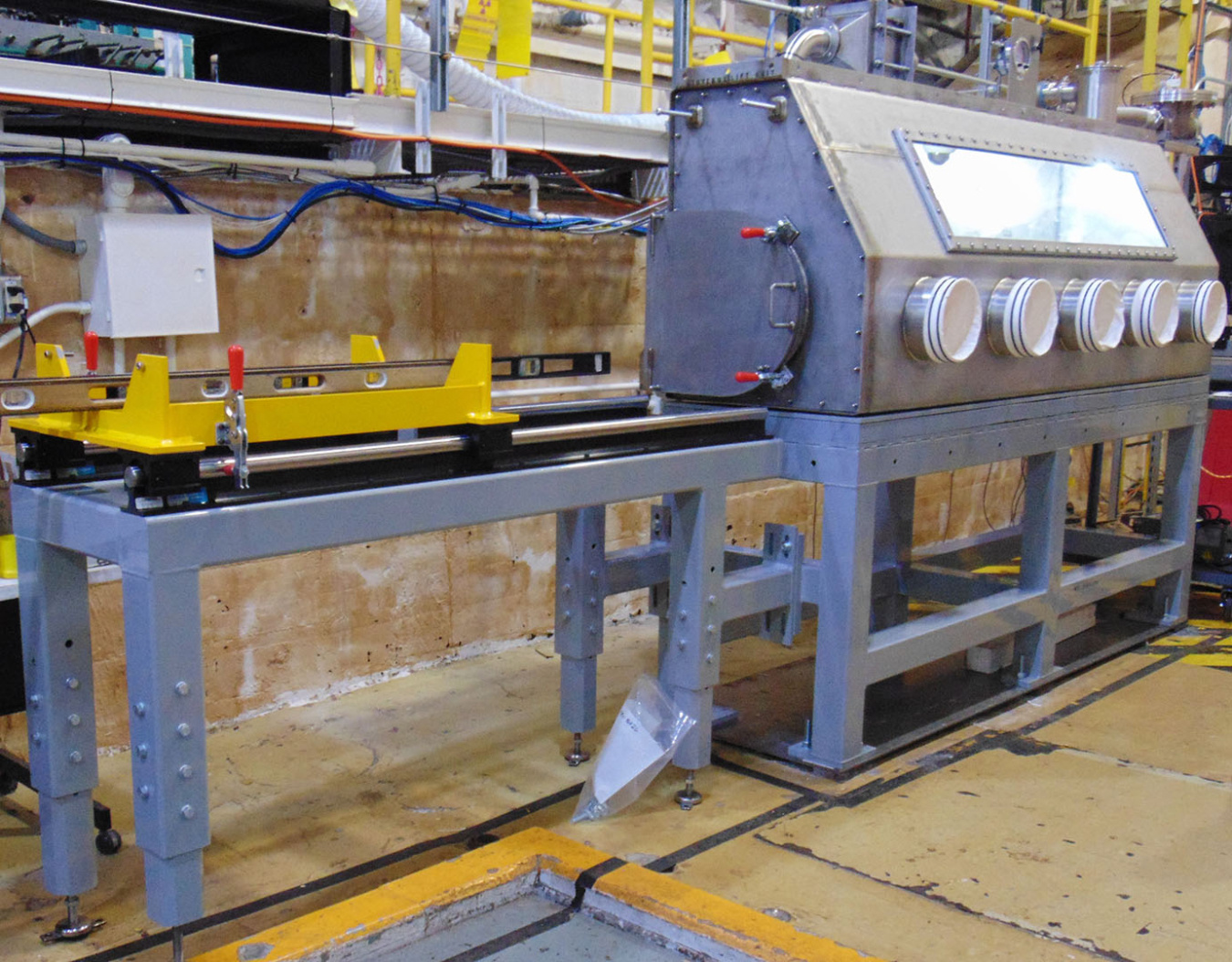
A view of Isotek’s glovebox being installed in the uranium-233 storage facility at Oak Ridge National Laboratory.
OAK RIDGE, Tenn. — An innovative workaround enables the U.S. Department of Energy’s (DOE) Oak Ridge Office of Environmental Management (OREM) to advance its highest priority cleanup project at Oak Ridge National Laboratory (ORNL) and save taxpayers $175 million.
OREM contractor Isotek is working to eliminate the nation’s inventory of uranium-233 (U-233) stored at ORNL in the world’s oldest operating nuclear facility. In the project’s latest phase, crews will process large canisters of U-233 in a separate nuclear facility.
That facility required costly retrofitting and increased security to accommodate the larger canisters. Completing those changes would have delayed the project by two years.
However, Isotek employees came up with a solution to avoid meeting those costly requirements and begin processing this portion of the U-233 inventory earlier. They designed a new glovebox to segment the canisters into a size that the processing facility can receive for workers to begin downblending the material. A glovebox is a sealed, stainless steel box with windows and attached gloves. It protects workers as they address the materials.
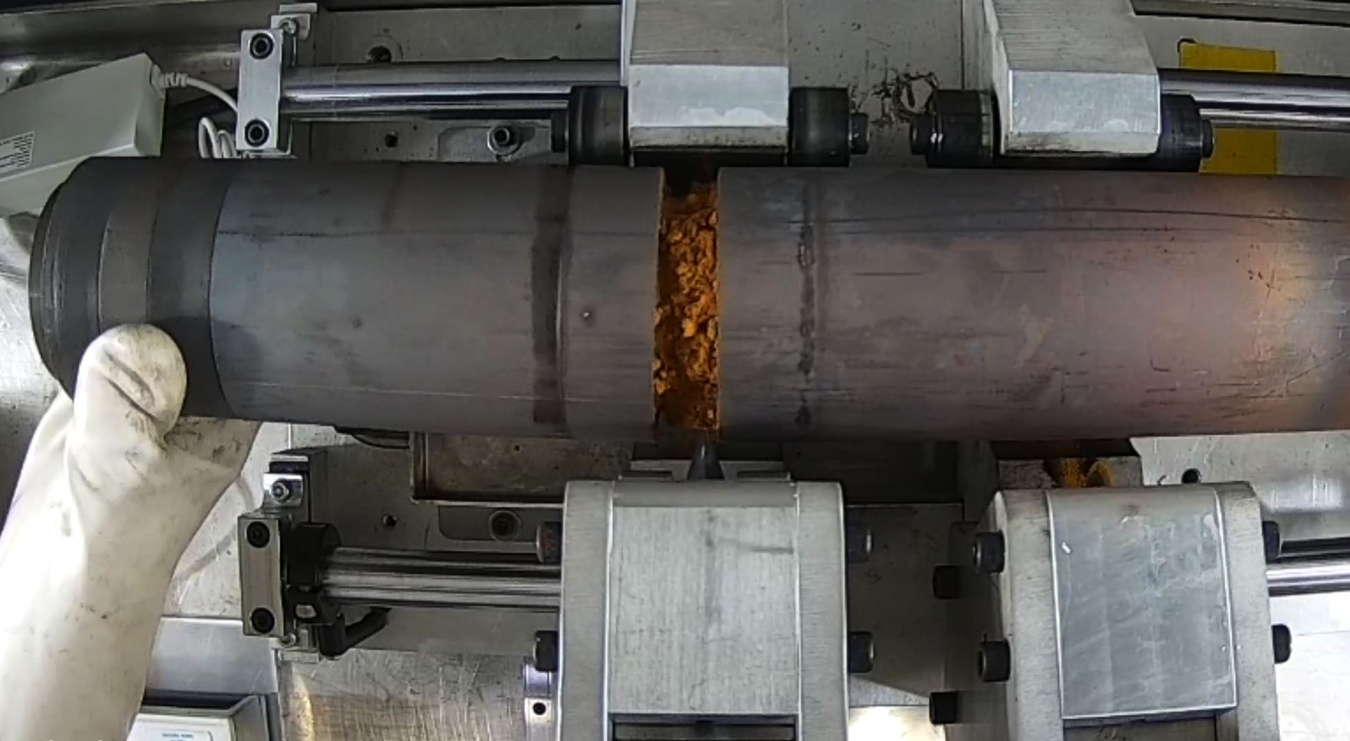
Operators use the new glovebox to segment a larger uranium-233 canister.
“This innovative glovebox design is the synthesis of the Isotek team’s experience, incorporating lessons learned and best practices from previous operations,” said Sarah Schaefer, Isotek president and project manager. “The result of the collaboration and commitment is a safe and secure path forward handling larger U-233 canisters that ultimately delivers significant savings to DOE.”
This cleanup project removes a major risk, avoids significant costs to taxpayers associated with keeping the inventory safe and secure and enables demolition of the storage facility to transform ORNL’s central campus and open space for important research and innovation missions.
U-233 was created in the 1950s and 1960s for potential use as fuel for nuclear reactors but proved unviable. The material was sent to ORNL for storage. Crews directly disposed of approximately half of the inventory, while the remainder requires processing to convert it into a form safe for transportation and disposal out of state.
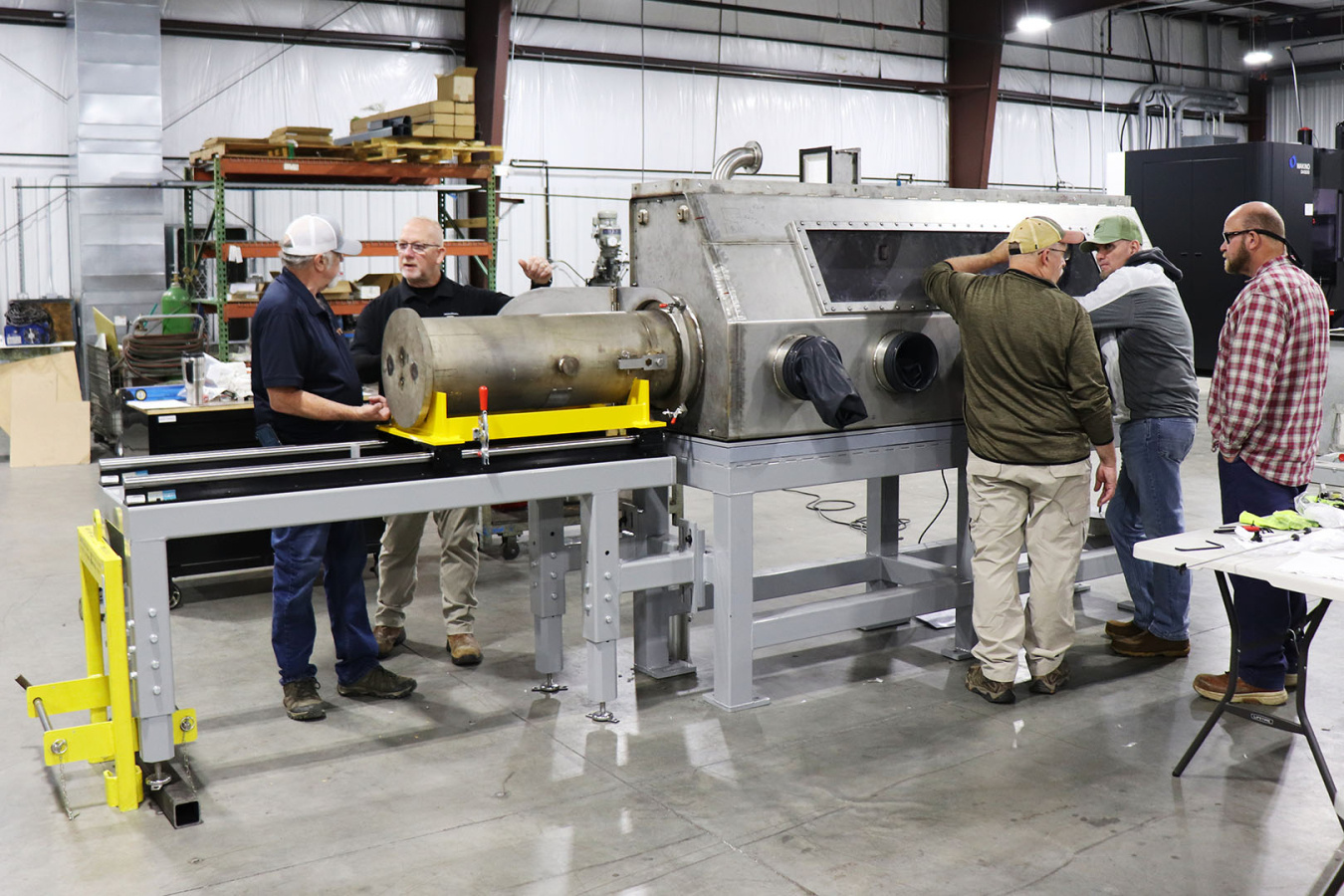
Isotek employees practice using the glovebox at the manufacturer’s shop. They provided input before the final product was installed at the uranium-233 storage facility.
Isotek completed the glovebox design in 2025, and a local firm, Tennessee Tool and Engineering, fabricated the equipment.
Workers practiced using the glovebox in the manufacturer’s shop. They provided input for the final product before it was installed at the U-233 storage facility.
“Using full scale mock-ups and doing practice runs allowed us to hit the ground running,” said Karl Thomas, Isotek senior technical advisor and team lead for glovebox implementation. “Tennessee Tool deserves a lot of credit, too, because they were able to make changes to the glovebox as we needed them and were crucial to our success.”
The new glovebox operation began in late June, and work has already begun to segment the larger U-233 canister for processing.
To date, Isotek has disposed of 75% of the U-233 inventory.
-Contributor: John Gray
To receive the latest news and updates about the Office of Environmental Management, submit your e-mail address.