


How does risk assessment factor into the U.S. Department of Energy’s cleanup at the Santa Susana Field Laboratory? What is happening with the supplemental environmental impact statement for Area IV?
Office of Environmental Management
November 24, 2026 Estimated Read Time min
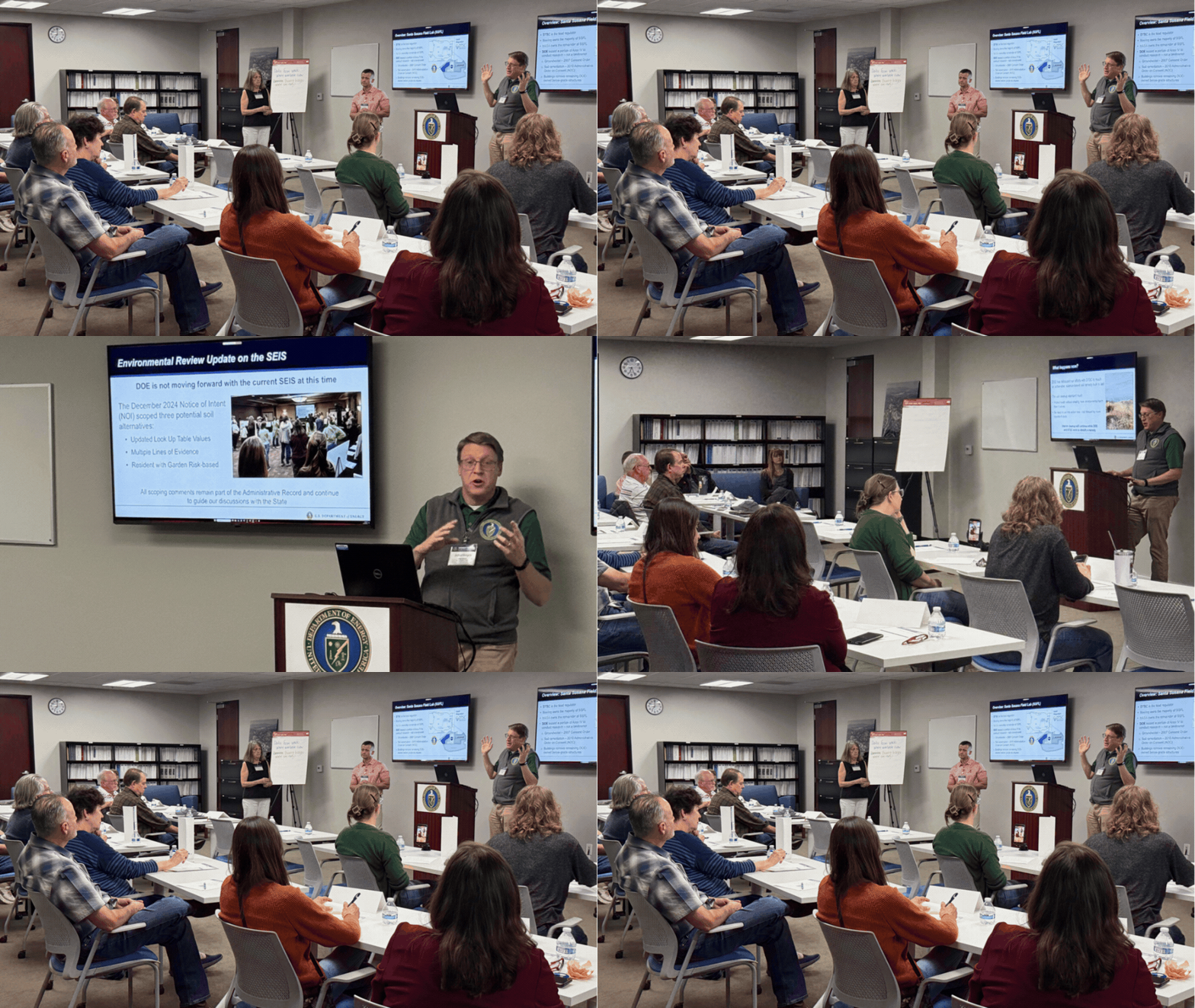
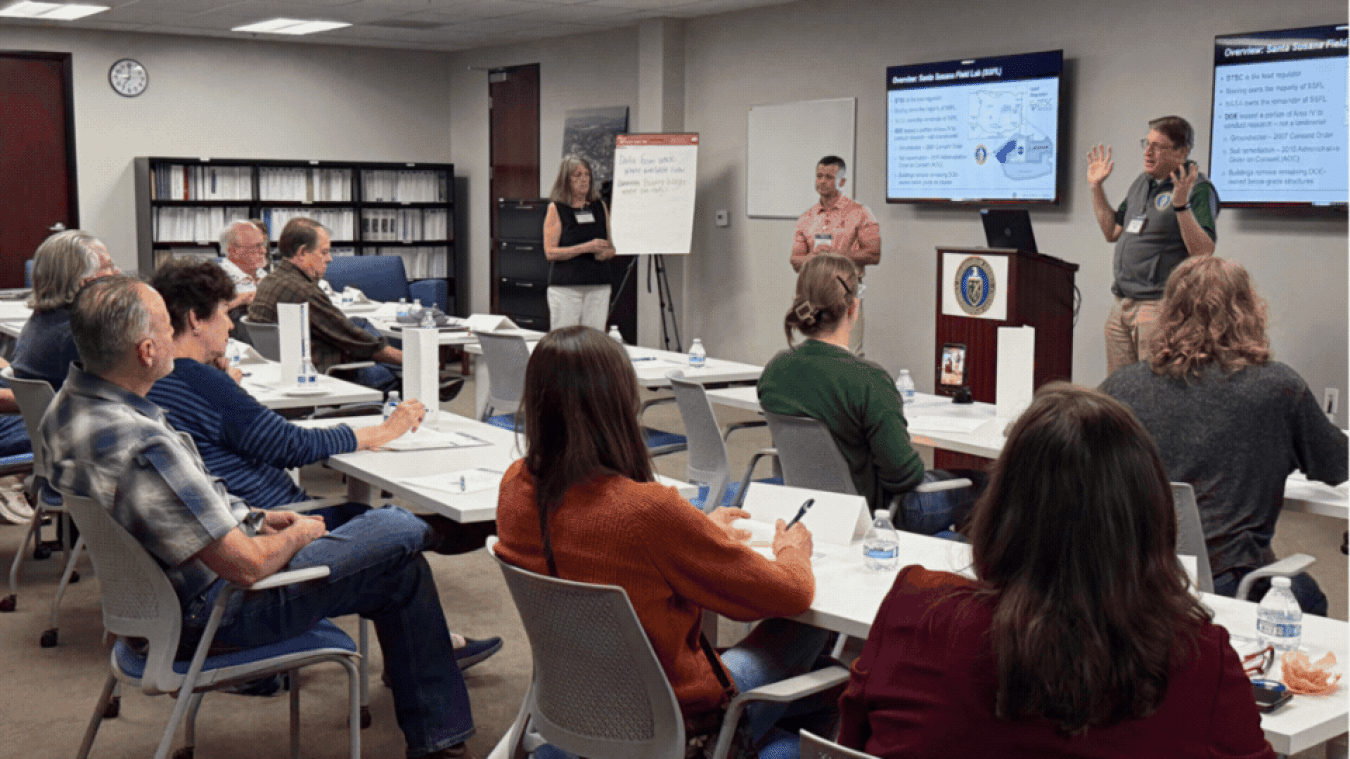
Josh Mengers, federal project director for the Energy Technology Engineering Center, talks about risk assessment and environmental review during a recent Community Outreach, Neighbor Notifications, Engagement, Collaboration and Training (CONNECT) Series meeting.
SIMI VALLEY, Calif. — How does risk assessment factor into the U.S. Department of Energy’s (DOE) cleanup at the Santa Susana Field Laboratory (SSFL)? What is happening with the supplemental environmental impact statement (SEIS) for Area IV?
Josh Mengers, DOE’s federal project director for the Energy Technology Engineering Center (ETEC) at SSFL, addressed these questions and more during a recent Community Outreach, Neighbor Notifications, Engagement, Collaboration and Training (CONNECT) Series meeting.
Mengers responded to a stakeholder’s question on the Biological Effects of Ionizing Radiation VII report, which looks at the health risks from exposure to low-dose radiation from both natural and human-made sources. Risk-based models such as these are typically used to inform cleanup decisions.
At SSFL, the 2010 Administrative Order on Consent (AOC) that describes the characterization and process for cleanup of Area IV where the DOE Office of Environmental Management (EM) is charged with remediation does not use risk-based models.
“The 2010 AOC bypasses health risk modeling entirely, mandating excavation of soils down to local background regardless of calculated risk,” Mengers said, adding that the AOC has “technical roadblocks” that make soil remedy not implementable.
DOE’s SEIS analyzed three alternate soil cleanup approaches not evaluated in its 2018 final environmental impact statement, but those remedies are no longer feasible.
The SEIS must evaluate reasonable alternatives that are technically and economically feasible.
To refocus efforts on identifying an implementable soil remedy with the state of California, DOE has decided not to move forward with the SEIS, Mengers said.
Any final soil remedy must be protective of human health without causing unnecessary environmental damage. Once an implementable soil remedy is established, DOE will complete an environmental review.
“The local community has waited long enough to get this cleanup across the finish line. DOE owes it to our neighbors to get these issues resolved efficiently and to get to a cleanup remedy that actually works,” he said.
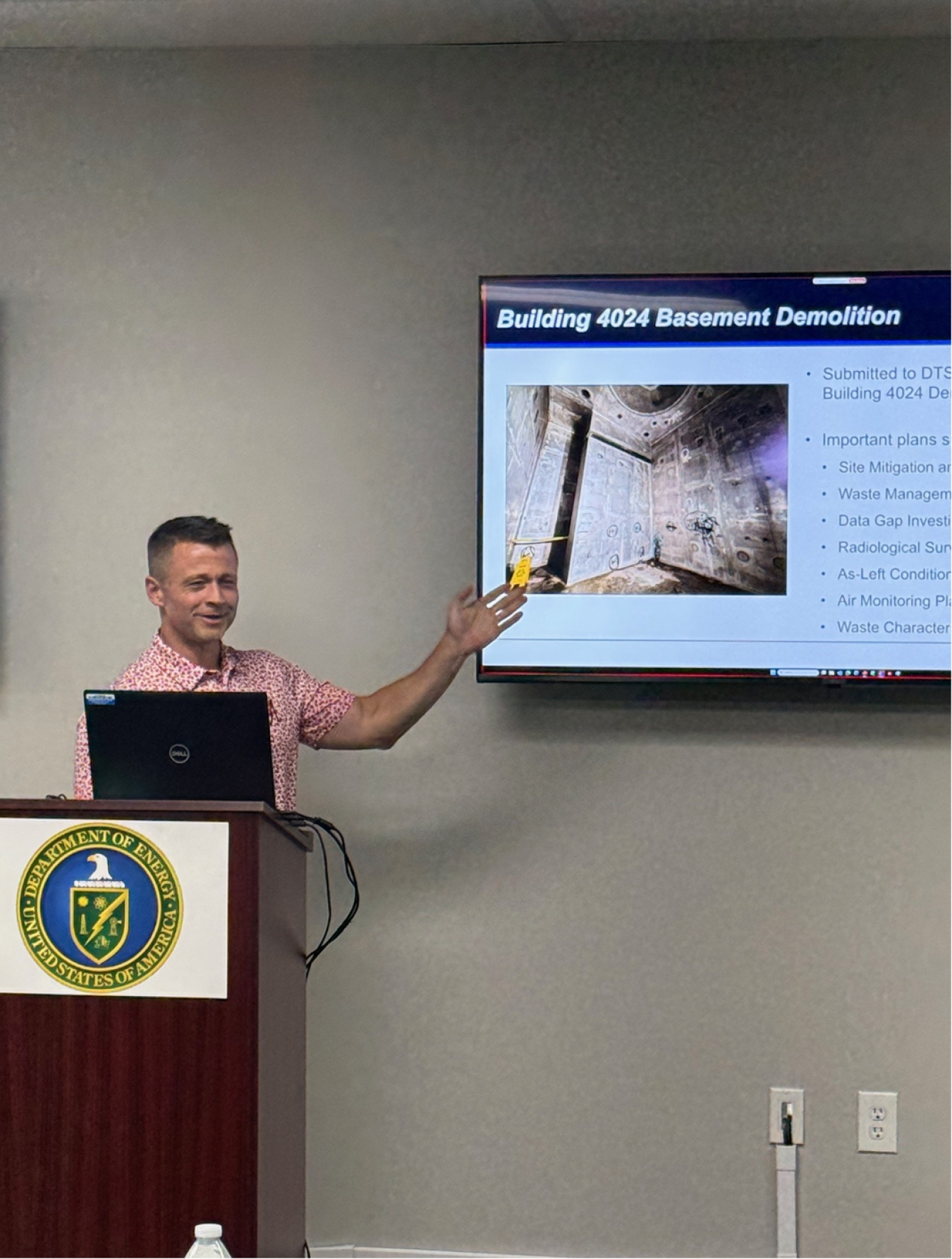
Luke Hill, site project manager for Office of Environmental Management contractor North Wind, talks about ongoing groundwater, building demolition and monitoring activities at the recent Community Outreach, Neighbor Notifications, Engagement, Collaboration and Training (CONNECT) Series meeting.
Not moving forward with the SEIS does not mean interim cleanup stops.
The amount of contaminated groundwater extracted as part of interim measures at the Former Sodium Disposal Facility continues to increase, with 29,000 gallons removed since January and a total of 98,000 gallons since 2017, said Luke Hill, project manager with EM contractor North Wind.
An innovative in-situ, or in-place, pilot study using biological and chemical amendments to treat contaminated groundwater at the Hazardous Materials Storage Area also shows promising early results.
Other recent activities at the site include working toward approval from the state for the demolition work plan for the basement of Building 4024, where DOE tested nuclear reactors for use in space and sea and on land between 1956 and 1971 as part of its System for Nuclear Auxiliary Power program.
The basement is part of the remaining subsurface structures and slabs slated for removal in Area IV.
Hill said activities on the horizon include developing demolition plans for 16 remaining building slabs.
The meeting's presentation recording and slides will be available on the CONNECT Series page.
The next meeting is tentatively scheduled for February 2027. Check the CONNECT Series page for upcoming sessions or topics.
To suggest future topics or provide feedback, fill out the CONNECT feedback form.
-Contributor: Melissa Simon
To receive the latest news and updates about the Office of Environmental Management, submit your e-mail address.