



What are international standards?
International standards are technical specifications and documents written by experts from across the globe to describe best practices, based on industry experience, for how a device should be designed, built, and/or operated to be safe, compatible, and interoperable. For marine energy, standards exist or are being developed to characterize features such as power performance assessments and acoustic characterization, among others. International Standards are not mandatory unless they are adopted as part of a certification scheme, regulatory process, and/or are referenced as a prerequisite as part of a funding solicitation.
What are the benefits of standards?
Standards have many benefits for the public and private sectors, especially in rapidly evolving industries like marine energy. Standards can accelerate economic growth by reducing barriers to global trade and enabling companies to more quickly and cost-effectively enter new markets. Additionally, standards can help governments write regulations with input from industry and ensure safety for consumers. Standards also facilitate international collaboration, provide high-quality, reproducible test results, improve the quality of devices, stimulate innovation, lower development risk to investors, increase transparency to regulators and the public, and, reduce costs.
What is the IEC?
The International Electrotechnical Commission (IEC) is an international organization that publishes international standards for all electrical, electronic, and related technologies, including marine energy devices. IEC standards are consensus-based, meaning a majority of international experts agreed on the standard before it moves forward. The International Organization for Standardization (ISO) and the International Telecommunication Union (ITU) are similar organizations responsible for developing international standards in other industries. All three standardization bodies (IEC, ISO, and ITU) coordinate when their standardization activities overlap.
Who belongs to the IEC?
Each country has a national committee (NC) that coordinates their experts to participate on technical committees (TCs). The NCs are the IEC members, and the individual people that participate on the TCs are the experts who typically work in the industry for which they are writing the standards, and can be from the private sector, academia, national labs, or government. Currently, over 20,000 experts from 172 countries participate in the IEC.
In the United States, the American National Standards Institute (ANSI) manages the United States NC of the IEC (USNC/IEC). The U.S. Technical Advisory Group is organized under and works closely with the USNC/IEC and serves as the convening body for U.S. experts to participate on TCs to create international standards.
What is IEC TC 114?
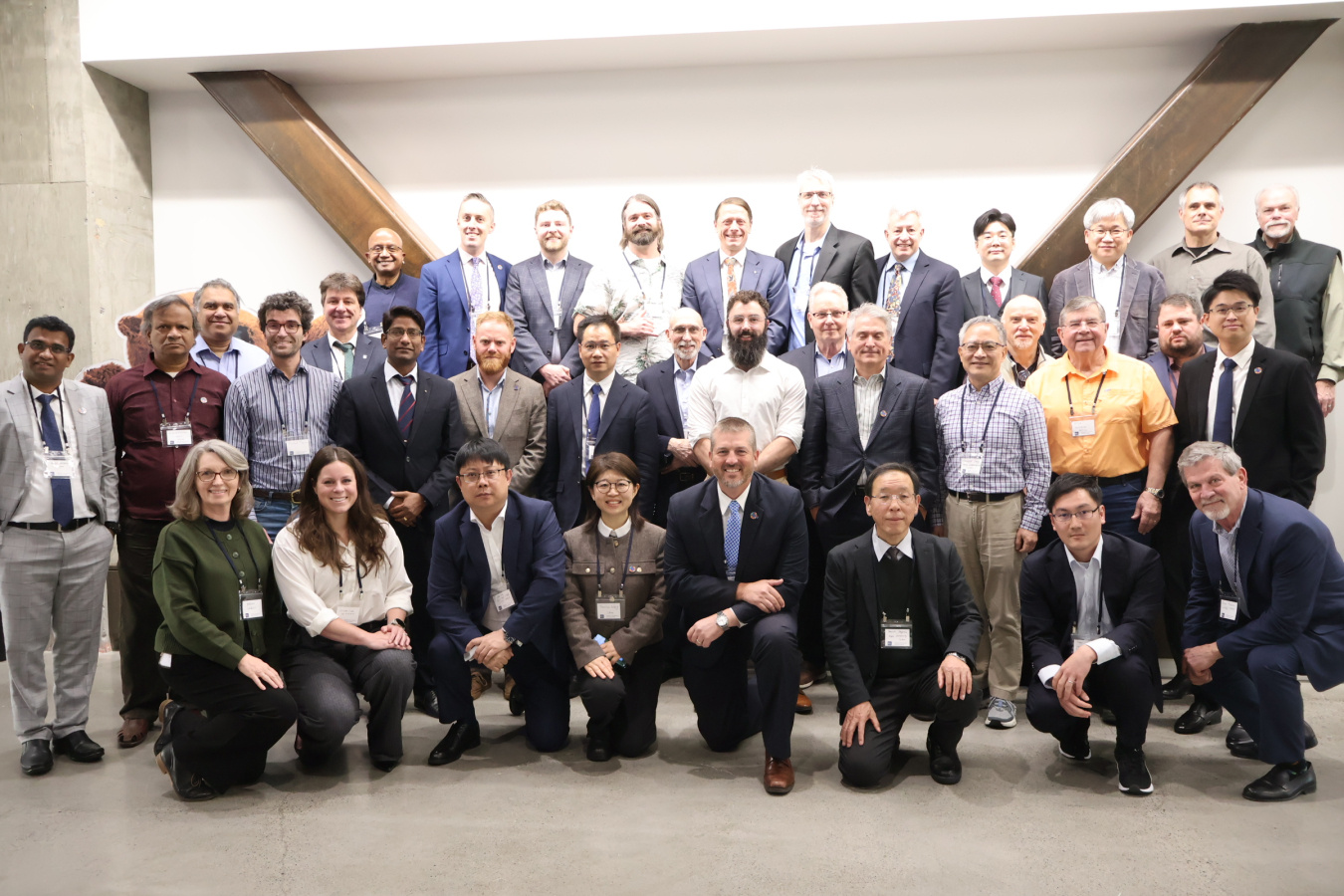
IEC TC 114, Marine energy - Wave, tidal and other water current converters, was established in 2007 to develop international, consensus-based standards for the marine energy industry. Over 190 experts from 27 countries participate in IEC TC 114, which includes representatives from the largest marine energy companies and which has published technical specifications for marine energy, including specifications for energy conversion device design, resource characterization, acoustic characterization, moorings, and power performance assessment.
How is the Hydropower and Hydrokinetic Office Involved?
The Hydropower and Hydrokinetic Office (H2O) supports IEC TC 114 by providing funding for the National Laboratory of the Rockies and Sandia National Laboratories to support and manage the U.S. Technical Advisory Group . As additional International Standards for marine energy devices are developed, H2O will continue to incorporate these into program activities.