



In this Q&A, Curt Jawdy shares how his problem-solver mindset led him to hydropower, what managing a river system entails, and ideas for supporting the next generation of energy professionals.
Hydropower and Hydrokinetic Office
August 12, 2026 Estimated Read Time min
Curt Jawdy fondly recalls his mother’s volunteer spirit. For her, community service wasn’t a box to check off a list; it was a calling.
“I still remember my dad telling my mother, ‘You can't volunteer for one more thing’,” Jawdy said. “Because she would really spend herself taking care of other people. If somebody was sick. If somebody needed a hand. If the church or school needed something—she was there.”
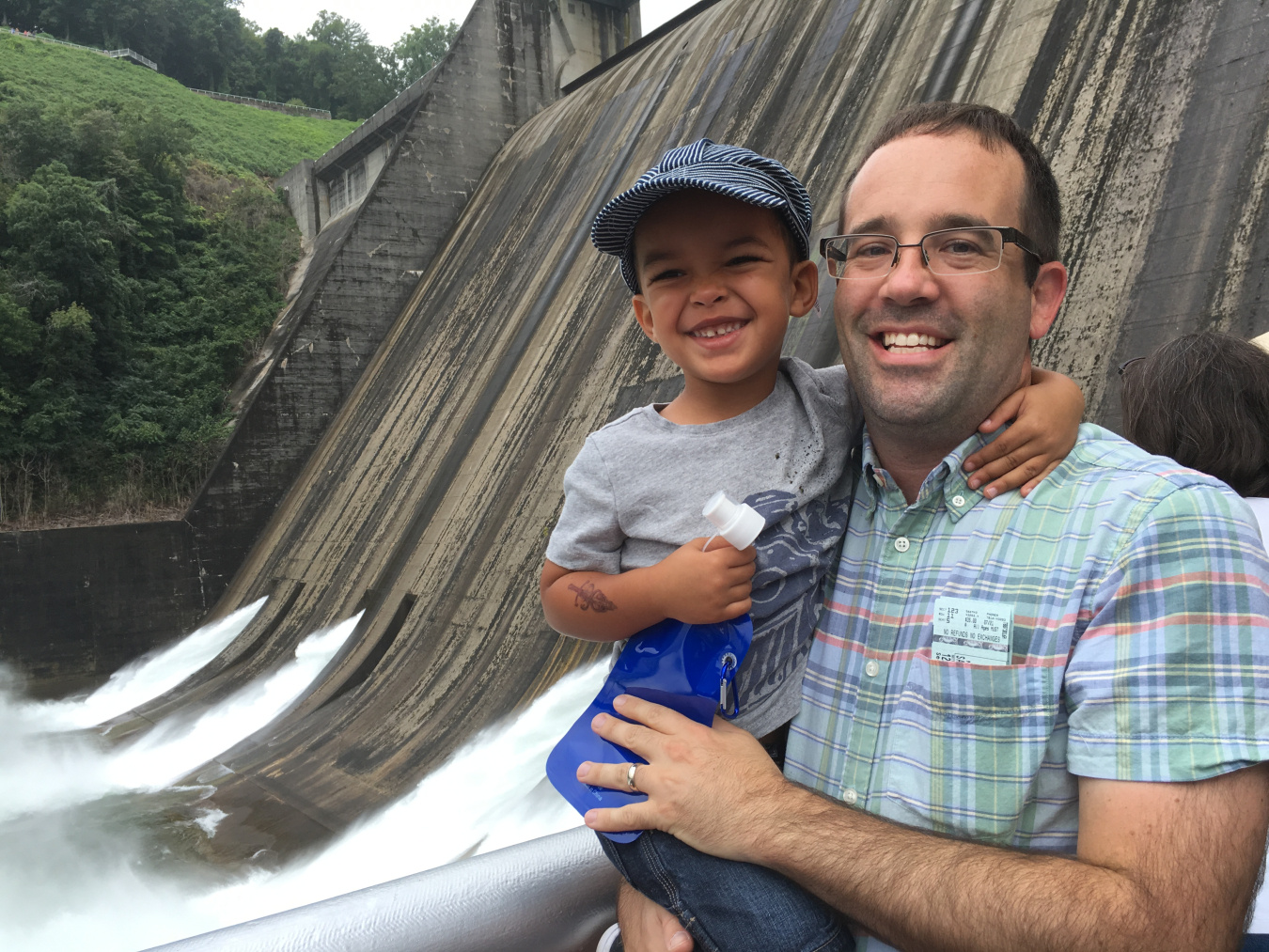
Jawdy inherited that spark and eventually found inspiration beyond his upbringing. He received his master’s degree from the University of Tennessee, which is home to the famous Torchbearer statue. The iconic statue bears a flame that never extinguishes and displays the Volunteer Creed: One that beareth a torch shadoweth oneself to give light to others.
“It may be a coincidence, but I take that idea of community service seriously,” said Jawdy.
So, when Curt landed at the Tennessee Valley Authority (TVA) more than 15 years ago, he got the chance to use his water and modeling expertise to serve the Tennessee Valley region. “Public power embodies the Volunteer spirit, and TVA harnesses the abilities of many smart technical folks to make life better for the people of the Tennessee Valley,” said Jawdy.
TVA is the largest public energy provider in the United States and provides power to more than 10 million people. The corporation also focuses on environmental stewardship and economic development.
In this Q&A, Curt Jawdy shared how his problem-solver mindset led him to hydropower, what managing a river system entails, and ideas for supporting the next generation of energy professionals.
How did you become interested in energy and what motivated you to build a career in it?
My fascination with water is what led me to energy. Water is a beautiful thing. As a kid, I was always running around in streams and rivers, and I did a lot of fishing. But water is also important. You can't live without it. It's very impactful.
I think energy shares that characteristic with water in the sense that human beings can't live without energy. The more energy you have, the higher your standard of living. So being able to deliver energy affordably and reliably, while still taking care of the environment and people, feels like the highest calling for me as a technical person.
How did you find your way to hydropower specifically?
I went to Penn State for undergrad, and as part of their honors program I had to do an undergraduate thesis. So, I did a summer internship with Oak Ridge National Laboratory’s bioenergy program. I returned to ORNL during my master’s, researching water and energy fluxes through bioenergy plantations (i.e., land cultivated with fast-growing plants, trees, or grasses that are harvested and converted into useable energy). I was looking at these plantations to understand how to restore degraded soil and protect the watershed.
After spending some time doing hazardous waste cleanup, I eventually found a niche in green storm water development and started writing green storm water manuals that helped local municipalities protect water quality and reduce urban flooding. I quickly became the water modeling specialist for the consultant I was working for.
But that modeling work focused on storm drains and streams, and I had reached a point where I really wanted to model big rivers. So, I began looking for jobs in the Knoxville area and lo and behold the TVA's River Forecast Center is in Knoxville. I started working in TVA’s River Forecast Center and then moved into river management where we rebuilt the mathematical basis and decision logic for the TVA river management system over the course of about 10 years.
That sounds like a lot of work. What did the project entail?
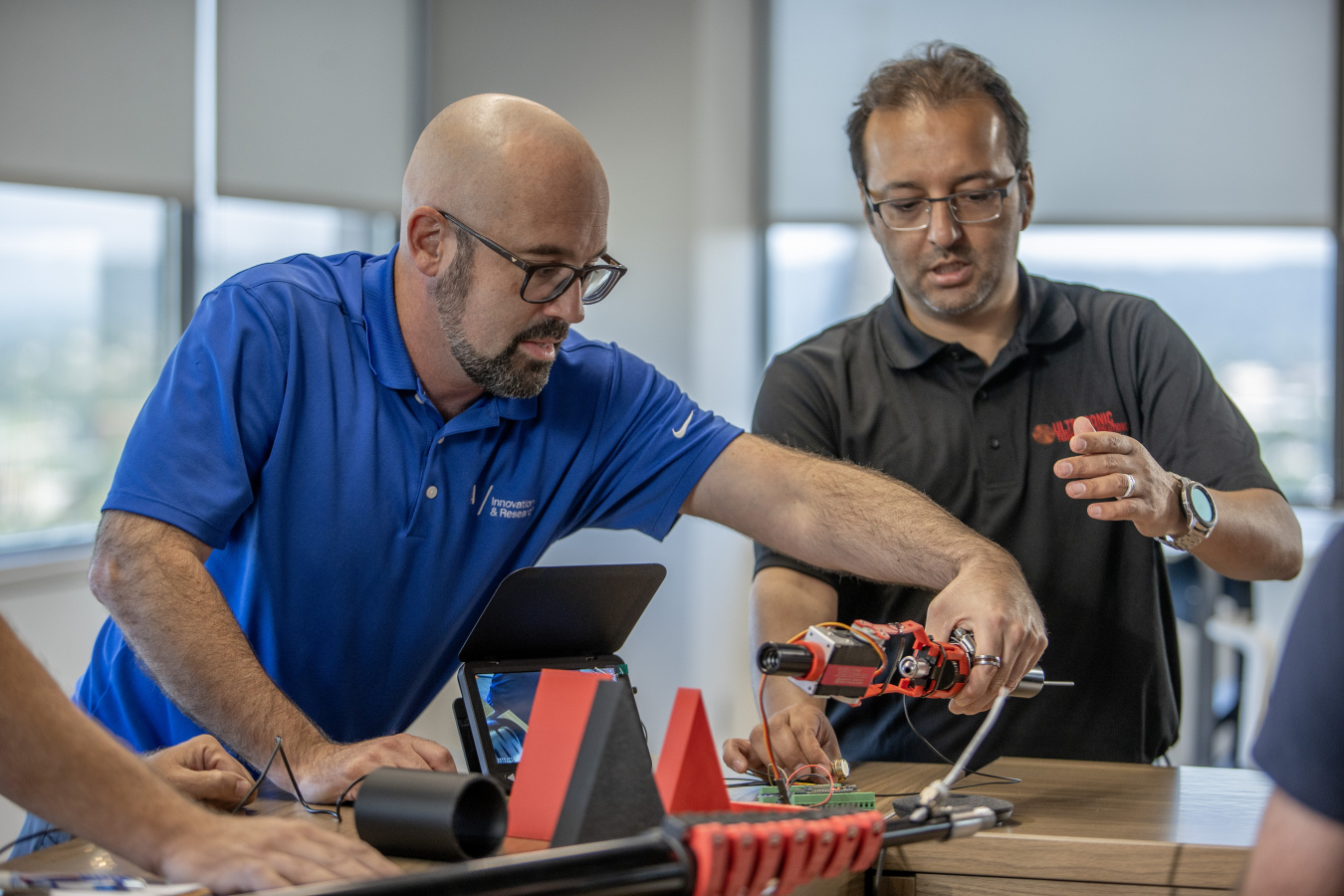
Over the course of that decade, I was blessed to work with a number of smart TVA staff and external experts to modernize the mathematical and decision science foundations of the TVA river management system. On the operational side, we replaced the entire river forecast system to improve decisions that affect millions of folks and billions of dollars annually. Then, we synchronized the planning side of river management to use those same calibrated models, which enabled a positive feedback loop between operations and planning. We also explored the extremes of hydrology by looking at tree rings for drought, ancient sediment deposits for flooding, and evacuation models to cover the unlikely event of a dam breach.
So, what does it mean to manage a river system?
There are an untold number of factors that determine how to route water downstream. TVA manages the 40,000-square-mile Tennessee River system through a network of 49 dams (29 of them provide power) and they all empty into the Ohio River. We use those dams to continually balance things like navigation, flood control, power generation, water quality, and recreation.
To do that, we first look at the forecasted rainfall. Then we distribute the rain forecast to understand how much rain will fall on each of our 149 subbasins. It’s almost like the moving storm maps you see on the news, but it’s a map that shows the future rainfall depth across our 40,000 square mile basin.
Then we look at how much water will run off and how long it will take for the runoff to reach the reservoirs. We use hydrology models for this. And then once that water is in the reservoirs, we start asking: How much water should we release from this dam? When should we generate power to best help the grid? What recreational or water supply factors must we account for today? How does the release from this dam factor into the decisions for the next dam?
And we work our way down the river system all the while thinking about those things.
You worked in river management for about 10 years and then transitioned out of it. What have you been working on since?
In 2020, I had the opportunity to come work in TVA's innovation and research group. I started in an advisor role for our vice president and had the opportunity to influence TVA’s overall innovation strategy. We worked together to communicate with various leaders about water and energy decisions and the trade-offs that come with those decisions.
Since then, I've moved into more detailed research and development. I'm working on things like how to build hydropower facilities faster, 3D printing of metal, contracting strategies, advanced manufacturing and modular construction, and integrating artificial intelligence. I just led a team of TVA experts to select our new pumped storage project location.
I also recently had the opportunity to advise on more national problems through leadership at the National Hydropower Association, the National Academies of Science, Engineering and Medicine, and other organizations. TVA is a dedicated national leader on these topics, and we share our learnings broadly to help advance the hydropower industry as a whole.
So rather than being a specialist, I'm now more of a generalist helping other people connect the dots. The expertise I use on any given day isn't always about hydrology or electricity. It's more about unlocking the expertise spread around TVA in new ways to enable innovation.
What’s it like being in an innovative, multidisciplinary space?
I really enjoy it because I have varied interests. I get bored easily. So, I’m always moving on to the next interesting problem. That's probably why I've ended up in innovation and research. I want to make things work better, and I really enjoy synthesizing. Analysis is the art of taking something apart and understanding how it works, but synthesis is the art of taking a bunch of pieces and turning them into something that works.
And frankly, the ability to synthesize is sorely needed. We need more young people that can both analyze and synthesize because the world is growing more complex. And if we don't have people that can connect all the dots, it impacts our ability to make decisions that benefit everybody.
You’re currently mentoring up-and-coming hydropower professionals. What personal experiences have shaped your mentorship style?
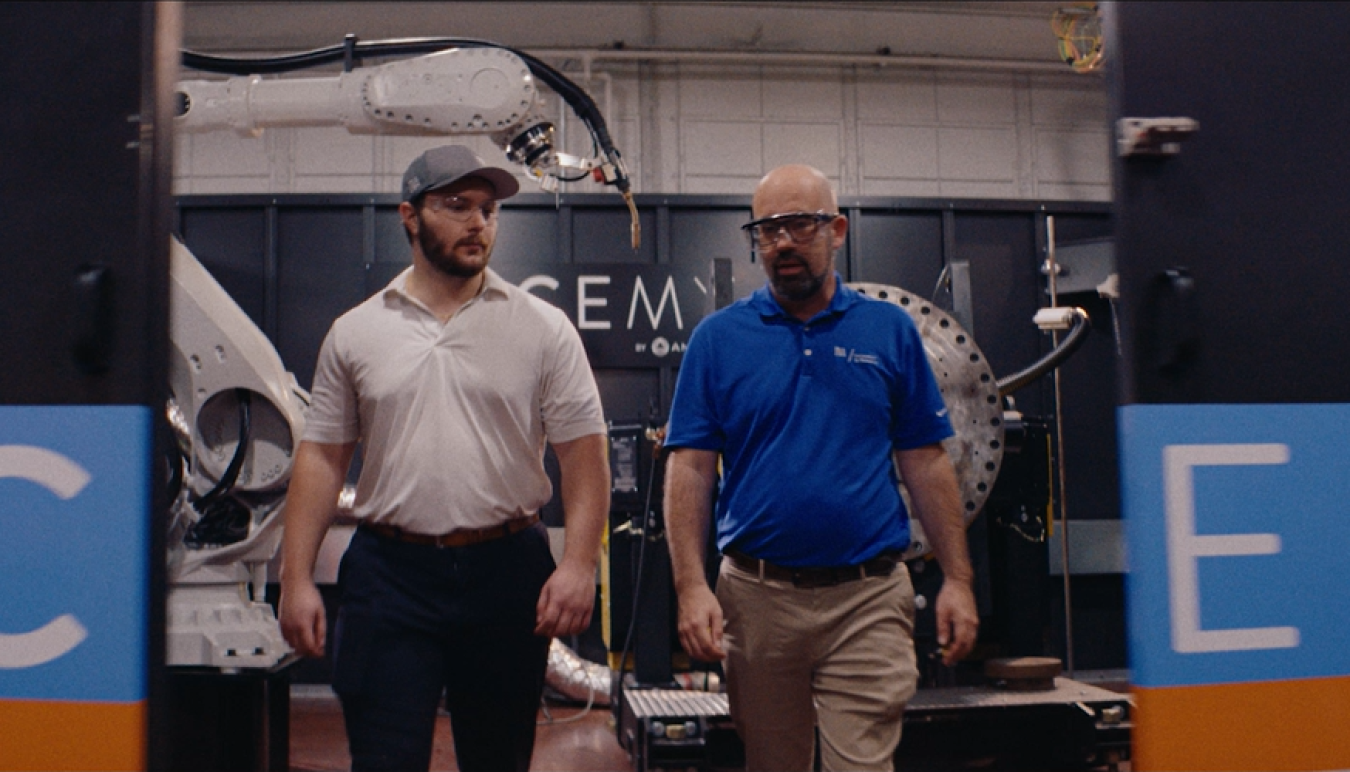
My first mentor was Lee Gentry. He was a water modeling expert who really got me hooked on water modeling in the first place. He took his work very seriously. It was clearly a calling for him. He wouldn't let shoddy work past him. So, if you were working for him, you would do it right. And he took the time to really teach you not only how to do it right, but why to do it right.
He was my mentor for about five years, but I've had several since. And every one of my mentors took the time to sit down with me and give me advice. They let me ask lots of questions because they wanted to see me grow. They all invested in me, and now I try to do the same with other young folks as best I can.
What advice do you have for the next generation of hydropower and energy professionals?
First, focus on a broad education. Then go out there, get some internships and some real-world experience to see if you really like it. Take some risks, and don’t be afraid to tackle problems outside your lane.
And bring your values with you. Sometimes we try to divorce technical things from our values. But I think it’s really important to bring your values to the office so you can help these bigger entities make choices that serve everyone.
Catch up on our other Ripple Effect profiles and stay in the know with H2O! Receive the latest information on funding opportunities, events, and news, including the next Ripple Effect by subscribing to the Water Wire newsletter.