



The Alternative Fuels and Feedstocks Office (AFFO) supports analysis and R&D to inform AFFO direction, prioritization, and decision making, develop technologies that enable the safe use of alternative fuels and feedstocks, and inform common-sense regulations, codes, standards, and workforce training.ng, and Analysis technologies efforts supports research, analysis, and tool development to address the economic and environmental dimensions of bioenergy and bioproducts.
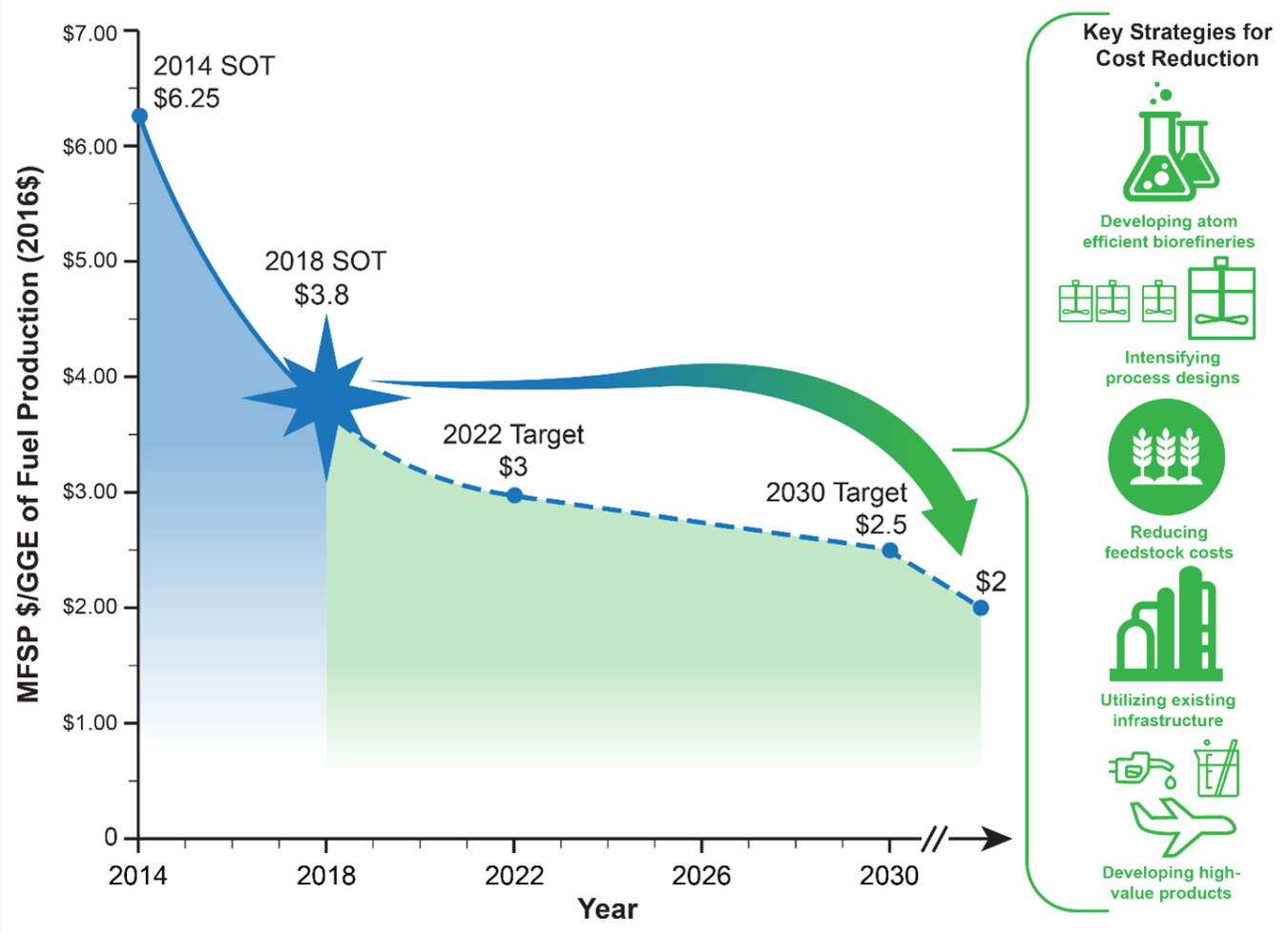
Analysis identified top strategies to reduce the cost of biofuels.
AFFO works with research and development (R&D) programs to conduct integrative analyses that facilitate insights across the alternative fuels and feedstocks supply chain. This includes analyses that integrate economic and environmental dimensions to understand trends, synergies, and trade-offs.
Analysis, Codes, and Standards R&D works to identify overall AFFO goals and priorities and covers issues that cut across all areas including:
- System-level analyses inform strategic direction and planning efforts and help AFFO focus its technology development priorities and identify key drivers and hurdles for maximum national impact
- Technology-specific analyses explore sensitivities and identify areas where AFFO funding may lead to the greatest impacts as well as outline R&D needed to further develop emerging ideas.
Analysis, Codes, and Standards Activities
Analysis, Codes, and Standards takes an approach comprised of three main elements:
- Strategic analysis,
- Systems impact analysis,
- System design.
Across these elements, Data, Modeling and Analysis activities supports developing and enhancing analytical tools, models, and methods to:
- Address barriers to achieving AFFO’s goals
- Improve understanding of system dynamics
- Inform internal and external decision-making through detailed scientific understanding.
U.S. Department of Energy national laboratories, academia, and industry perform these activities.