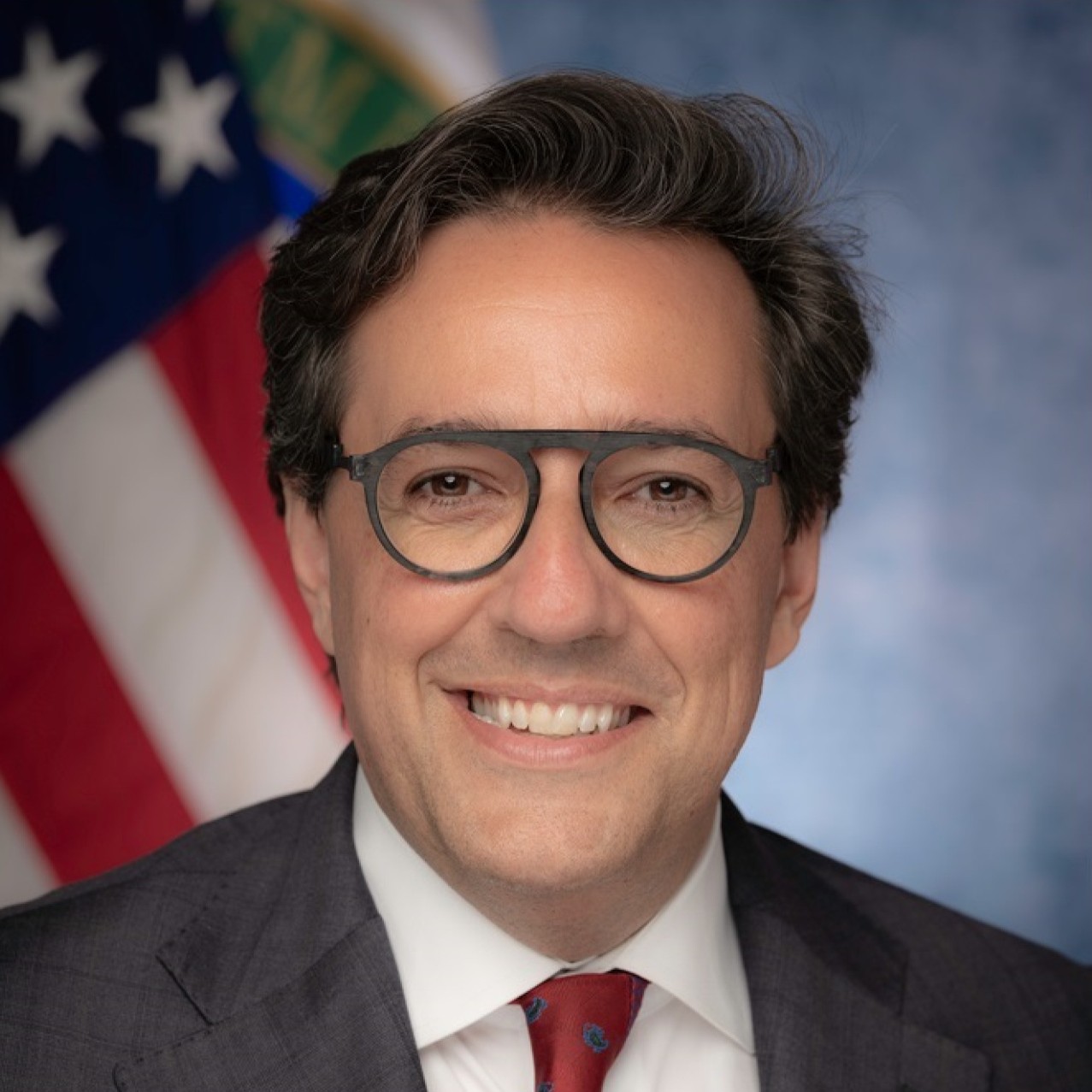
Quantum computing is becoming a revolutionary tool for scientific discovery.
September 17, 2026 Estimated Read Time min
Darío Gil
Under Secretary for Science
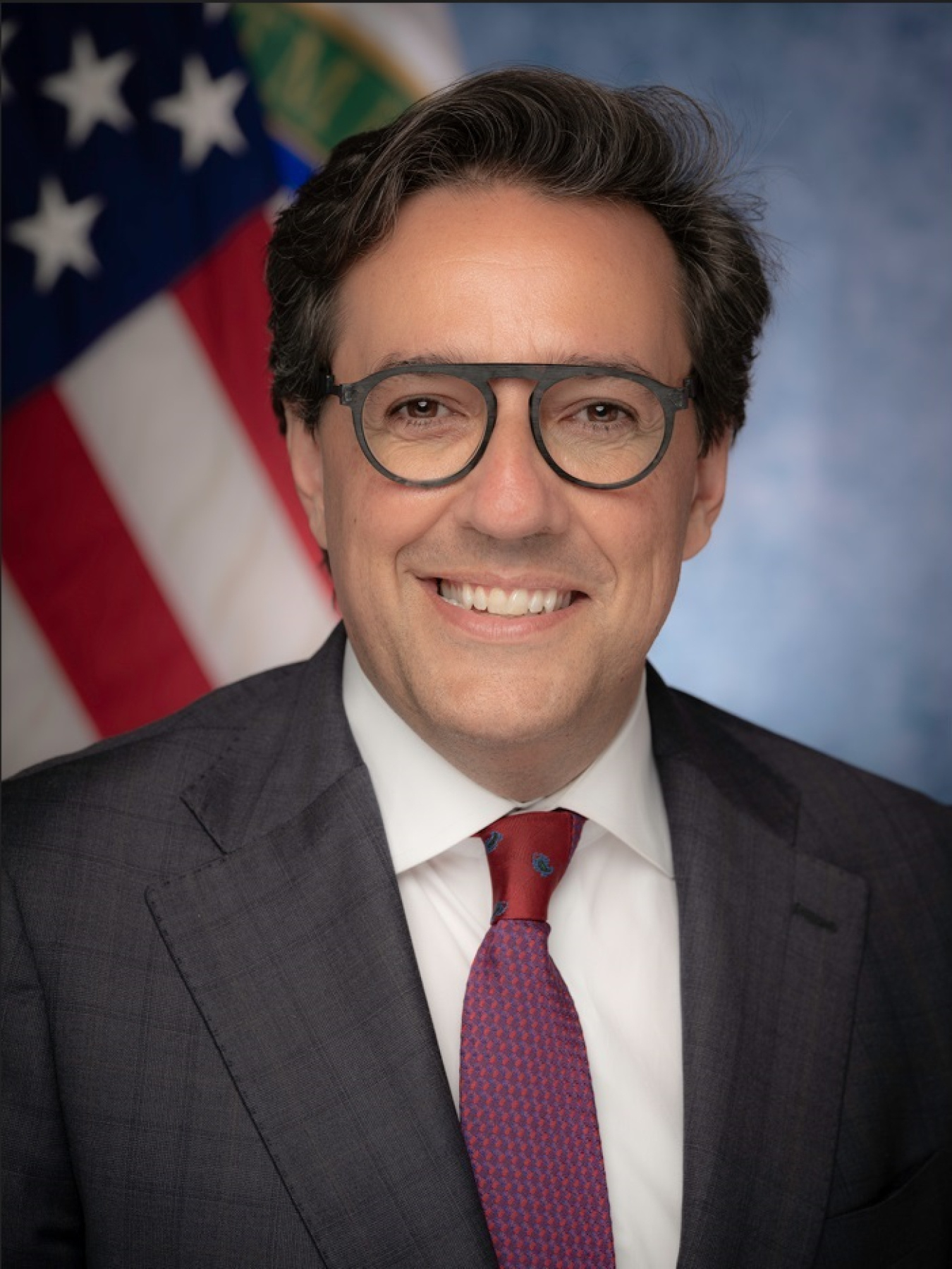
Dr. Darío Gil is Under Secretary for Science at the U.S. Department of Energy. His office is the nation's largest federal sponsor of basic research in the physical sciences, supporting all 17 National Laboratories of the United States, and responsible for programs including advanced computing, fusion, nuclear and high energy particle physics, basic energy sciences, and biological and environmental research. He is the department’s principal advisor on science and technology.
Prior to his current position, Dr. Darío Gil was IBM Senior Vice President and Director of Research, where he was responsible for one of the world’s largest and most influential corporate research labs.
Dr. Gil was elected to the National Academy of Engineering “for his contributions to artificial intelligence and quantum computing” and is a globally recognized leader of the quantum industry. Under his leadership, IBM was the first company in the world to build programmable quantum computers and make them universally available through the cloud.
Dr. Gil is an inventor and an institutional innovator, the force behind the creation of the International Science Reserve, the AI Alliance, the MIT-IBM Watson AI Lab, and the COVID-19 High Performance Computing Consortium.
Dr. Gil has served on the President’s Council of Science and Technology Advisors (PCAST) and on the National Science Board (NSB), where he was first member from industry to be elected chairman in 30 years. He has served on numerous boards including the Center for Strategic and International Studies (CSIS), the New York Academy of Sciences, the Semiconductor Industry Association (SIA), the New York Hall of Science, and Rensselaer Polytechnic Institute (RPI).
Dr. Gil is the recipient of two honorary doctorates and received his Ph.D. in Electrical Engineering and Computer Science from MIT.
Every major shift in technology promises to redefine the boundaries of discovery. Quantum computing is rapidly transitioning from a phase of fundamental laboratory research into a scientifically revolutionary capability. As this technology races forward, we need a clear, defined path to success. That is why I charged the Office of Science Advisory Committee (SCAC) Quantum Subcommittee with an ambitious task: to chart a milestone-driven roadmap toward demonstrating a scientifically relevant, error-corrected quantum computer by 2028, and to articulate a long-term vision for a dedicated Quantum Computing User Facility.
Today, I am proud to share their newly released report, "SCAC Quantum Committee Report: Path to an Integrated Quantum Future." It confirms what many of us in the scientific community have felt: we have reached a historic inflection point.
Our mission now is to ensure the United States leads this next era of discovery.
Moving Beyond Hardware Metrics to Scientific Utility
For years, the quantum conversation has been dominated by hardware-centric milestones. While these metrics are vital, the SCAC report proposes a crucial shift in thinking: success must be measured by scientific utility.
Our goal is not simply to build the largest quantum computer; it is to solve problems that are otherwise completely intractable. We are talking about predicting exact molecular properties for drug discovery, designing transformative catalysts for manufacturing, simulating fusion-relevant materials, and modeling the fundamental physics of the early universe.
The report emphasizes that the Department of Energy is uniquely positioned to lead this transition. By leveraging our world-class National Laboratories, high-performance computing (HPC) centers, testbeds, and existing scientific User Facilities, we can integrate quantum processors directly into hybrid, classical-quantum workflows that accelerate real-world discovery.
A Phased Path to 2028 and Beyond
To achieve scientifically useful quantum computers, the SCAC recommends a highly strategic, three-phased framework that aligns with our national Quantum Genesis Initiative:
- Phase I: The Quantum Grand Challenges (2026–2028): We will establish multidisciplinary, competitive challenges pairing National Labs, universities, and industry. These challenges will drive the co-design of hardware, algorithms, and software to meet specific, milestone-driven scientific targets by 2028.
- Phase II: The DOE Quantum Computing User Facility (QCUF): Using lessons from the Grand Challenges, we will plan and establish a world-leading User Facility. This will not be a commercial "black box" cloud service. Rather, it will be an open, collaborative scientific instrument where researchers can co-develop hardware architectures, control systems, and software stacks alongside technology providers.
- Phase III: An Integrated Quantum Future (2030+): Ultimately, quantum computing will not exist in isolation. We envision a future where quantum co-processors, simulators, and sensors are seamlessly woven into the broader DOE scientific enterprise—augmenting our leadership-class AI and HPC networks.
Partnership and Co-Design as Our Competitive Edge
To realize this future, we must break down traditional barriers. The SCAC report highlights that breakthrough science occurs when hardware developers and domain scientists work side-by-side. We are actively exploring novel partnership models, which could include embedded co-design fellowships, joint appointments, and shared technical staff across industry and our National Labs.
Crucially, we must maintain a technology-neutral stance. The field is evolving too quickly to prematurely lock in a single hardware modality. Whether through superconducting circuits, neutral atoms, trapped ions, photonics, or spin qubits, we will let demonstrated scientific utility guide our long-term investments.
The Journey Ahead
I want to express my deepest gratitude to the Subcommittee Chair, Dr. Anna Grassellino, Vice-Chair Dr. Supratik Guha, and the hundreds of stakeholders from industry, academia, and federal agencies who contributed to this report.
We stand at a pivotal moment. The choices and investments we make over the next three years will shape global scientific leadership for decades to come. Together, we are not just building quantum computers; we are establishing a new national capability for scientific discovery.