



The U.S. Department of Energy’s Environmental Management Nevada Program has completed well development and testing at three groundwater monitoring well locations drilled last year on Pahute Mesa at the Nevada National Security Site.
Office of Environmental Management
November 10, 2026 Estimated Read Time min
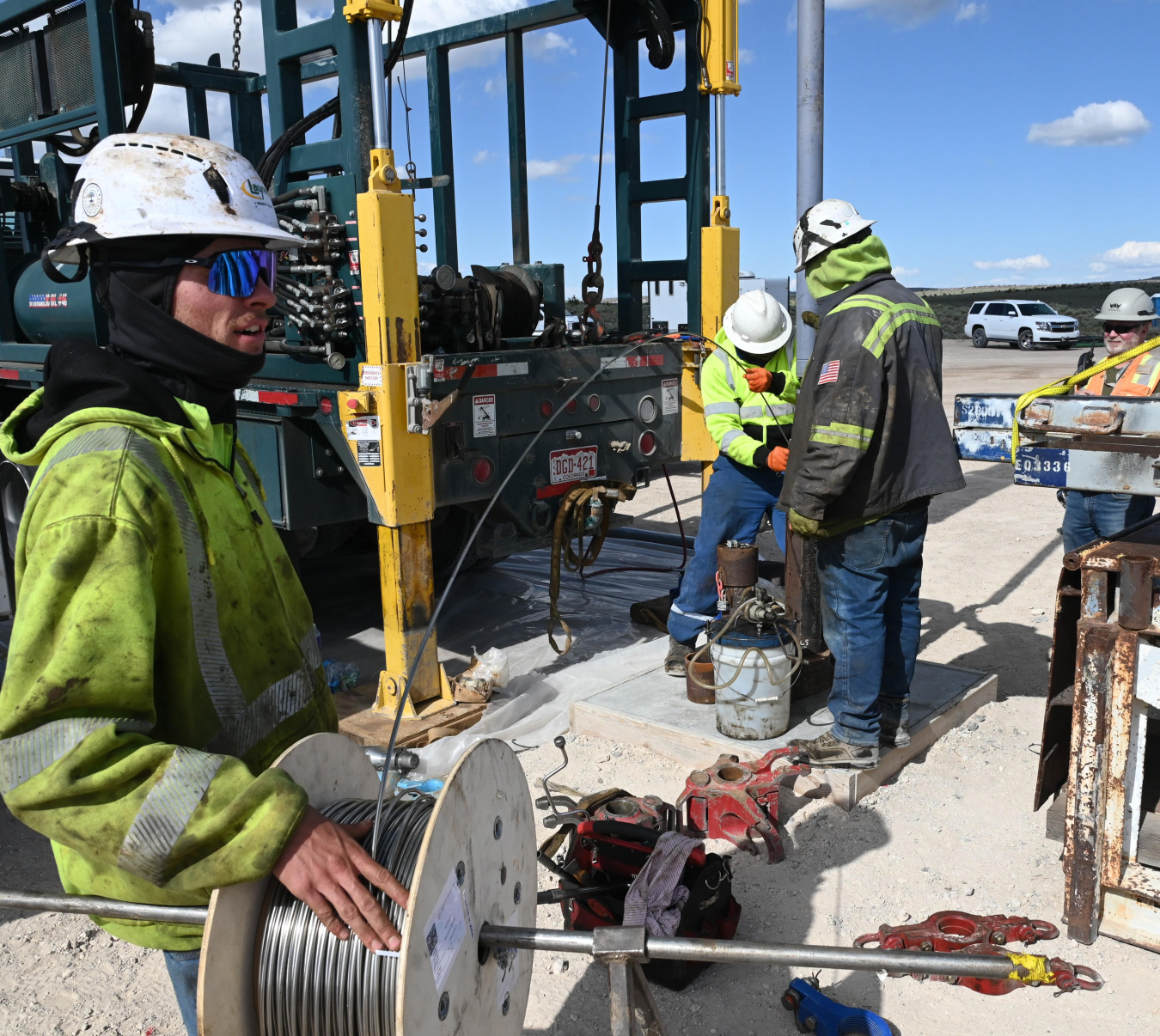
Environmental Management Nevada Program crews set up a pump and adjust pressure release for well development and testing at a groundwater monitoring well on Pahute Mesa at the Nevada National Security Site in May.
LAS VEGAS — The U.S. Department of Energy’s Environmental Management (EM) Nevada Program has completed well development and testing at three groundwater monitoring well locations drilled last year on Pahute Mesa at the Nevada National Security Site (NNSS).
Completing this work provides valuable data needed to inform and calibrate the Pahute Mesa groundwater models. The models support regulatory closure of the Pahute Mesa groundwater contamination area in accordance with the Federal Facility Agreement and Consent Order.
Once approved, closure involves implementing a long-term monitoring program to ensure the public and site workers remain protected from exposure to groundwater contaminated by underground nuclear testing on the NNSS.
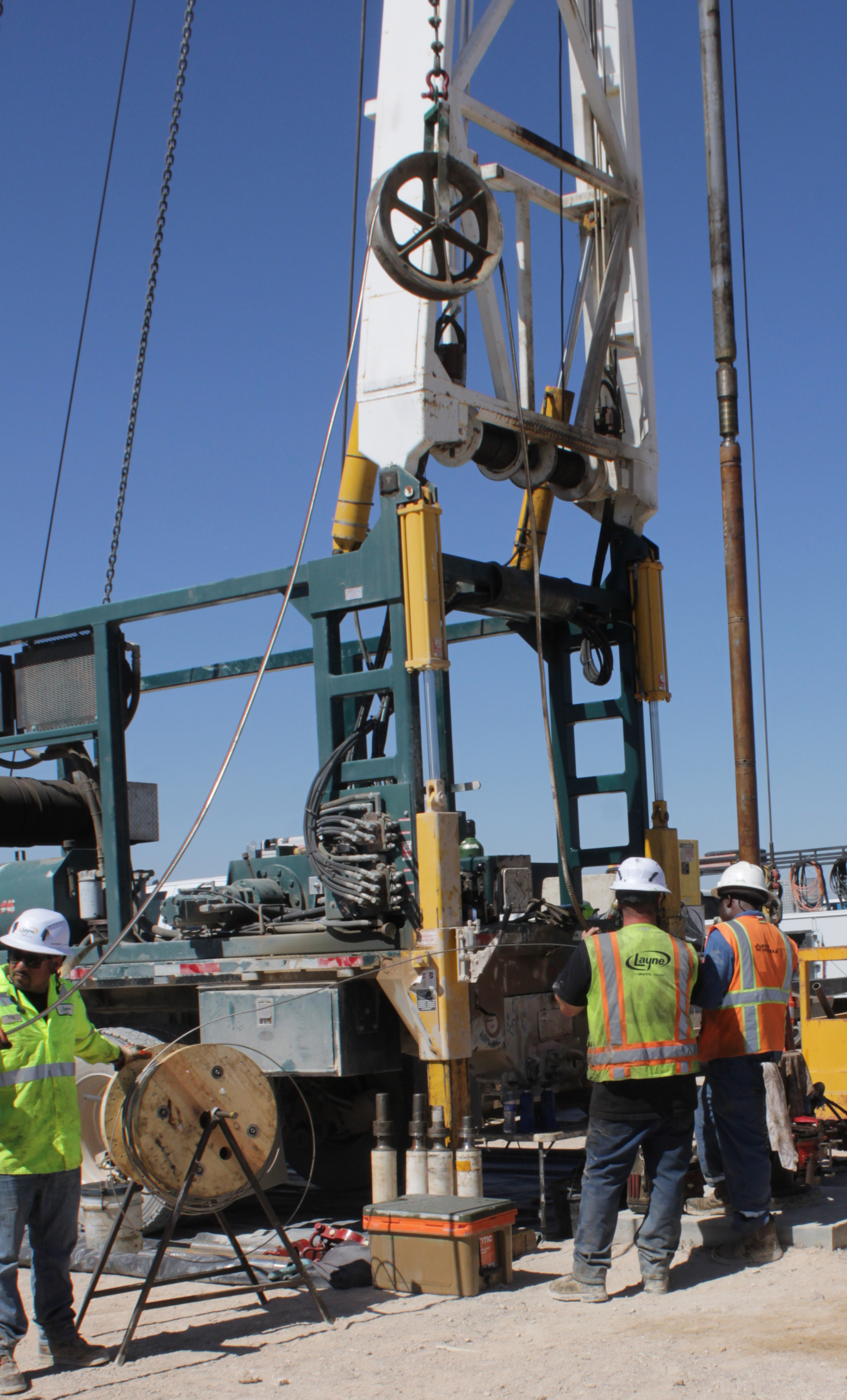
Environmental Management Nevada Program crews install a pump for well development and testing at a groundwater monitoring well on Pahute Mesa at the Nevada National Security Site in June.
Pahute Mesa is in the remote northwest portion of the NNSS and is the location of 85 historical underground nuclear detonations in complex geologic units. From 1965 to 1992, 82 of these tests were conducted at depths ranging from 226 to 1,450 meters below ground surface with most detonations within 100 meters of the water table, or deeper, indicating potential interaction with the groundwater system. Understanding these unique subsurface conditions is critical to ensuring communities downgradient remain protected from contaminated groundwater.
By performing well development after a well is constructed, any residual drilling additives are pumped out so future water quality samples are representative of what is in the aquifer. This process is then followed by well testing to measure aquifer properties.
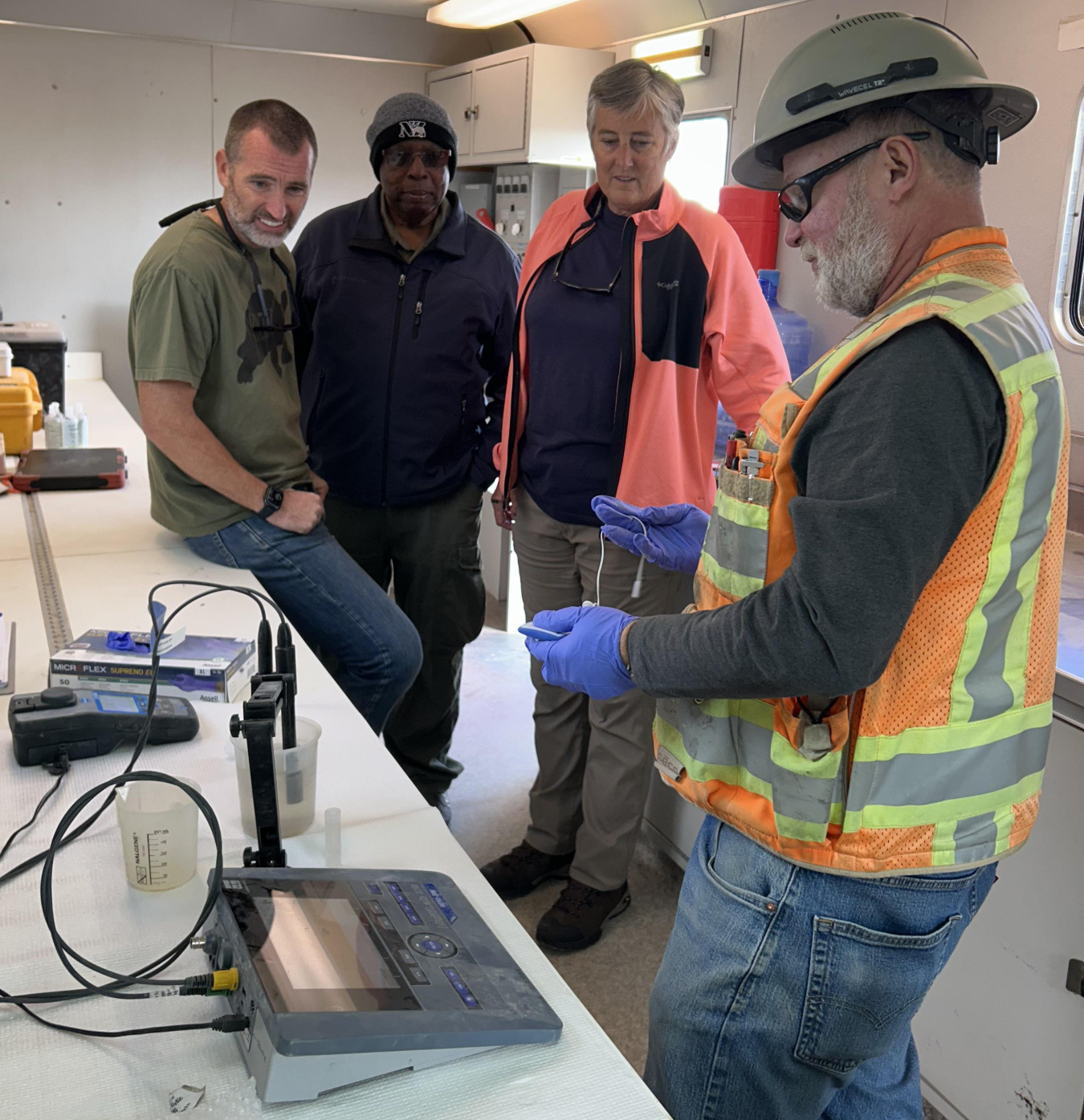
Nevada Site Specific Advisory Board members observe field screening of water samples collected during an October visit to the new Pahute Mesa wells. The board is charged with providing the Environmental Management Nevada Program a recommendation on the long-term monitoring network that will be implemented once the Pahute Mesa groundwater area is approved for closure.
Data collected during well development and testing are undergoing analysis and validation for incorporation into groundwater flow and contaminant transport models that already include decades of data collection.
These groundwater models, developed with a 1,000-year timeline, indicate that radionuclides from underground nuclear testing will not exceed Safe Drinking Water Act safety standards in publicly accessible groundwater.
The collection of additional data to evaluate model forecasts is vital to ensuring the models can be used for regulatory decisions and support approval for the closure of the Pahute Mesa groundwater area. The process of model evaluation will continue through mid-2028 and the EM Nevada Program plans to submit the model evaluation report for regulatory approval in the summer of 2028.
Pahute Mesa is the final NNSS Underground Test Area groundwater area to be closed. The EM Nevada Program previously achieved closure and implemented long-term monitoring of the Frenchman Flat, Yucca Flat, and Rainier Mesa and Shoshone Mountain groundwater areas. For these closed areas, groundwater is sampled, water levels are measured and results are documented as prescribed by Federal Facility Agreement and Consent Order closure requirements.
-Contributors: Dona Murphy, Barbara Ulmer
To receive the latest news and updates about the Office of Environmental Management, submit your e-mail address.