



With nearly 13,000 employees across the Hanford Site relying on a functioning information technology infrastructure, quick response time to a system outage is critical to the cleanup mission.
Office of Environmental Management
October 27, 2026 Estimated Read Time min
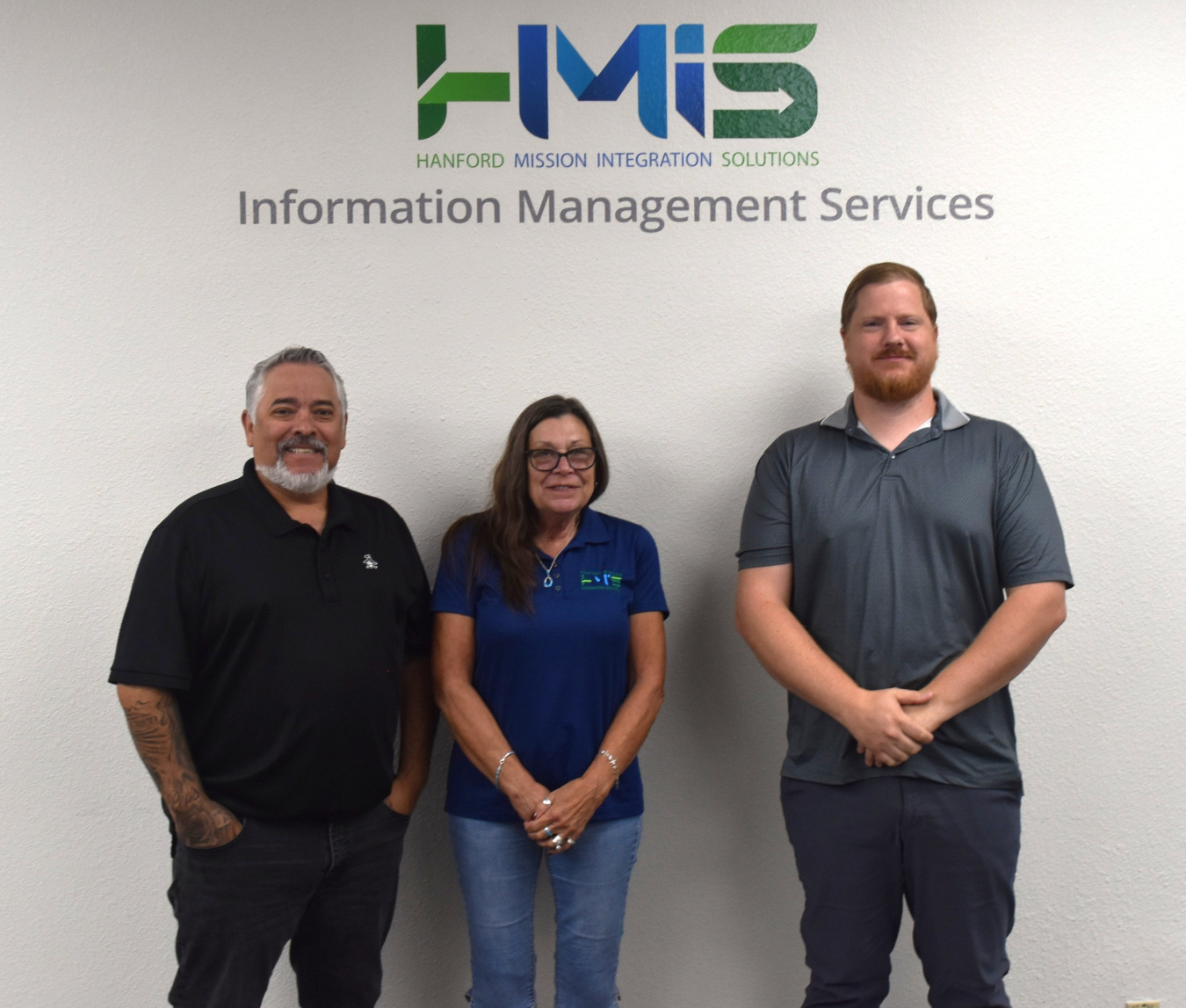
The Major Incident Management process starts with notifications to the Hanford Site Mission Service Desk. From left: Hanford Mission Integration Solutions (HMIS) Help Desk and End User Services Manager Cesar Gutierrez, and HMIS Field Work Supervisors Karen Ward and Ricky Rada-Burns. Their teams play a key role in supporting incident response and service restoration.
RICHLAND, Wash. — With nearly 13,000 employees across the Hanford Site relying on a functioning information technology (IT) infrastructure, quick response time to a system outage is critical to the cleanup mission.
To strengthen response times and coordination, Hanford Field Office essential services contractor Hanford Mission Integration Solutions (HMIS) developed the Major Incident Management (MIM) initiative, a structured approach for responding to high-impact IT service disruptions.
HMIS implemented the MIM model earlier this year, and early pilot rollouts have already shown meaningful positive outcomes, demonstrating the model’s effectiveness in real world use.
MIM is designed for incidents affecting more than five users, an entire building, a network or another critical system or application. Instead of teams working independently, MIM creates a centralized response model that brings the right teams together early in the process to assess the issue, coordinate communications and restore service as efficiently as possible.
“Strong mission support depends on strong teamwork,” said Mike Eddy, Hanford Field Office IT specialist. “This initiative shows how coordinated response and clear communication can make a meaningful difference when critical systems are affected.”
Before a MIM is initiated, Hanford’s Mission Service Desk and the Network Operations Center (NOC) work together to confirm the issue and assess its potential impact. Through this joint validation, the teams determine whether the situation meets major incident criteria. If it does, it’s elevated to the NOC, where the MIM process is activated. The NOC then coordinates with the support teams and updates leadership as restoration efforts continue.
“This initiative is about more than incident response — it’s about creating a shared structure for communication, decision-making and restoration during the moments that matter most,” said Cesar Gutierrez, HMIS help desk and end user services manager. “Thanks to this process, we can cut response times down significantly, sometimes from days to hours.”
To receive the latest news and updates about the Office of Environmental Management, submit your e-mail address.