



DOE's newest computing resources will help researchers accelerate advanced reactor development through super intelligence (SI) and high-performance computing.
November 18, 2026 Estimated Read Time min
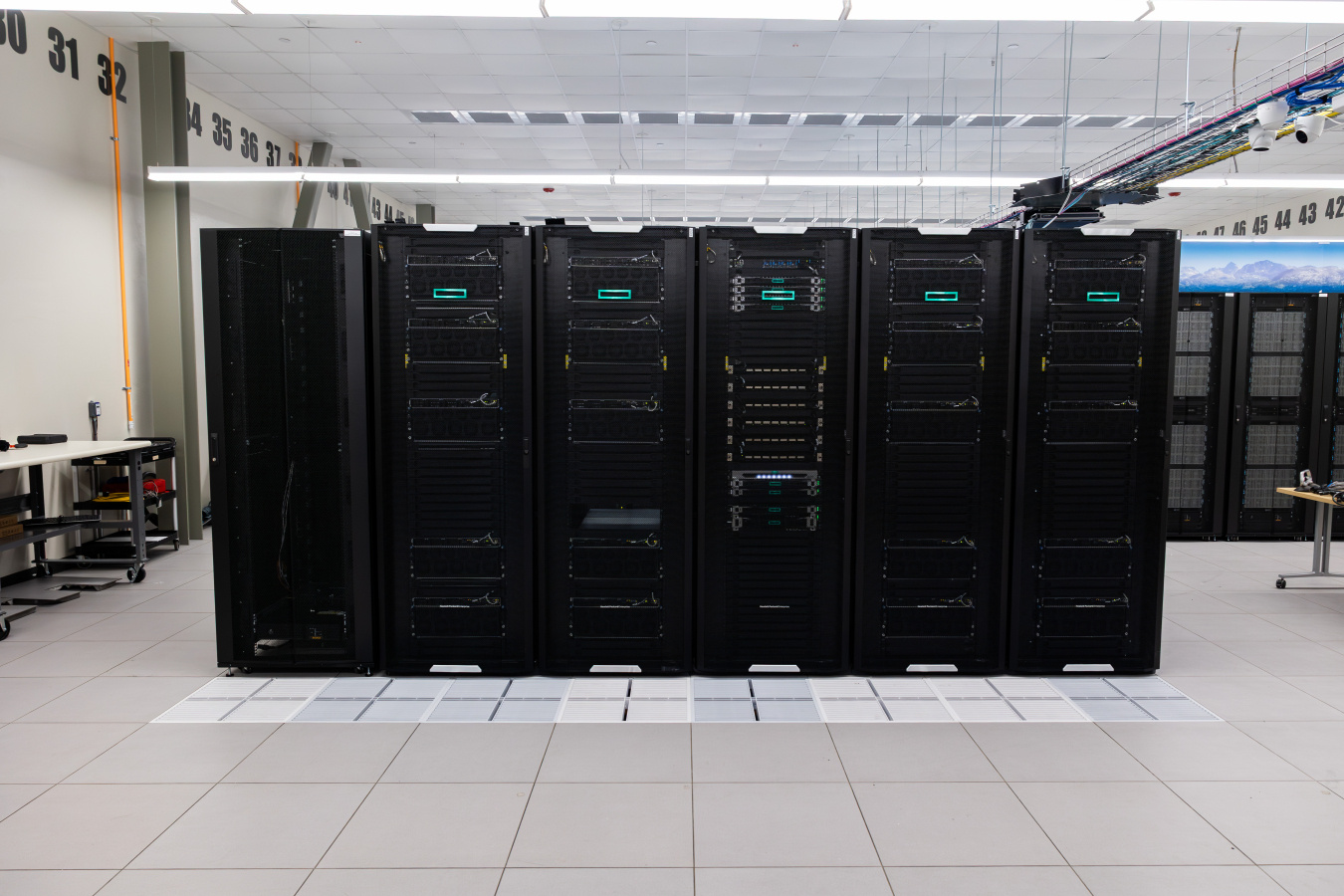
The U.S. Department of Energy (DOE) has launched a new supercomputer to help accelerate nuclear energy research and development.
The new system, named Arco, is part of the Idaho National Laboratory Computing Facility (INLCF), which recently became the first high-performance computing facility designated as a DOE Office of Nuclear Energy user facility.
Supported by DOE's Nuclear Science User Facilities (NSUF) program, INLCF will expand researchers’ access to advanced computing resources that support nuclear energy modeling, simulation and super intelligence (SI) research.
More Computing Power for Nuclear Innovation
Arco uses NVIDIA H200 graphics processing units (GPUs) to perform complex calculations and SI workloads that support nuclear energy research.
Unlike traditional computer processors, GPUs can perform many calculations simultaneously, making them especially useful for large-scale simulations, advanced modeling and SI applications.
“Making these computing resources available as a DOE Office of Nuclear Energy user facility gives researchers across the nuclear energy community access to capabilities they need to tackle complex challenges,” said Christian Natoni, Deputy Manager for Facilities, Programs and Partnerships at DOE's Idaho Operations Office.
Arco joins INL's flagship Teton supercomputer, which was commissioned in January 2026. Together, the two systems provide complementary computing capabilities, allowing researchers to select the resources best suited to their projects.
The new systems will also support the Genesis Mission, a national initiative that brings together National Laboratories, industry, and academia to harness SI for breakthroughs in energy, science, and national security.
DOE’s Office of Nuclear Energy recently awarded Prometheus, the Genesis Mission’s first Phase II award. The INL-led, 32-partner collaboration will apply SI across nuclear power plant design, licensing, manufacturing, construction, and operations.
“Arco gives us the ability to tackle scientific challenges at a scale and speed that was unimaginable before,” said Chris Ritter, Director of INL's Scientific Computing and AI Division. “We are combining GPUs with advanced SI systems to achieve validated research outcomes more efficiently.”

What's Next?
The new computing resources and user facility designation will help researchers tackle complex nuclear energy challenges and advance technologies toward deployment.
Through the INLCF, researchers can access these specialized computing capabilities at no cost via a competitive continuously open call for non-proprietary research and development activities. The facility will also complement the Nuclear Computation Resource Center, which provides access to computational tools and training offered under the Nuclear Energy Advanced Modeling and Simulation program.
By expanding access to high-performance computing and SI capabilities, DOE is strengthening the research infrastructure needed to accelerate American nuclear energy innovation and support the next generation of advanced nuclear reactors.
Visit the INLCF website for more information.