



A newly reconstructed spillway at the West Valley Demonstration Project in western New York is doing work most people will never see: safely directing stormwater away from a critical environmental remediation site.
Office of Environmental Management
October 20, 2026 Estimated Read Time min
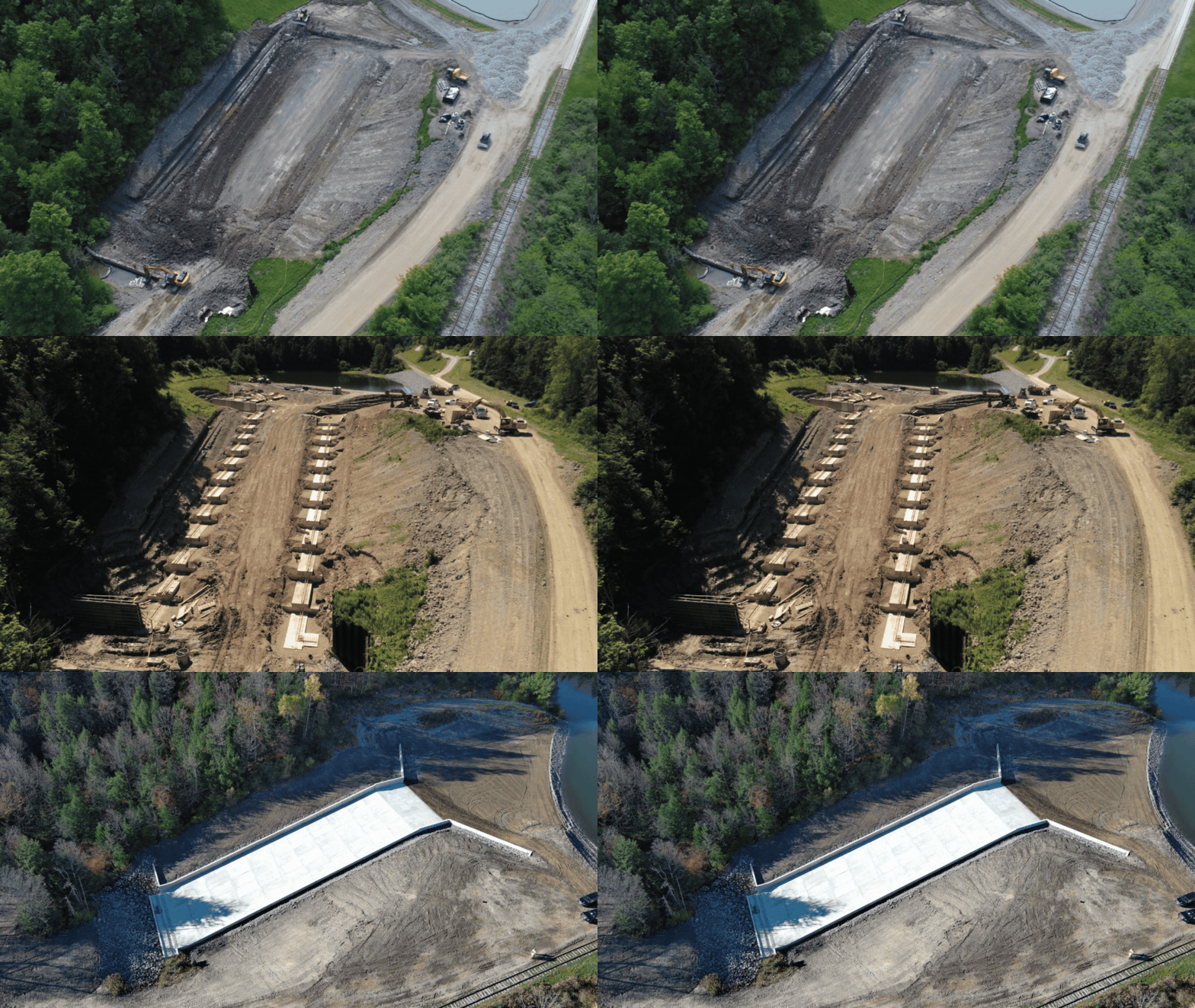
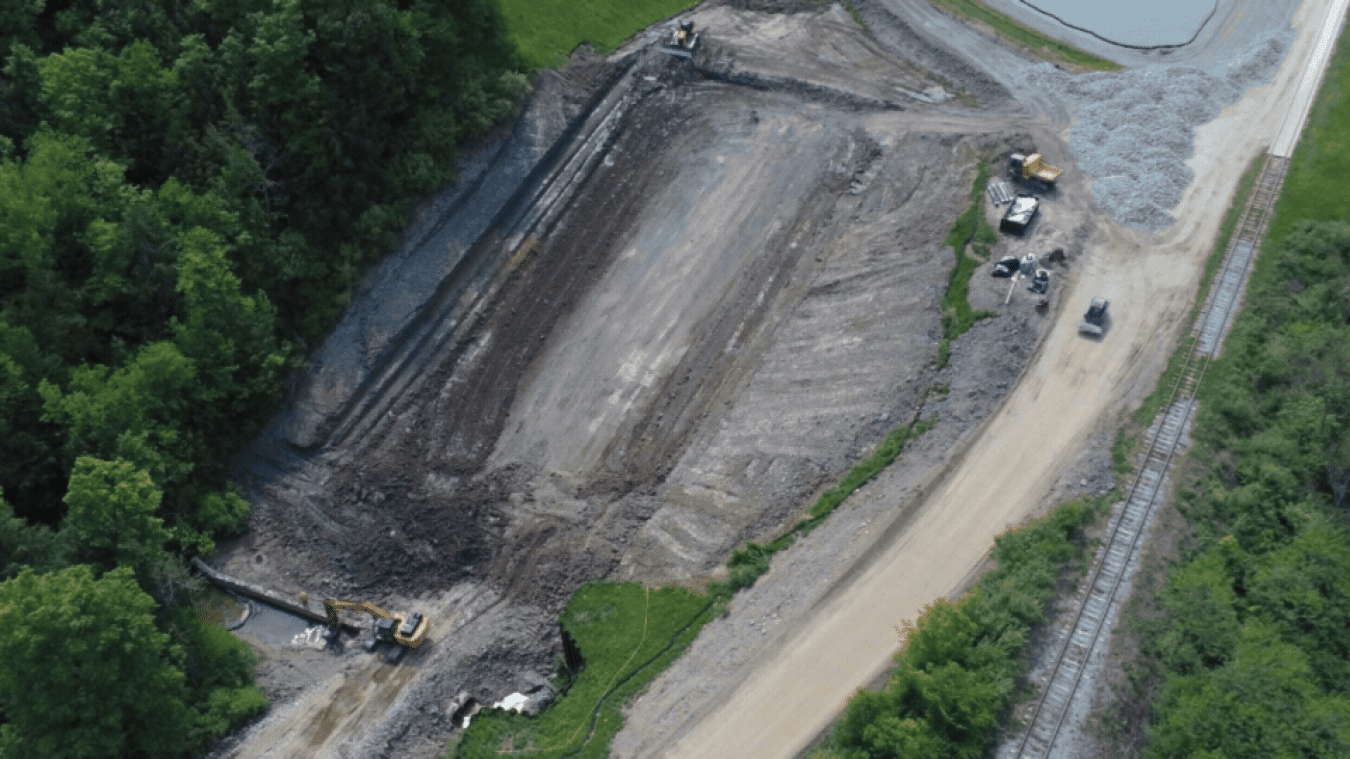
This sequence of photos shows the progression of the spillway construction. A dam safely directs stormwater away from the West Valley Demonstration Project, a critical environmental remediation site. In addition, this project helps protect the site’s lake-and-dam system, nearby waterways and surrounding community.
WEST VALLEY, N.Y. — A newly reconstructed spillway at the West Valley Demonstration Project (WVDP) in western New York is doing work most people will never see: safely directing stormwater away from a critical environmental remediation site.
A collaboration among the U.S. Department of Energy Office of Environmental Management (EM), U.S. Army Corps of Engineers Buffalo District and other partners replaced a deteriorating turf-based auxiliary spillway with a reinforced-concrete structure designed to withstand high-velocity storm flows.
The project supports ongoing legacy remediation at West Valley, home to the only commercial used nuclear fuel reprocessing facility to ever operate in the United States, while helping protect the site’s lake-and-dam system, nearby waterways and surrounding community.
“While the demand for large volumes of water for used fuel reprocessing operations has ceased, the lake-and-dam system remains vital for site management and continued operation,” said Anthony Lechanski, EM federal project director. “The lakes, and specifically the spillway improvement project, now primarily serve to manage water, ensuring proper conveyance to prevent flooding.”
The spillway is part of a larger lakes-and-dams system constructed in 1963 to provide water for the former reprocessing facility. The reservoirs historically supplied clean water for cooling systems, industrial needs and potable water.
The original spillway was lined with turf-reinforced geotextile matting. A later repair used similar material, but neither withstood the water velocities generated during significant storms nor prevented soil erosion. This created concerns about safe maintenance access and sediment reaching a protected trout stream at the foot of the spillway that ultimately connects to Lake Erie.
An evaluation of the system confirmed that water velocity would exceed what turf or earthen construction could withstand. After comparing alternatives and costs, the team selected the most durable solution — concrete.
The new 246-foot-long spillway between 6-foot-high side walls required excavation of 11,270 cubic yards of material and placement of 1,956 cubic yards of concrete.
“This project also offers a model for delivering technically demanding infrastructure projects with multiple stakeholders,” said Lechanski. “Our success was predicated on the following steps: start with rigorous engineering, identify risks early, establish clear roles and maintain open communication from design through construction.”
The spillway continues to support West Valley operations, particularly water management and industrial needs associated with remediation. While the site’s water needs have evolved from legacy operations to cleanup, the auxiliary spillway system remains essential during storms.
-Contributor: Joseph Pillittere
To receive the latest news and updates about the Office of Environmental Management, submit your e-mail address.