



The first mega-size disposal unit constructed and operated at the Savannah River Site is now filled with grout.
Office of Environmental Management
October 13, 2026 Estimated Read Time min
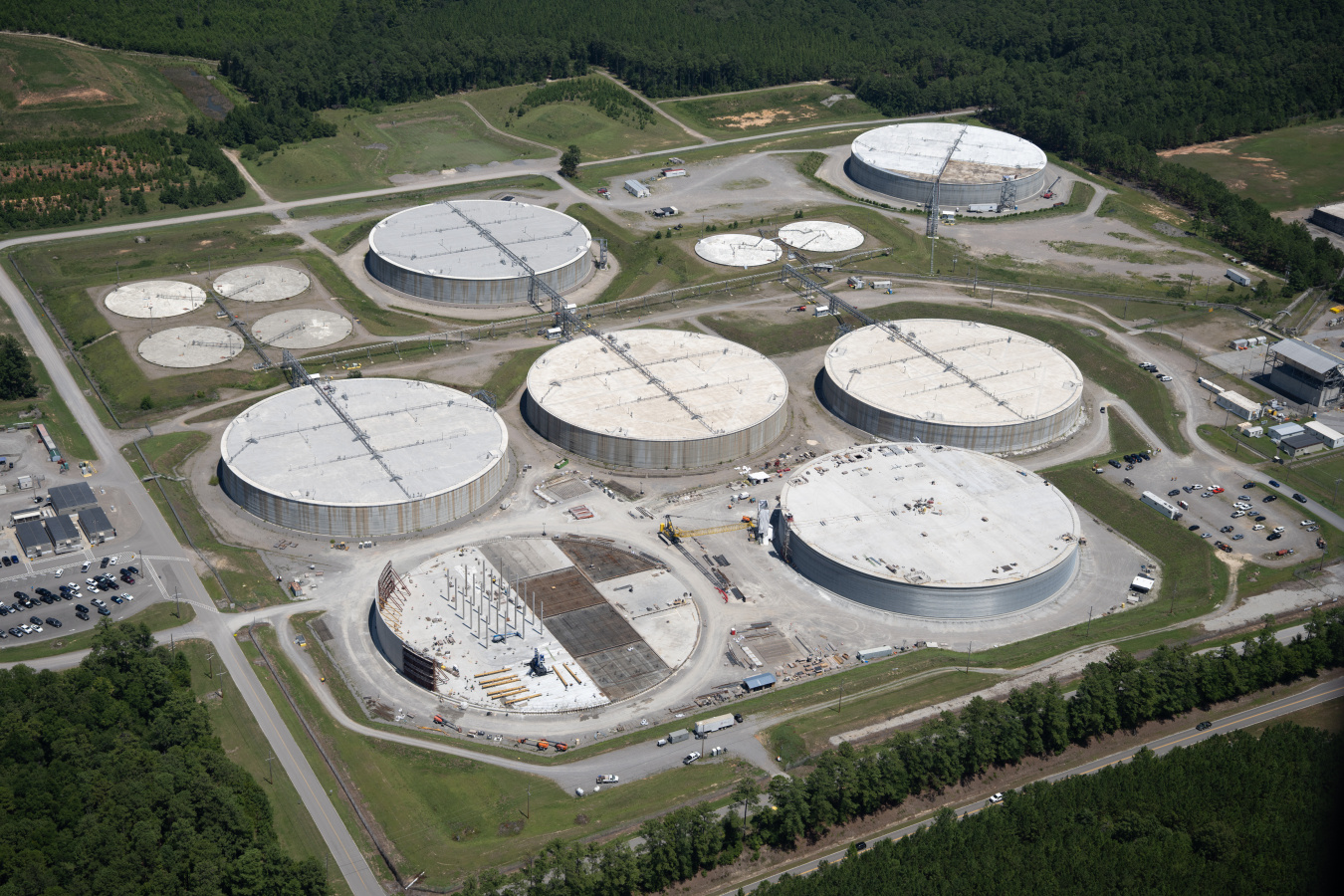
Saltstone Disposal Unit (SDU) 6, center, is surrounded by other massive disposal units at the Savannah River Site. SDU 6 was the first mega-size SDU to be built at the site, and it’s now filled with grout.
AIKEN, S.C. — The first mega-size disposal unit constructed and operated at the Savannah River Site (SRS) is now filled with grout.
Saltstone Disposal Unit 6 (SDU) is one of seven aboveground concrete units at SRS where the final stabilized form of Cold War legacy salt waste will be safely and permanently stored. The SDUs hold approximately 33 million gallons of grout treated at the Saltstone Production Facility (SPF). SRS began building the massive disposal units in 2014.
Filling SDU 6 with grout is another step forward in the U.S. Department of Energy’s (DOE) commitment to safely remediate legacy waste and reduce environmental risk, according to Chuck Comeau, DOE Savannah River Operations Office federal project director.
“This milestone is an important step in reducing the risk of waste at SRS,” said Comeau. “SDU 6 received the first transfer of grout two years before the Salt Waste Processing Facility (SWPF) began operations in 2020. Now that SWPF is treating waste at an unprecedented rate, the SDUs will be key to continued progress toward delivering on the cleanup mission and revitalizing the site for future missions.”
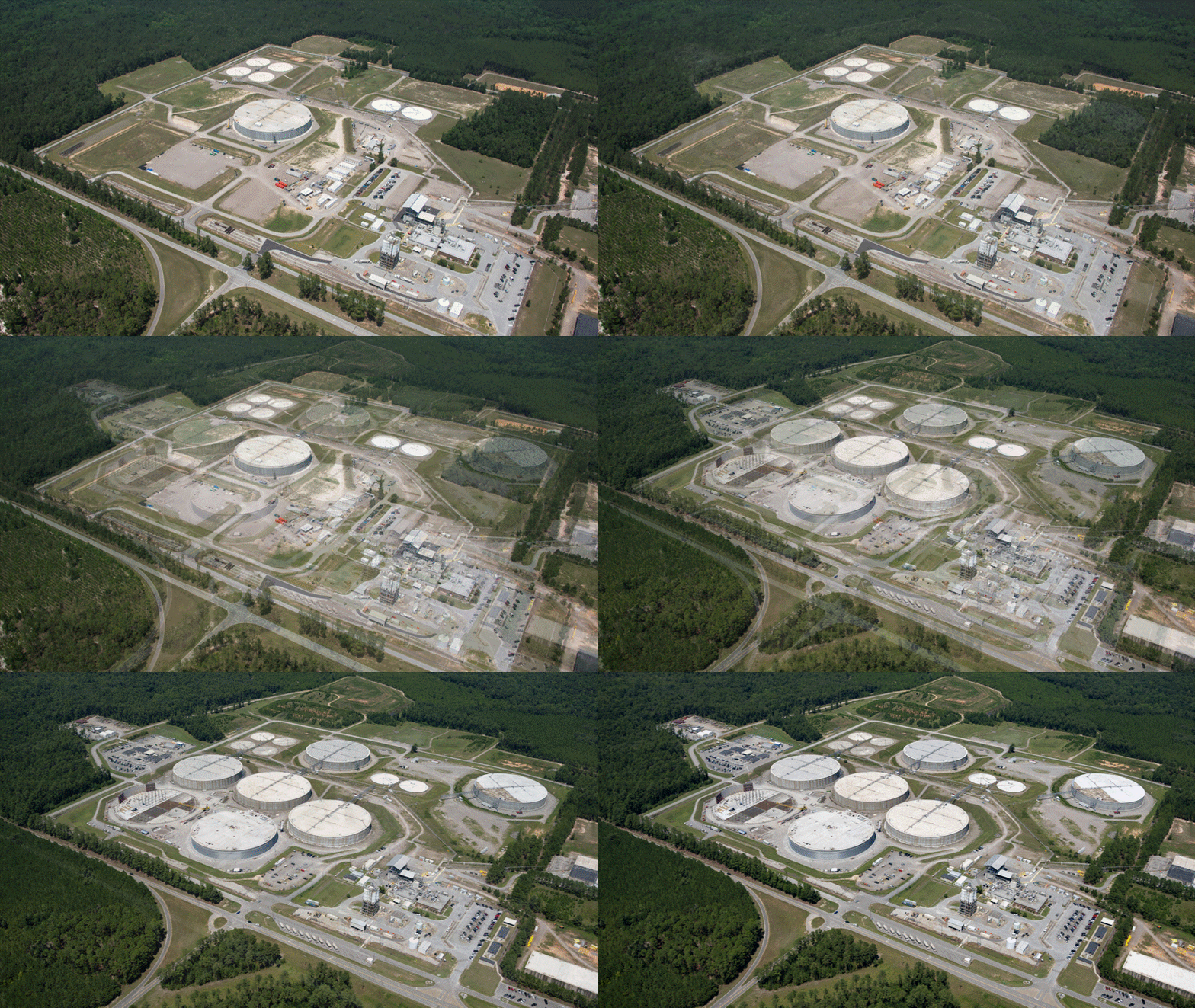
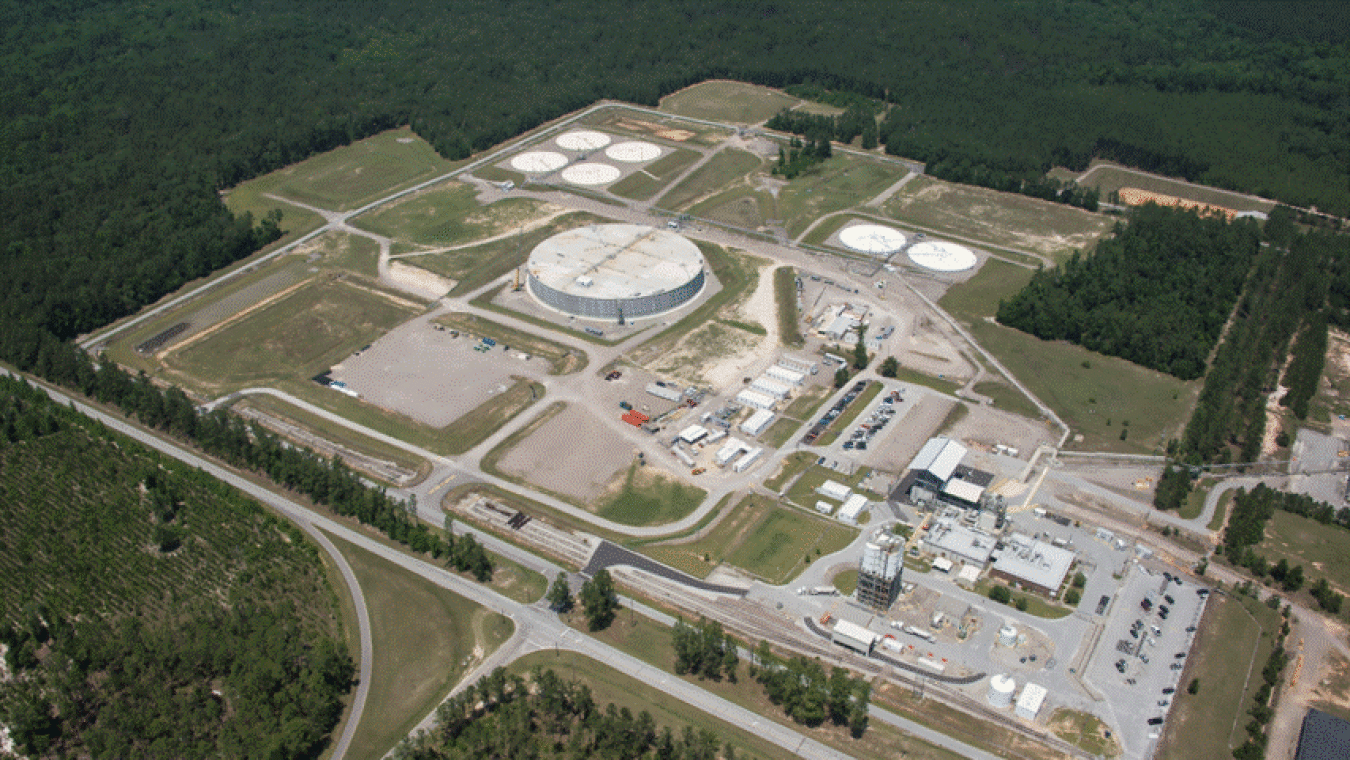
A visual of the change in the saltstone disposal unit landscape at Savannah River Site over the last decade.
The DOE Office of Environmental Management’s liquid waste contractor at SRS, Savannah River Mission Completion (SRMC), manages construction and operation of the SDUs.
In the saltstone process, decontaminated salt solution (DSS) from SWPF is mixed with dry materials at SPF to form grout, which is then pumped to the SDUs. Inside the SDUs, the grout hardens into a stable, solid form that safely contains the remaining low‑activity radionuclides.
The filling of SDU 6 comes on the heels of the first-ever continuous 24-hour processing run at SPF. The facility has typically supported 14-to-18-hour process runs, but with recent facility upgrades and increased DSS from SWPF, 24-hour capacity is now possible. Crews transferred just over 112,000 gallons of DSS to SDU 6 in 24 hours.
SRMC Senior Director and End Stream Delivery Facility Manager Matt McCoy said the SDU program has come a long way since SDU 6 began receiving grout in 2018.
“While we’ve been steadily adding grout to SDU 6 over the years, the landscape around it has continued to change,” McCoy said. “Four more units have been built, with two of them also now receiving grout. And the construction of the final two SDUs needed for the mission is underway now.”
Workers filled SDU 6 under closely controlled operating and safety procedures, including monitoring of grout height and use of engineered ventilation features built into the SDU 6 design. The liquid waste team will continue to monitor the filled unit, including long‑term surveillance aligned with regulatory guidelines.
Thirty-two million gallons of tank waste remains onsite, but during treatment, the waste is diluted and chemically processed, and the resulting DSS is combined with dry materials to form grout, so the total volume of material ultimately placed in SDUs will be significantly larger than the original tank waste volume.
-Contributor: Colleen Hart
To receive the latest news and updates about the Office of Environmental Management, submit your e-mail address.