



On a humid Carolina morning, U.S. Forest Service staff from the Savannah River Site Forest walked the rows of seedling beds at a nursery in nearby Windsor, inspecting the next generation of trees destined to take root across one of the most actively managed forests in the South.
Office of Environmental Management
September 15, 2026 Estimated Read Time min
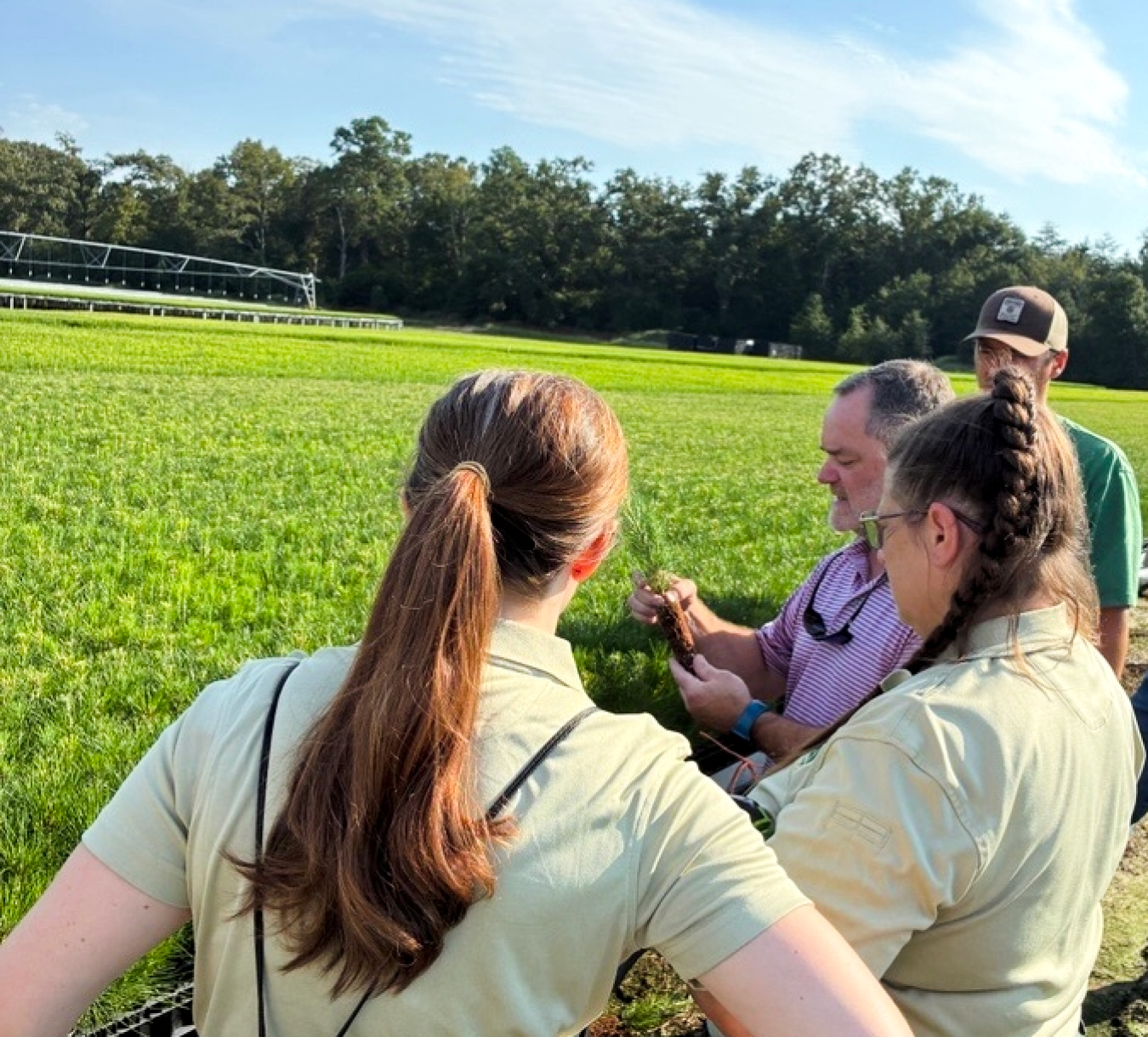
U.S. Forest Service employees from the Savannah River Site inspect loblolly pine seedlings at the PRT Nursery in Windsor, S.C.
NEW ELLENTON, S.C. — On a humid Carolina morning, U.S. Forest Service staff from the Savannah River Site (SRS) Forest walked the rows of seedling beds at a nursery in nearby Windsor, inspecting the next generation of trees destined to take root across one of the most actively managed forests in the South.
For more than 75 years, the 310-square-mile SRS has been a proving ground for large-scale forest restoration. The nursery visit was a chance to see the future, thousands of pine seedlings grown from carefully selected seed sources, including longleaf cones collected on the SRS Forest.
Reforestation is a cornerstone of the Forest Service’s work to restore resilience on a landscape to support wildlife, withstand storms and meet the unique demands of the site’s national security and environmental cleanup missions. Each regeneration harvest kicks off a sequence of treatments: site preparation to knock back competitive hardwoods, prescribed fire to clean up debris and prepare fresh seedbeds, and hand and machine planting to ensure each stand is stocked with the right species at the right density. It’s intensely hands-on work — but it is that hard work that defines long-term stewardship.
The cones collected by staff each fall go to specialized extractories to process seeds and test viability. The seed is then stored and sent to nurseries for sowing each spring, based on future planting needs. Nurseries grow high-quality seedlings that are delivered to the site throughout the planting season. Seedling survival is checked in the first and third years, with foresters hiking plot lines to confirm that the new generation is alive and thriving.
“These seedlings will be ready for delivery later this winter, and we’ll start planting them as soon as soil moisture and temperatures line up,” Forest Silviculturist Eileen Eck said. “We will ensure seedlings are planted properly to avoid transplant shock and maximize their potential for healthy establishment and growth.”
-Contributor: Josef Orosz
To receive the latest news and updates about the Office of Environmental Management, submit your e-mail address.