



Construction is underway on the final Saltstone Disposal Unit, marking a historic milestone in the Savannah River Site radioactive waste-tank cleanup mission.
Office of Environmental Management
September 15, 2026 Estimated Read Time min
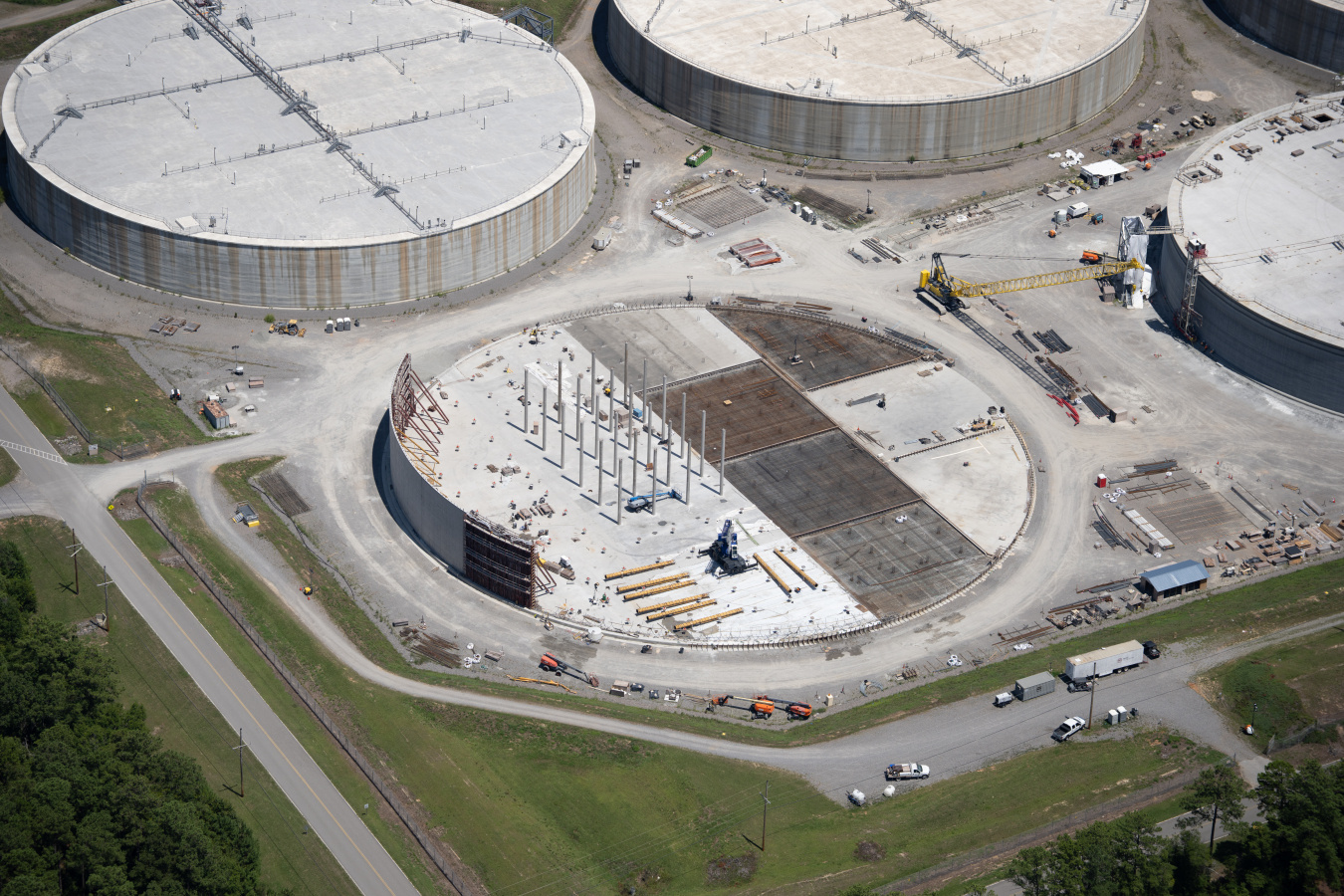
Saltstone Disposal Unit 12, the final mega-unit to be constructed at the Savannah River Site, represents the culmination of a decade-long initiative to support the U.S. Department of Energy’s mission to safely manage and stabilize liquid radioactive waste.
Seven massive disposal units are critical to site’s legacy nuclear waste disposal mission
AIKEN, S.C. — Construction is underway on the final Saltstone Disposal Unit (SDU), marking a historic milestone in the Savannah River Site (SRS) radioactive waste-tank cleanup mission.
The massive aboveground disposal units are integral to the U.S. Department of Energy’s (DOE) Office of Environmental Management (EM) mission to safely dispose of legacy nuclear waste at SRS, according to Chuck Comeau, DOE Savannah River Operations Office federal project director.
“Legacy waste cleanup is a priority for EM, and the SDUs play a key role in the SRS cleanup mission, especially now that the Salt Waste Processing Facility (SWPF) is treating waste at record levels,” Comeau said. “SWPF has greatly accelerated processing the waste, which means the SDUs must be ready to store the final product.”
How SDUs are built at SRS
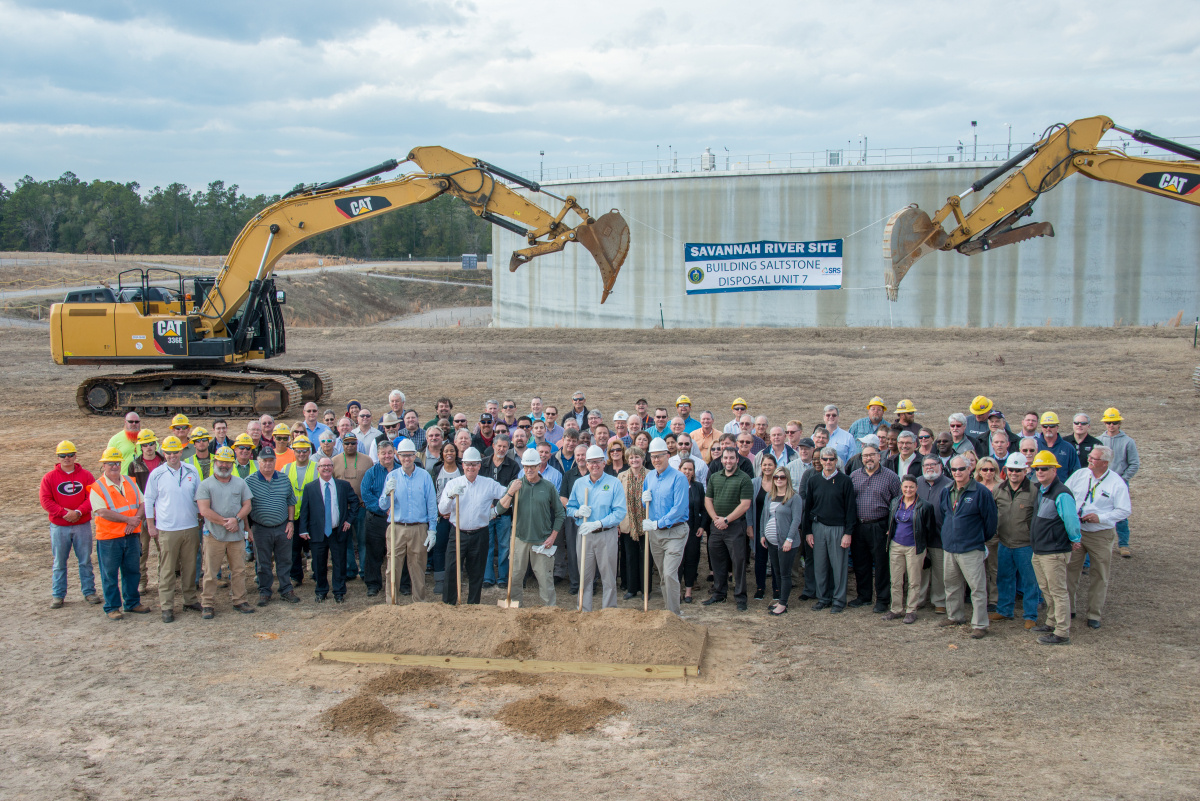
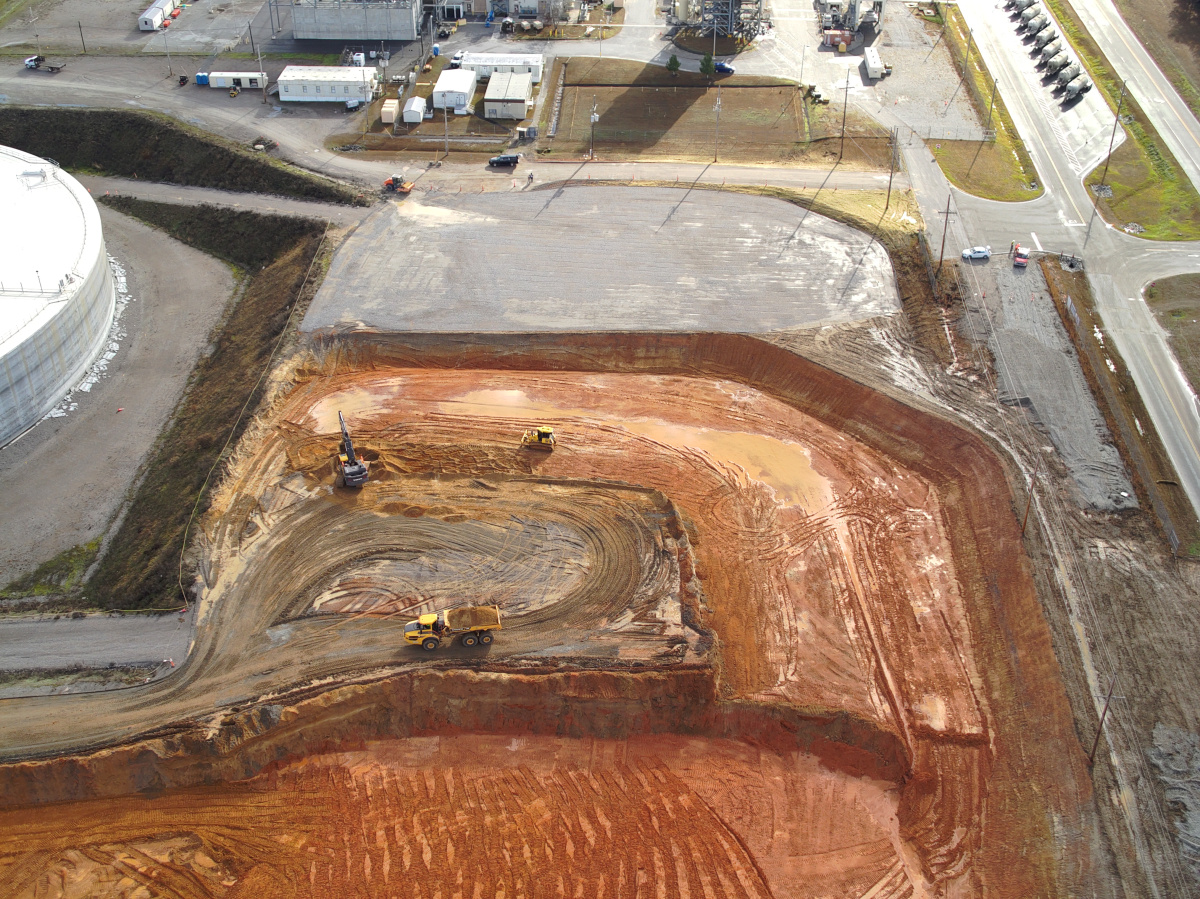
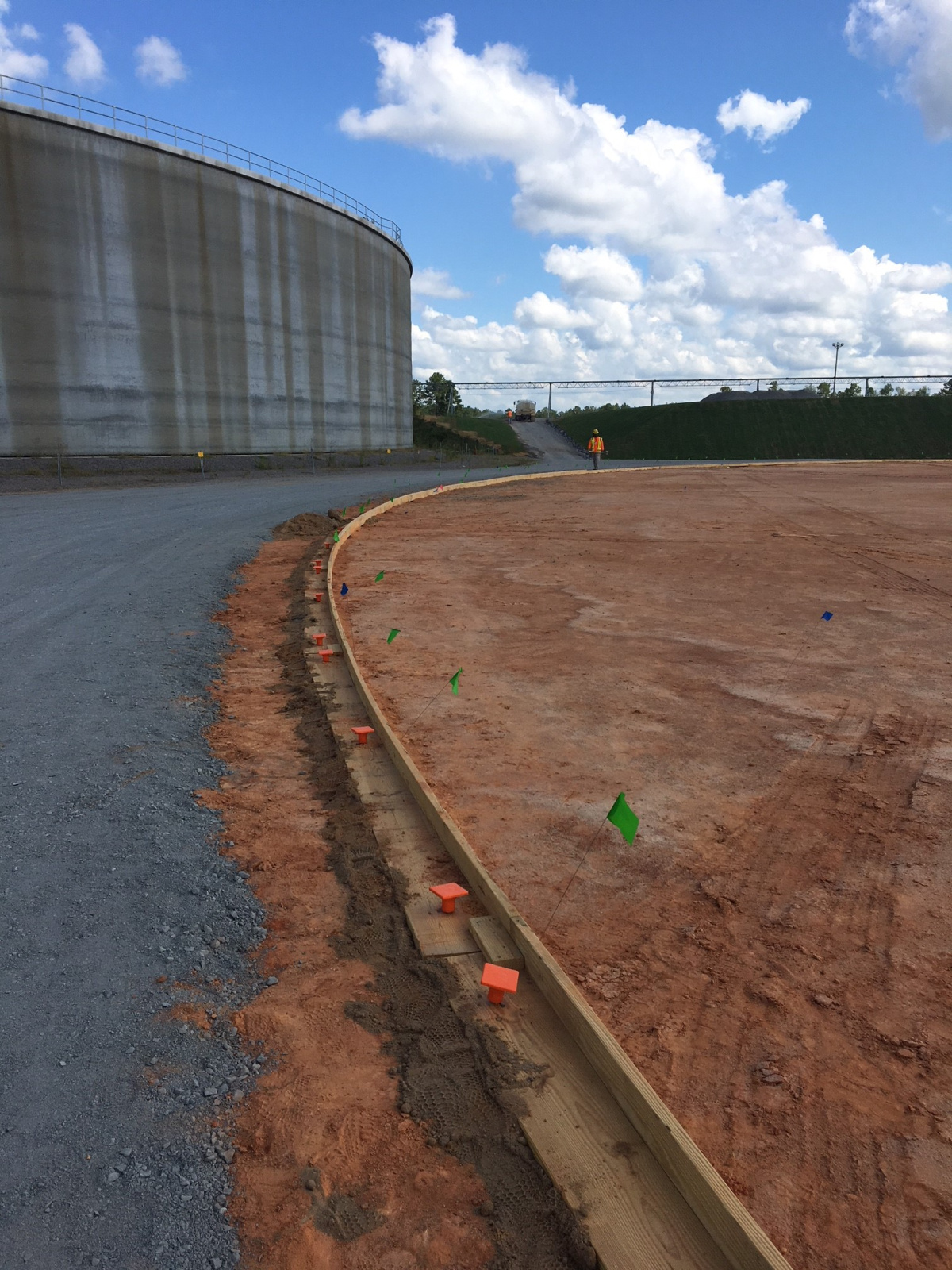
1. Groundbreaking
The SDUs are the end of the salt waste processing path. SWPF decontaminates the salt waste from the site’s underground waste tanks. The high-activity radionuclides are transferred to the Defense Waste Processing Facility for vitrification and the decontaminated salt solution is pumped to the Saltstone Production Facility, where it is mixed with dry materials to make a cement-like grout. The grout is pumped into the SDUs, where it solidifies into a monolithic, nonhazardous form.
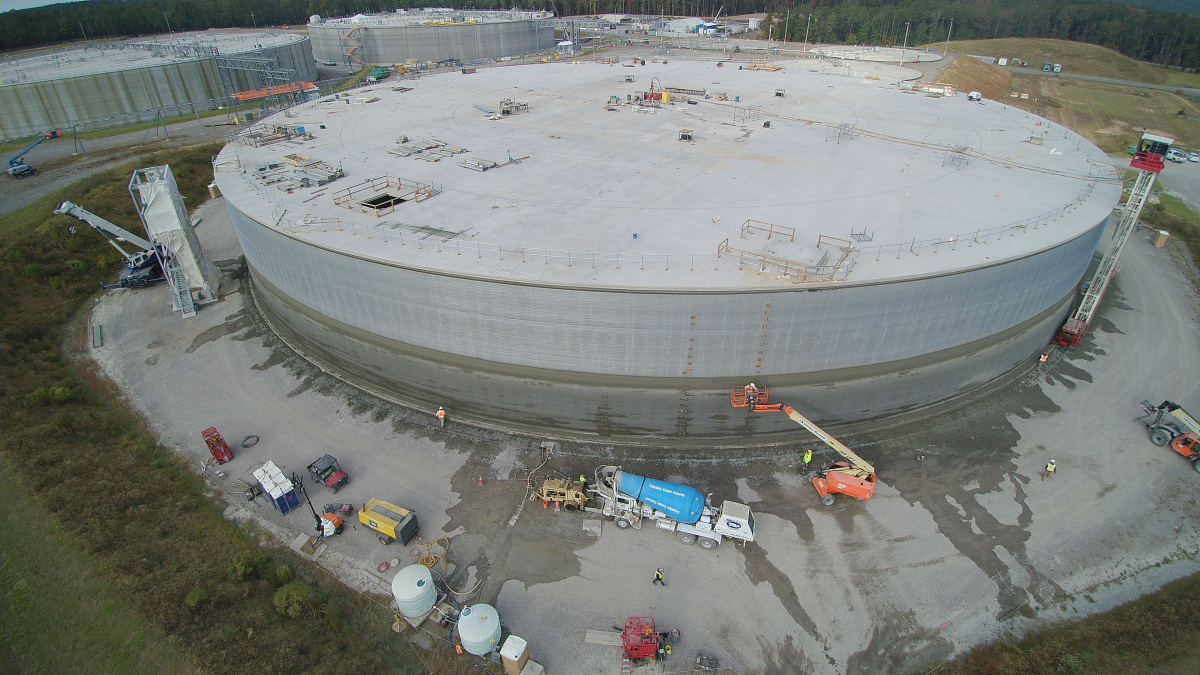
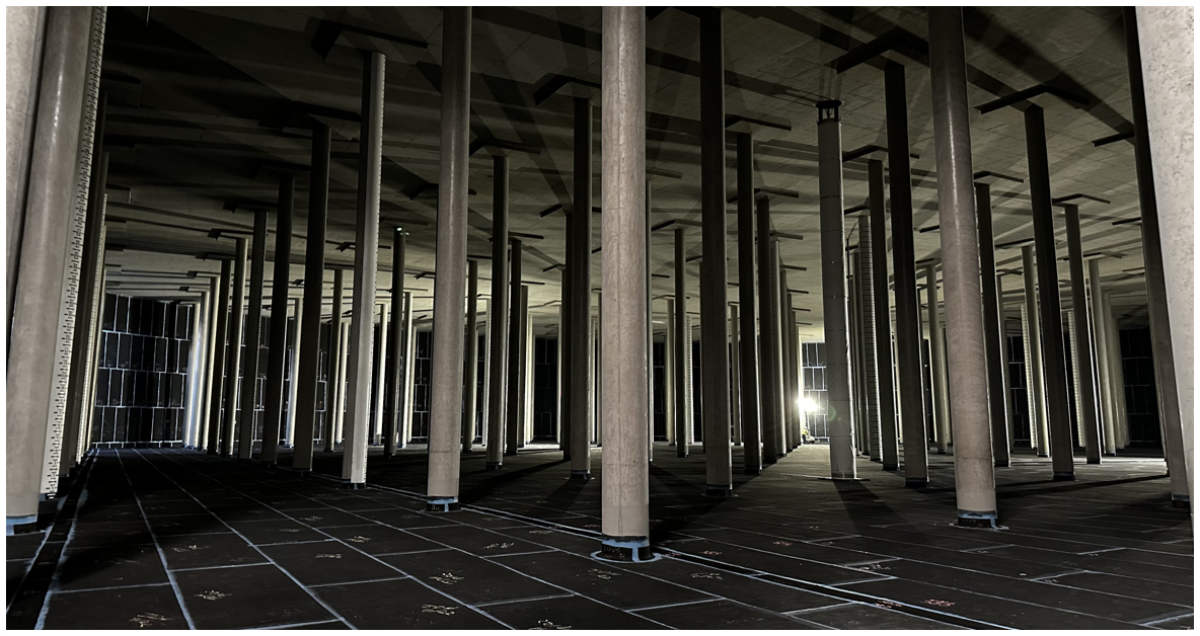
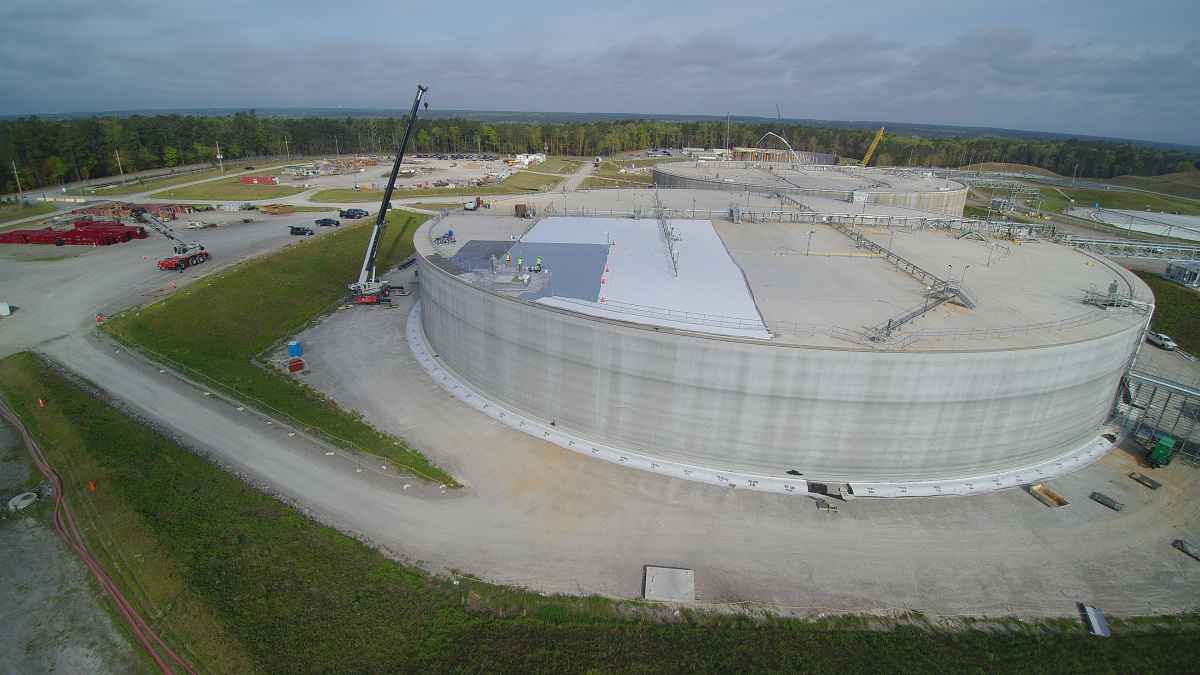
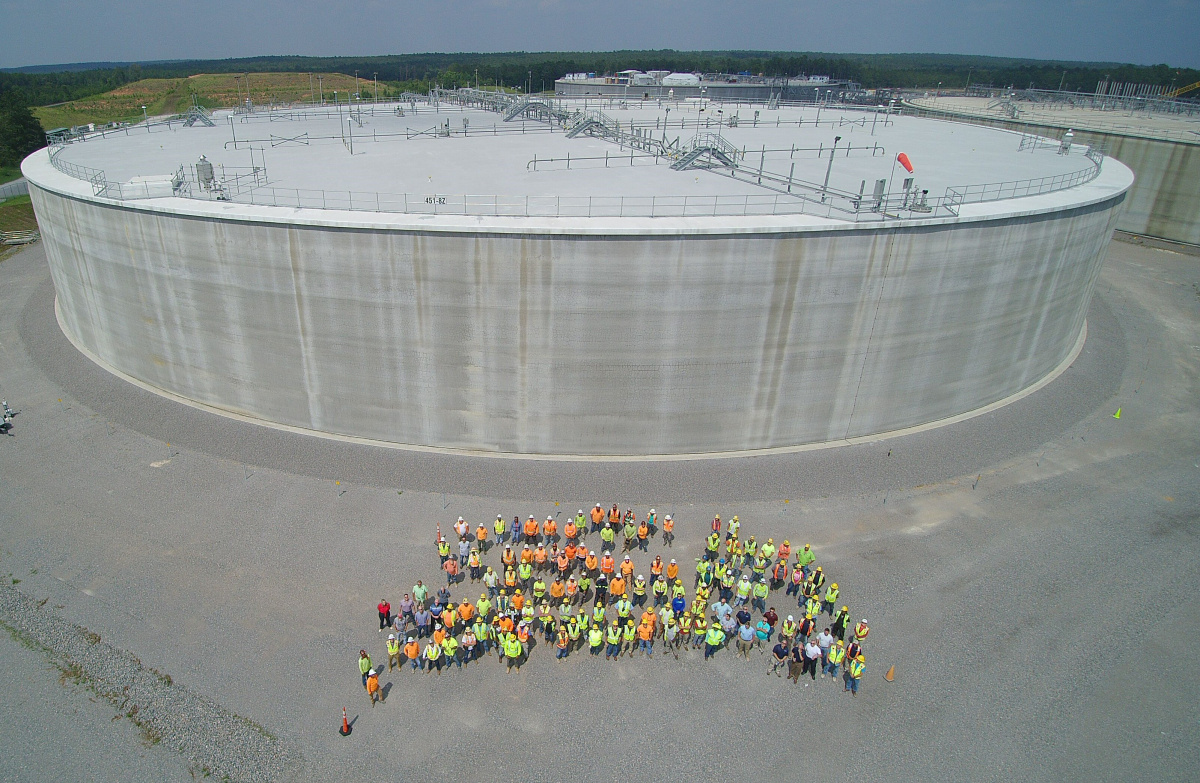
SDU 12 will measure 43 feet in height and 375 feet in diameter, just like its six mega-size predecessors, and has a total capacity of 34.5 million gallons. The liquid waste program team has continuously improved the design of the units throughout the SDU program. Enhancements, such as moving column footers from the base of the column to the top, optimized storage capacity without sacrificing structural durability. There are also six smaller cylindrical SDUs at the site in addition to the mega-size units.
SRS liquid waste contractor Savannah River Mission Completion (SRMC) manages construction and operation of the SDUs.
Thomas Burns Jr., SRMC president and program manager, lauded the collaboration that drives the success of the SDU work over the years.
“The SDU program is a phenomenal construction project, and it requires the teamwork of construction workers, subcontractors, engineers, safety professionals, planners, procurement and more to get the job done,” Burns said. “SDU 12 stands as a testament to the innovative engineering and tenacious teamwork driving the liquid waste mission.”
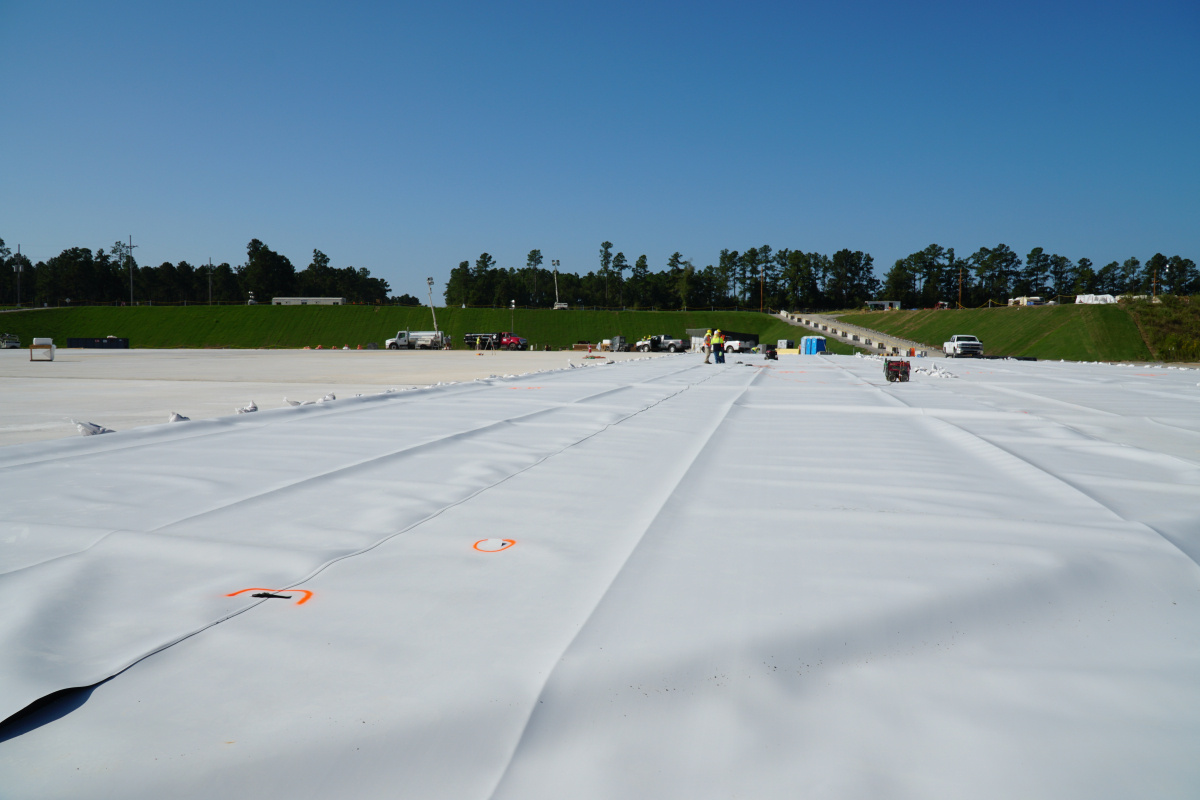
The initial construction phase has been completed. Crews installed a multilayer foundation comprised of a geosynthetic clay liner and high-density plastic liner sandwiched between two concrete layers called mud mats.
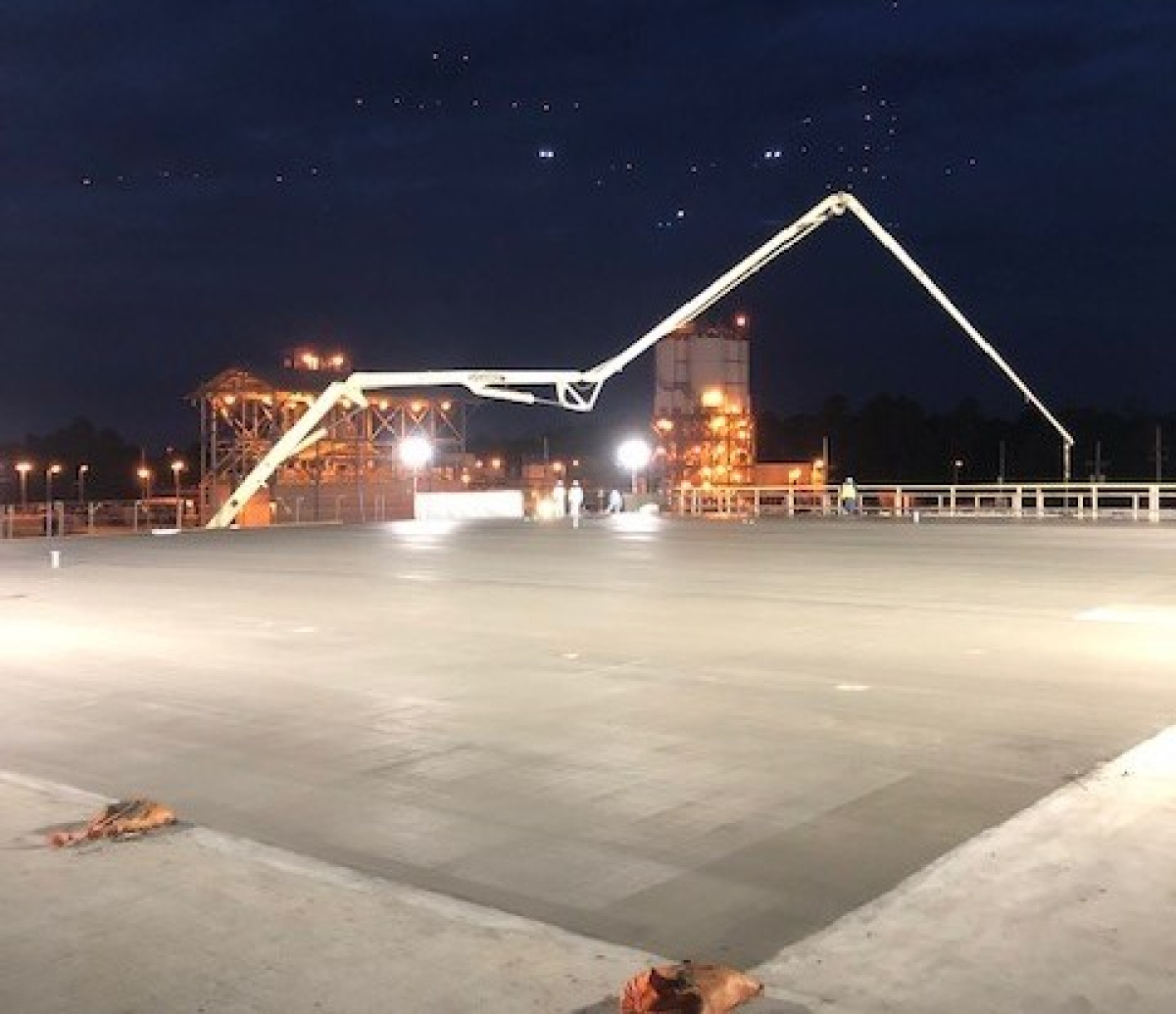
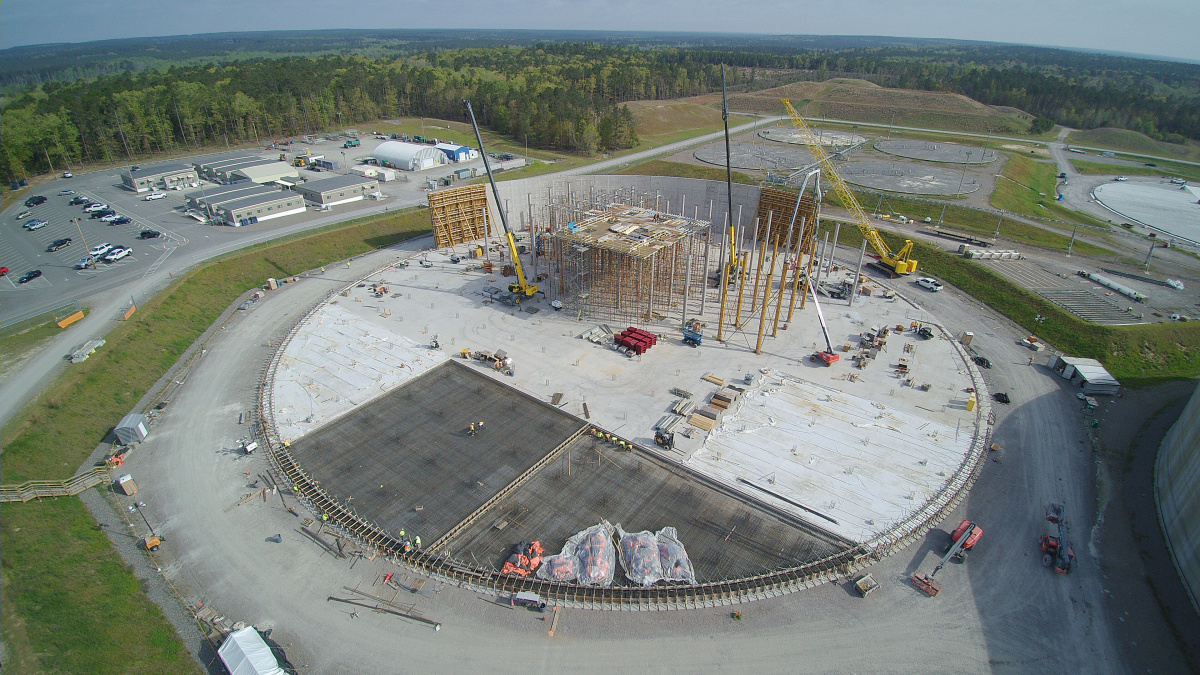
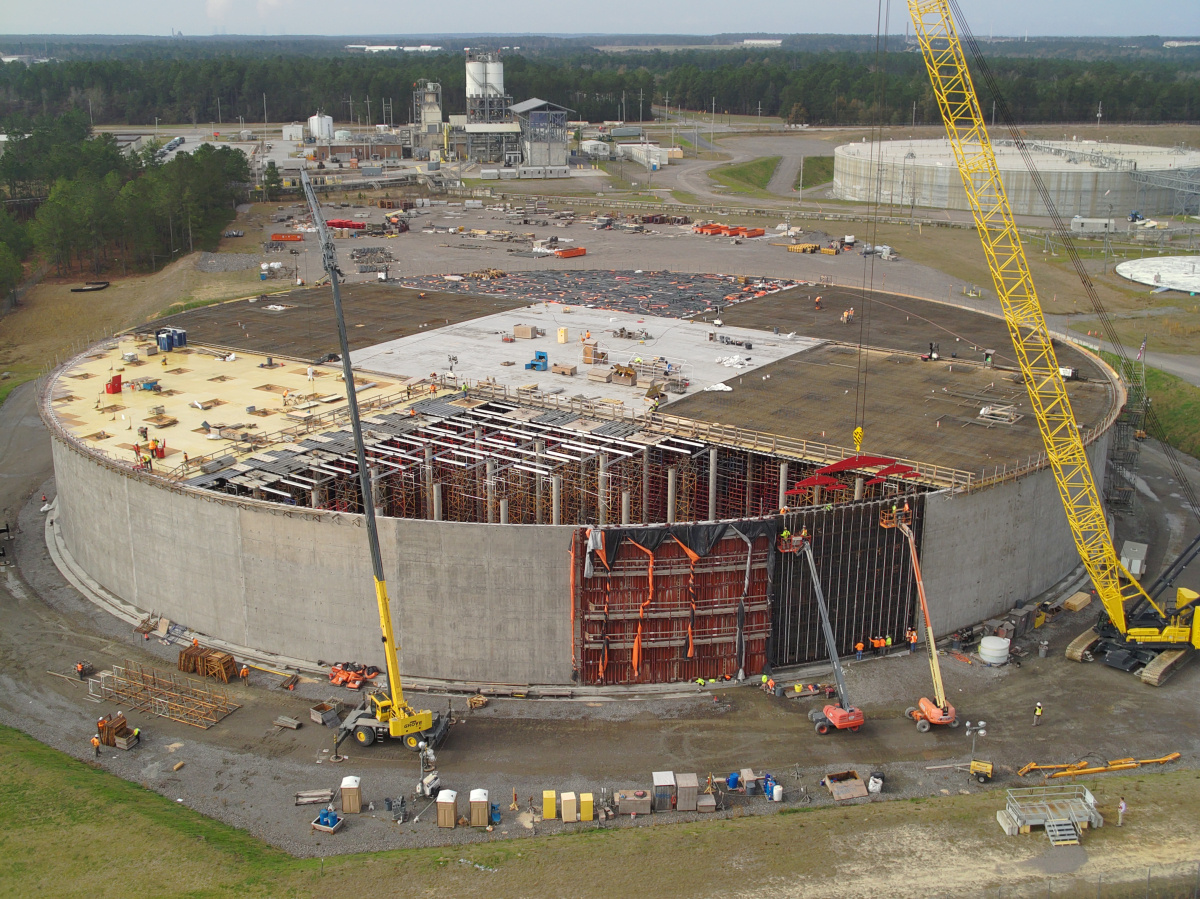
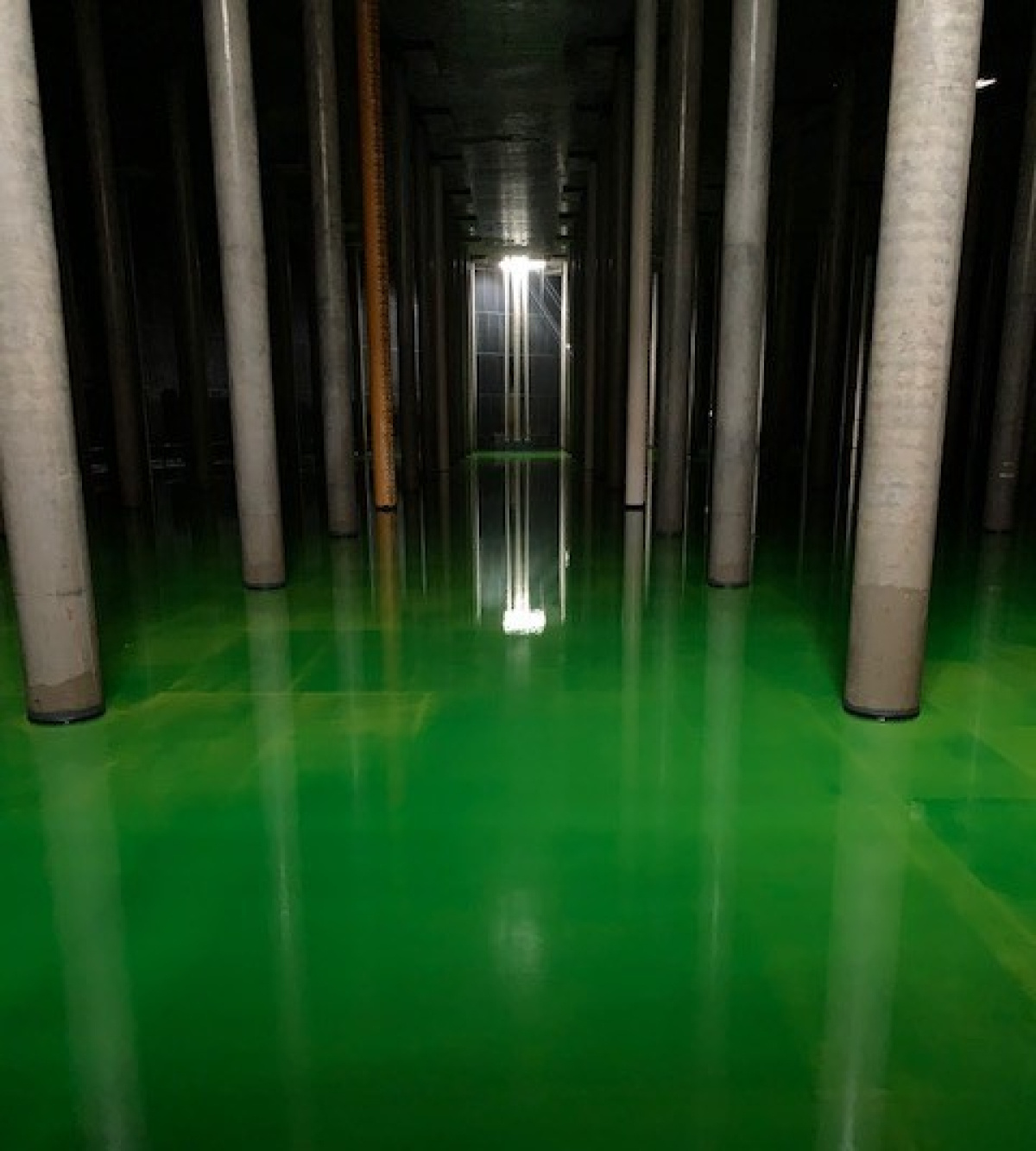
The formwork to prepare for concrete pours and rebar installation is underway for the floor sections. Construction of the walls and columns are also underway. Once the 14 floor sections, 25 walls and 208 columns are complete, construction will progress to the installation of the seven roof sections. The tank’s interior is lined with a chemical-resistant rubber liner to provide secure containment.
-Contributor: Colleen Hart
To receive the latest news and updates about the Office of Environmental Management, submit your e-mail address.