



Pens, paper and clipboards are becoming things of the past at the U.S. Department of Energy’s Paducah Site as employees use barcode scanning technology to swiftly inventory thousands of pieces of equipment in a 2.1-million-square-foot legacy facility being prepared for demolition, leading to more efficient cleanup.
Office of Environmental Management
September 1, 2026 Estimated Read Time min
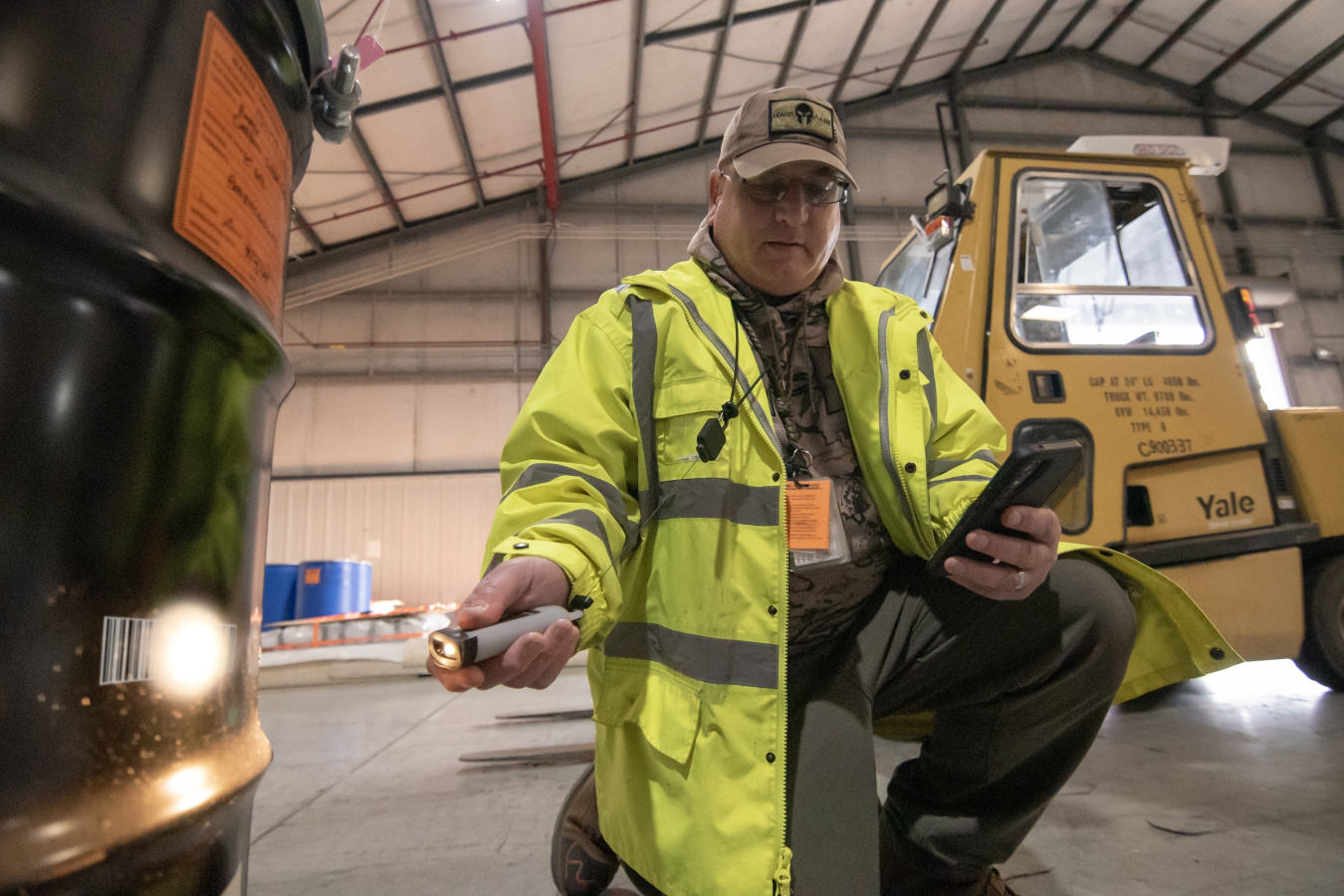
Container Management Supervisor Jonathan Tucker scans a waste container for tracking, demonstrating one of the many uses of the Paducah Site’s barcode tracking system.
PADUCAH, Ky. — Pens, paper and clipboards are becoming things of the past at the U.S. Department of Energy’s (DOE) Paducah Site as employees use barcode scanning technology to swiftly inventory thousands of pieces of equipment in a 2.1-million-square-foot legacy facility being prepared for demolition, leading to more efficient cleanup.
DOE Office of Environmental Management (EM) deactivation and remediation contractor Four Rivers Nuclear Partnership (FRNP) originally employed the barcode scanning system to collect necessary information to track the inventory of waste containers, speeding up the process by eliminating manual paper input. Now, employees rely on the system to track components during deactivation of the C-337 Process Building.
"The expanded use of barcode technology is a significant step forward for inventory and data management at the site," Federal Project Director William Wessel said. "Using this technology to quickly and accurately capture information digitally, we not only reduce the potential for human error but also simplify our ability to manage and retrieve data in real time across various organizations at the site."
Going paperless with barcode scanning comes after the Paducah Site embraced a new technology at C-337 that enables workers to efficiently scan equipment for uranium deposits as they deactivate the former uranium enrichment process building. Both initiatives demonstrate how EM incorporates innovation and efficiency into cleanup, focusing on priorities and reining in costs without sacrificing safety or effectiveness.
The barcode scanning technology improves accuracy and streamlines processes by eliminating the transfer of data from paper to digital input. Data is collected in the field in real time, then uploaded into a database. Workers can easily gather information via digital applications or hand-held scanners.
Through an initiative in which contractors collaborate on lessons learned and best practices, FRNP shared the barcode scanning technology with operations and site mission support contractor Mission Conversion Services Alliance (MSCA) as a cost-savings tool. MSCA is evaluating its potential use in tracking the 43,000 remaining depleted uranium hexafluoride cylinders stored at the site, key to DOE’s work to transform liabilities into assets for the nuclear renaissance and future reindustrialization.
"Investing in technologies, collaborative knowledge and resource sharing is crucial for advancing the mission at the Paducah Site," Portsmouth Paducah Project Office Acting Deputy Manager April Ladd said. "It's about empowering the workforce to use new technology in the field to enhance efficiency, ensure accuracy and maintain the highest standards of safety and compliance across our operations."
-Contributor: Dylan Nichols
To receive the latest news and updates about the Office of Environmental Management, submit your e-mail address.