



An Oak Ridge Office of Environmental Management team has begun demolishing a tight cluster of highly contaminated buildings on one of the most challenging footprints at Oak Ridge National Laboratory.
Office of Environmental Management
September 1, 2026 Estimated Read Time min
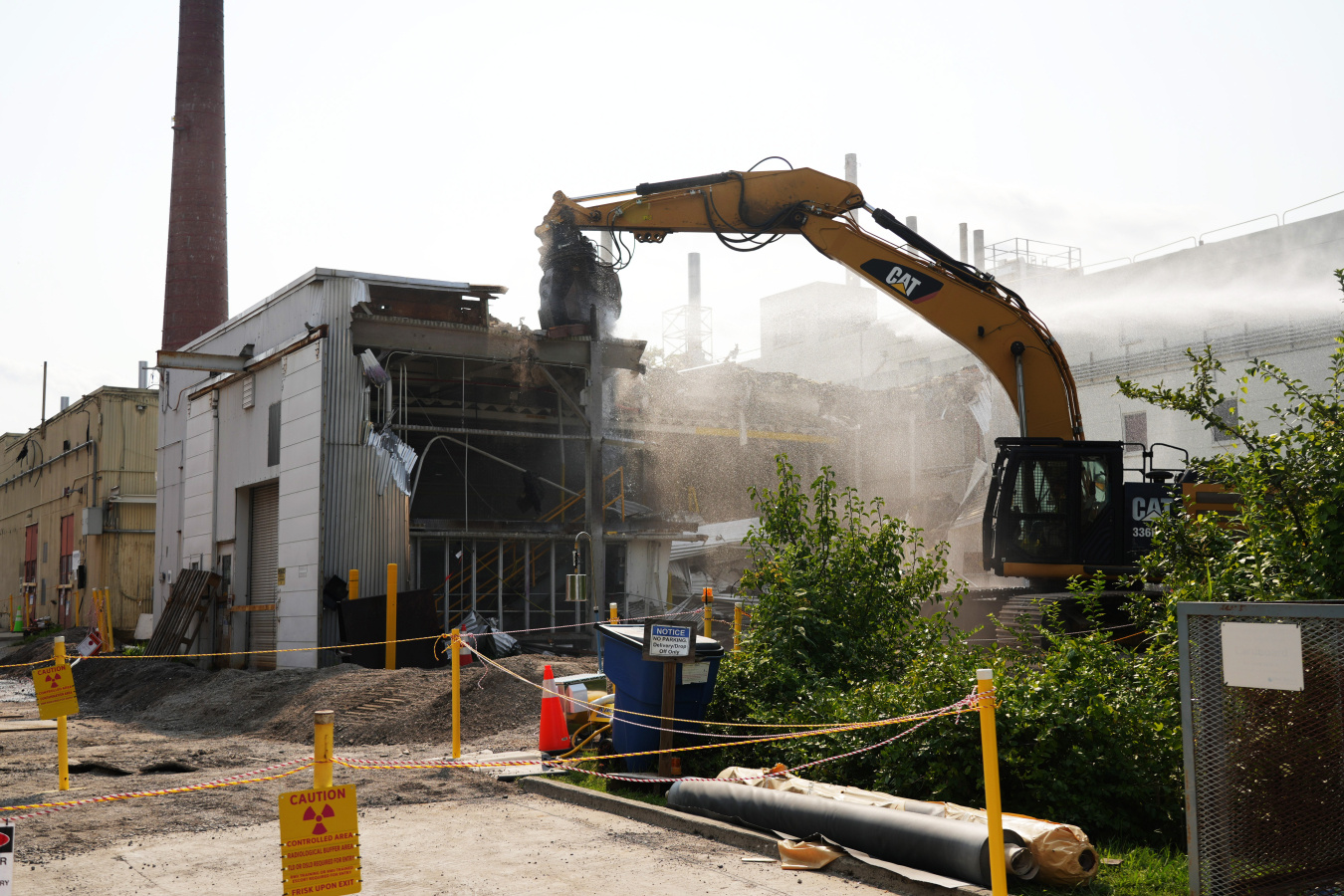
The first building in Isotope Row to come down was the Isotope Area Storage and Service Building, also known as Building 3036.
New chapter awaits for valuable land in heart of lab’s central campus
OAK RIDGE, Tenn. — An Oak Ridge Office of Environmental Management (OREM) team has begun demolishing a tight cluster of highly contaminated buildings on one of the most challenging footprints at Oak Ridge National Laboratory (ORNL).
The aging, contaminated infrastructure presents risks within its tight quarters in the heart of the laboratory’s central campus. With each teardown OREM eliminates hazards, enables modernization and provides land for new facilities to advance research and innovation.
Located in ORNL’s central campus, Isotope Row consists of 10 facilities constructed from the late 1940s to early 1960s to support the laboratory’s isotopes program. For decades, employees at the facilities produced, processed and researched chemical elements used in medical, industrial, scientific and national defense applications.
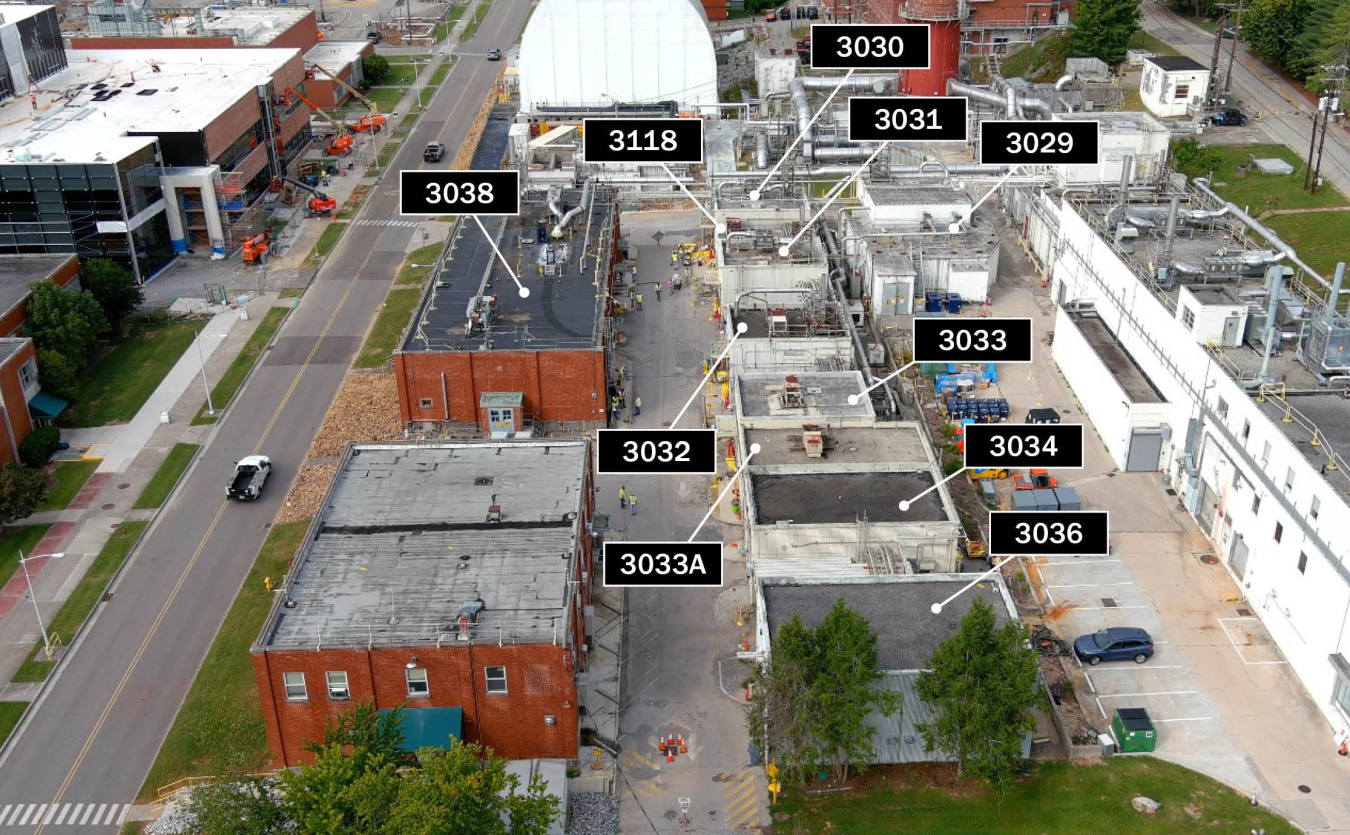
Located in Oak Ridge National Laboratory’s central campus, Isotope Row consists of 10 facilities constructed between the late 1940s and early 1960s to support the laboratory’s isotopes program. Cleanup crews are set to demolish all the facilities by the end of the year.
As the U.S. Department of Energy’s largest multiprogram national lab expanded over the decades, the aging isotope facilities remained in place following the discontinuation of their operations in the early 1990s.
What was left behind were contaminated ventilation systems, hot cells, process equipment and legacy radioactive materials requiring specialized cleanup approaches. Addressing those complex tasks and deactivating the facilities was a six-year effort.
“Beginning demolition on Isotope Row is a significant milestone that reflects years of careful planning, technical expertise and disciplined execution by our workforce,” said Jim Blankenhorn, president and program manager for OREM cleanup contractor United Cleanup Oak Ridge. “Our crews systematically reduced radiological and industrial hazards to safely reach this point, and now we’re taking the next step in transforming ORNL’s central campus.”
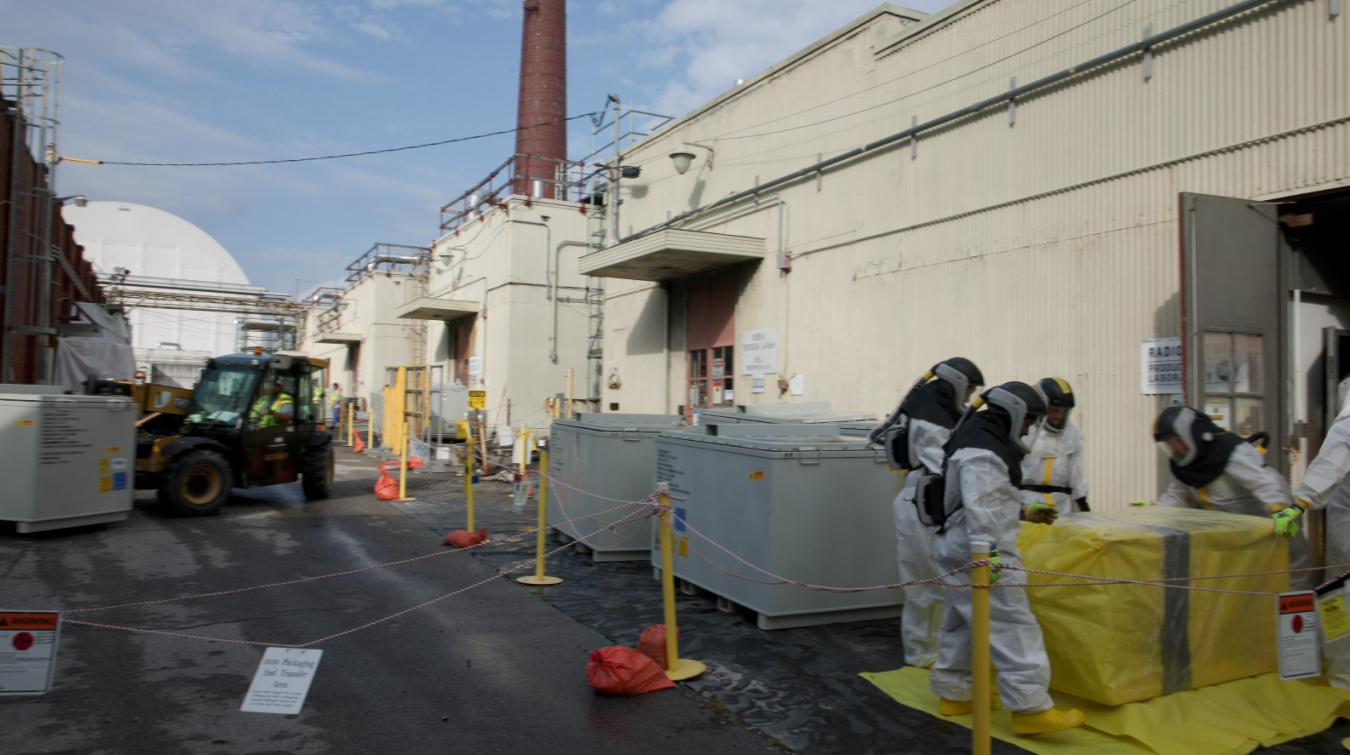
Removing contaminated ventilation systems, hot cells, process equipment and legacy radioactive materials from Isotope Row posed a complex task requiring six years of work by deactivation crews.
The first of the 10 buildings to come down was the Isotope Area Storage and Service Building, also known as Building 3036.
During demolition, workers are taking added steps to ensure smooth progress. Teams are conducting the teardowns in the late afternoon — outside normal operating hours — to avoid impacting ongoing missions near the footprint.
Crews expect to complete demolition on all 10 Isotope Row buildings by the end of the year.
-Contributor: Ryan Getsi
To receive the latest news and updates about the Office of Environmental Management, submit your e-mail address.