



The U.S. Department of Energy Environmental Management Los Alamos Field Office continues work to further characterization and inform decision-making for remediating a hexavalent chromium plume at Los Alamos National Laboratory.
Office of Environmental Management
September 1, 2026 Estimated Read Time min
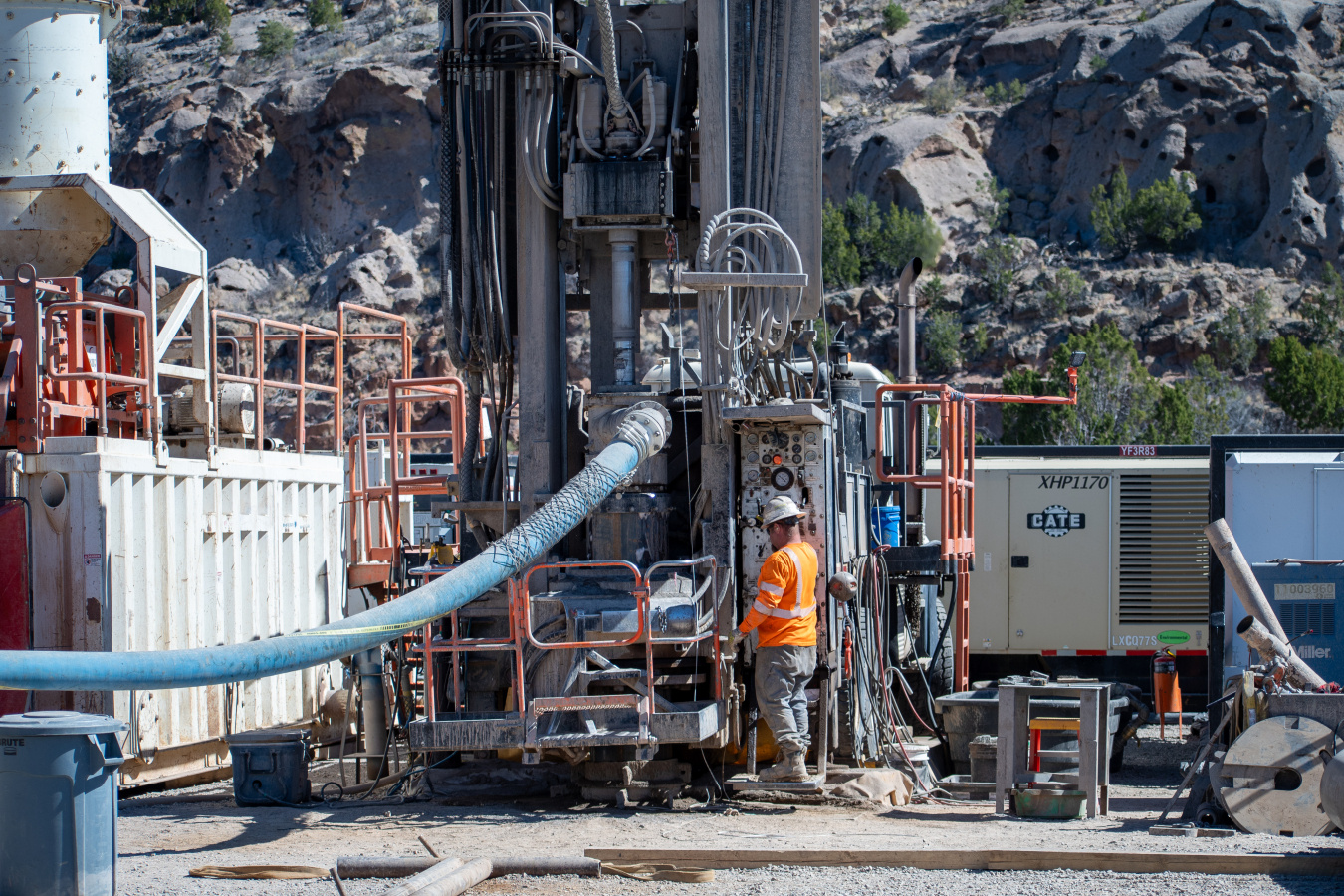
Crews adjust equipment during drilling for a new groundwater monitoring well, which will further characterization efforts in the northeast portion of the hexavalent chromium plume at Los Alamos National Laboratory.
LOS ALAMOS, N.M. — The U.S. Department of Energy (DOE) Environmental Management Los Alamos Field Office (EM-LA) continues work to further characterization and inform decision-making for remediating a hexavalent chromium plume at Los Alamos National Laboratory (LANL).
EM-LA legacy cleanup contractor Newport News Nuclear BWXT-Los Alamos LLC (N3B) has completed drilling a borehole — about 1,030 feet below land surface — for a new groundwater monitoring well. Drilling the Regional Aquifer Monitoring Well R-80 completes a fiscal year 2026 Consent Order milestone for the Hexavalent Chromium Campaign. The well will support additional characterization in the northeast portion of the hexavalent chromium plume and evaluation of alternatives for remediation.
“Protecting human health and the environment is our top priority,” said Vince Rodriguez, N3B program manager for Environmental Remediation. “R-80 is central to our overall strategy for monitoring, treating and containing the plume.”
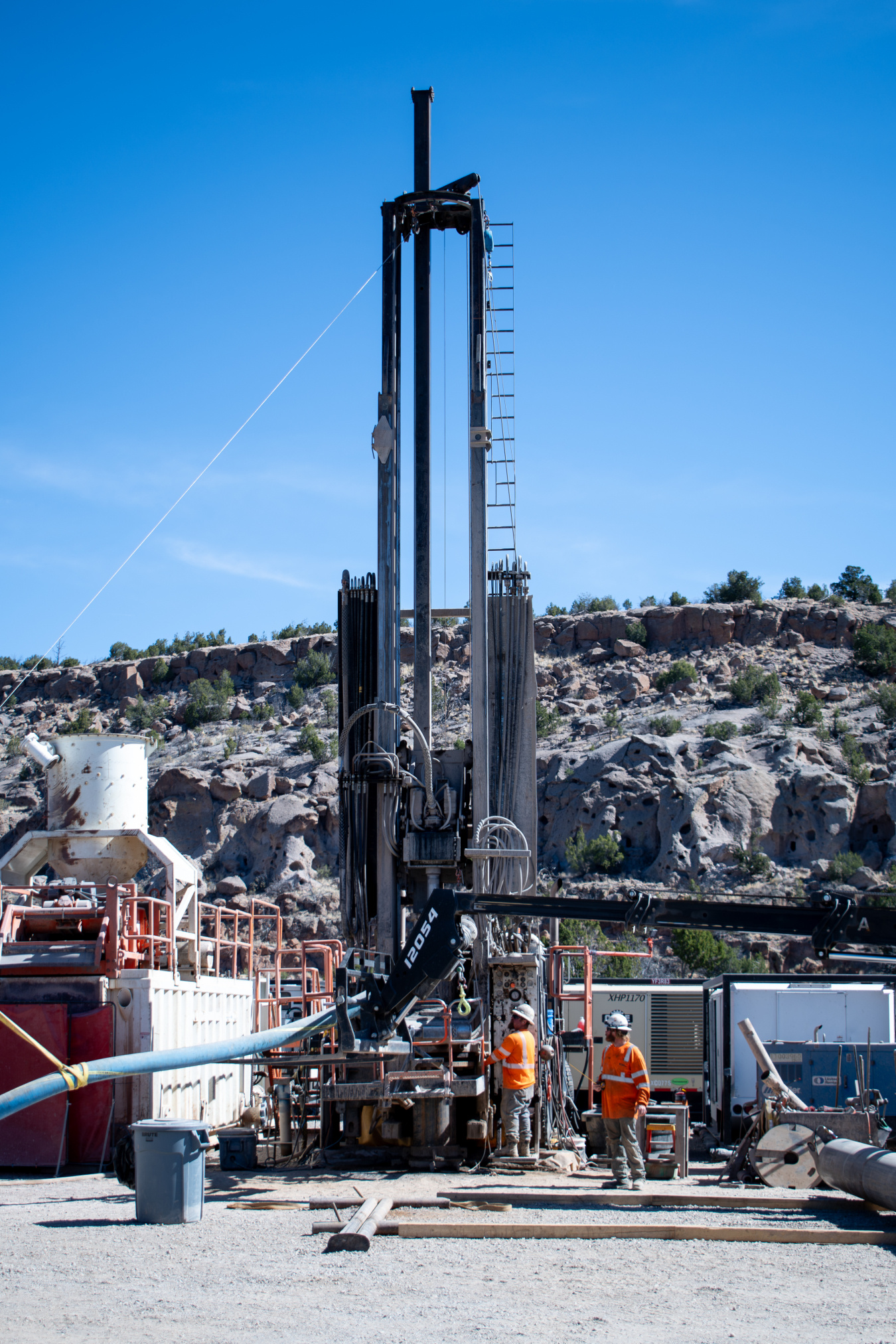
The U.S. Department of Energy Environmental Management Los Alamos Field Office and legacy cleanup contractor Newport News Nuclear BWXT-Los Alamos LLC completed drilling the borehole for a new groundwater monitoring well. It was drilled to a depth of approximately 1,030 feet below land surface — about the distance from the main observation deck of the Empire State Building to street level.
The primary goal of the Hexavalent Chromium Campaign is to monitor the hexavalent chromium plume and minimize and reduce risk to human health and the environment. The plume is currently estimated to be approximately 1 mile long by 0.5 mile wide, 1,000 feet beneath Mortandad and Sandia canyons at LANL.
Rodriguez noted that since 2018, N3B has used pump-and-treat technology to help mitigate and contain the hexavalent chromium plume until a remedy is selected and implemented. The pump-and-treat process pumps contaminated groundwater from four extraction wells to a facility in Mortandad Canyon, where it is treated to remove chromium using ion-exchange technology.
In November 2025, the New Mexico Environment Department (NMED) directed EM-LA and N3B to cease all injection for the hexavalent chromium plume pump-and-treat operations, also referred to as interim measures (IM). Given the design of the IM and limited alternative water discharge options, ceasing injection under the IM necessarily drives cessation of all IM operations.
Operating the IM in a partial configuration supports the purpose of the IM and enables adaptation based on new data. This is consistent with the Chromium Expert Technical Review team’s conclusion in its December 2024 final report: “The single most important recommendation … is to restart the IM — using a portion of the original system — while other studies and field investigations move forward.” EM-LA and NMED convened the review team.
Groundwater well sampling data shows that the IM have a positive effect: injection establishes a hydraulic barrier in the area of injection, which helps to control and reduce the plume, while also preserving aquifer water, a precious natural resource. Increases in hexavalent chromium concentration were observed in most monitoring wells within the first few months of the IM shutdown. EM-LA and NMED agree there is no immediate threat to public or private drinking water wells.
EM-LA and N3B continue to work collaboratively with NMED, the State Engineer’s Office, Los Alamos County and Pueblo de San Ildefonso to determine a path forward.
From 1956 to 1972, workers at a non-nuclear power plant at LANL periodically flushed chromium-contaminated water from the plant’s cooling towers into Sandia Canyon. At the time, potassium dichromate, with active ingredient hexavalent chromium, was commonly used as a corrosion inhibitor. The water flowed down Sandia Canyon as surface water penetrated the underlying rock layers, and in time seeped into the regional aquifer beneath Sandia and Mortandad canyons. Potassium dichromate has not been used at LANL since the 1970s.
-Contributors: Stephanie Gallagher, Donavan Mager
To receive the latest news and updates about the Office of Environmental Management, submit your e-mail address.