The Department of Energy’s Office of Electricity (OE) leads efforts to catalyze onshore production and availability of critical grid components to reduce reliance on foreign suppliers as outlined in OE’s Strategic Plan.
August 10, 2026 Estimated Read Time min
Catherine Jereza

The Honorable Catherine (Katie) Jereza was sworn in as Assistant Secretary for the U.S. Department of Energy's Office of Electricity (OE) on October 14, 2025. She leads the Department's research, development and demonstration programs to strengthen and modernize our nation’s power grid.
Assistant Secretary Jereza returned to OE in 2025 after serving as OE’s Deputy Assistant Secretary for Transmission Permitting and Technical Assistance from 2017-2019. During that time, she led Department efforts to promote the reliability, security and affordability of electricity infrastructure. In between her positions at OE, she served as a Corporate Vice President for the Electric Power Research Institute (EPRI), providing strategic leadership for government and external engagement.
Assistant Secretary Jereza has more than 30 years of experience in the energy, water, and manufacturing industries, where she led multiple startups, turnaround and major problem-solving initiatives. Specifically, she was the Director for Infrastructure Resilience at the Edison Electric Institute (EEI), Program Director at Energetics Incorporated, and Environmental Specialist at the Maryland Department of the Environment’s Water Supply Program. She also worked as a sales engineer for GE Water and Process Technologies and the Lincoln Electric Company.
Assistant Secretary Jereza grew up in West Virginia and currently lives in Maryland with her husband. She holds an MBA from the Loyola University Maryland and a Bachelor of Science degree in chemical engineering from the Virginia Polytechnic Institute and State University.
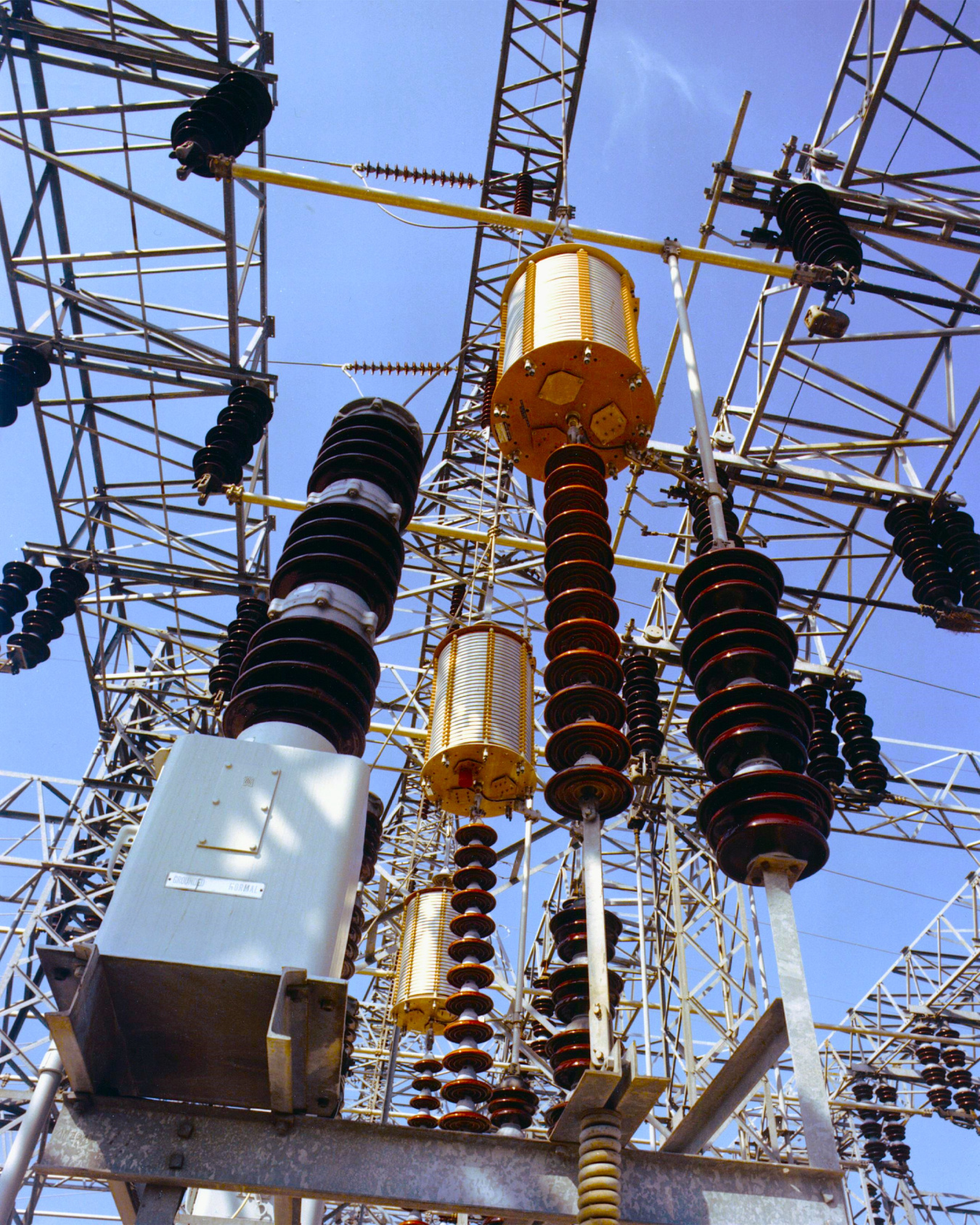
After almost 20 years of flat electricity demand, America’s grid is being challenged to meet rapid load growth, which has increased at close to 3% annually since 2023. From connecting new data centers that will help the U.S. dominate in artificial intelligence (AI) technologies to reshoring manufacturing and powering our businesses and homes, the affordability and reliability of electricity is vital to our economic and national security.
Yet much of the grid equipment that underpins this system—including transformers, circuit breakers, substations components, and power electronics—faces significant supply chain challenges that slow our ability to expand the grid to meet growing demand. These challenges include dependence on imported components and materials, limited domestic production capacity, and excessive customization—factors which have resulted in lead times of two or more years for critical equipment. Furthermore, these supply chain issues drive up electricity prices for American homes and businesses. Some transformers have seen 4-9 times price increases in the last five years, resulting in costs that are passed on to customers.
The Department of Energy’s Office of Electricity (OE) leads efforts to catalyze onshore production and availability of critical grid components to reduce reliance on foreign suppliers as outlined in OE’s Strategic Plan. This goal builds on progress made through OE’s research and development programs to maximize the life of existing grid components and create the next generation of grid hardware and materials that are more adaptive, flexible, reliable, and cost-effective. Furthermore, OE has been convening industry stakeholders to identify opportunities to reduce distribution transformer production times.
Looking ahead, OE plans to implement a program worth up to $375 million to enhance the domestic supply chain for manufacturing distribution and power transformers, components, materials, and other electric grid components. Consistent with OE’s strategic focus on stabilizing, optimizing, and growing the grid, this Supply Chain Program will:
- Strengthen U.S. readiness for supply chain disruptions by promoting greater refurbishment and reuse of existing grid equipment and materials and increasing the use of alternative materials and subcomponents sourced from the U.S. to reduce the need for imports, stabilizing supply-demand mismatches.
- Maximize the impact of investments in domestic manufacturing capacity by promoting greater standardization of grid equipment through common configurations that can streamline production, reduce lead times, and lower costs through economies of scale, optimizing resources.
- Position the U.S. to lead in next-generation grid power electronics, such as solid-state transformers, which can reduce the need for conventional equipment and materials, increase grid capacity, and ease large load integration by strengthening the domestic supplier ecosystem, growing the jobs and grid of tomorrow.
Collectively, this program will strengthen America’s ability to meet Administration and Secretarial priorities by accelerating speed to power, maintaining affordability, and positioning the U.S. industry for energy dominance. Anticipated outcomes include reducing imports and lead times of critical grid components by up to 10% and lowering utility spending on essential equipment by as much as 25%, enhancing energy affordability while advancing the United States’ long-term energy security.