



The U.S. Department of Energy Office of Environmental Management will resume shipping remote-handled transuranic waste drums from the Savannah River Site to the Waste Isolation Pilot Plant in New Mexico for permanent disposal. July 28, 2026
Office of Environmental Management
July 28, 2026 Estimated Read Time min
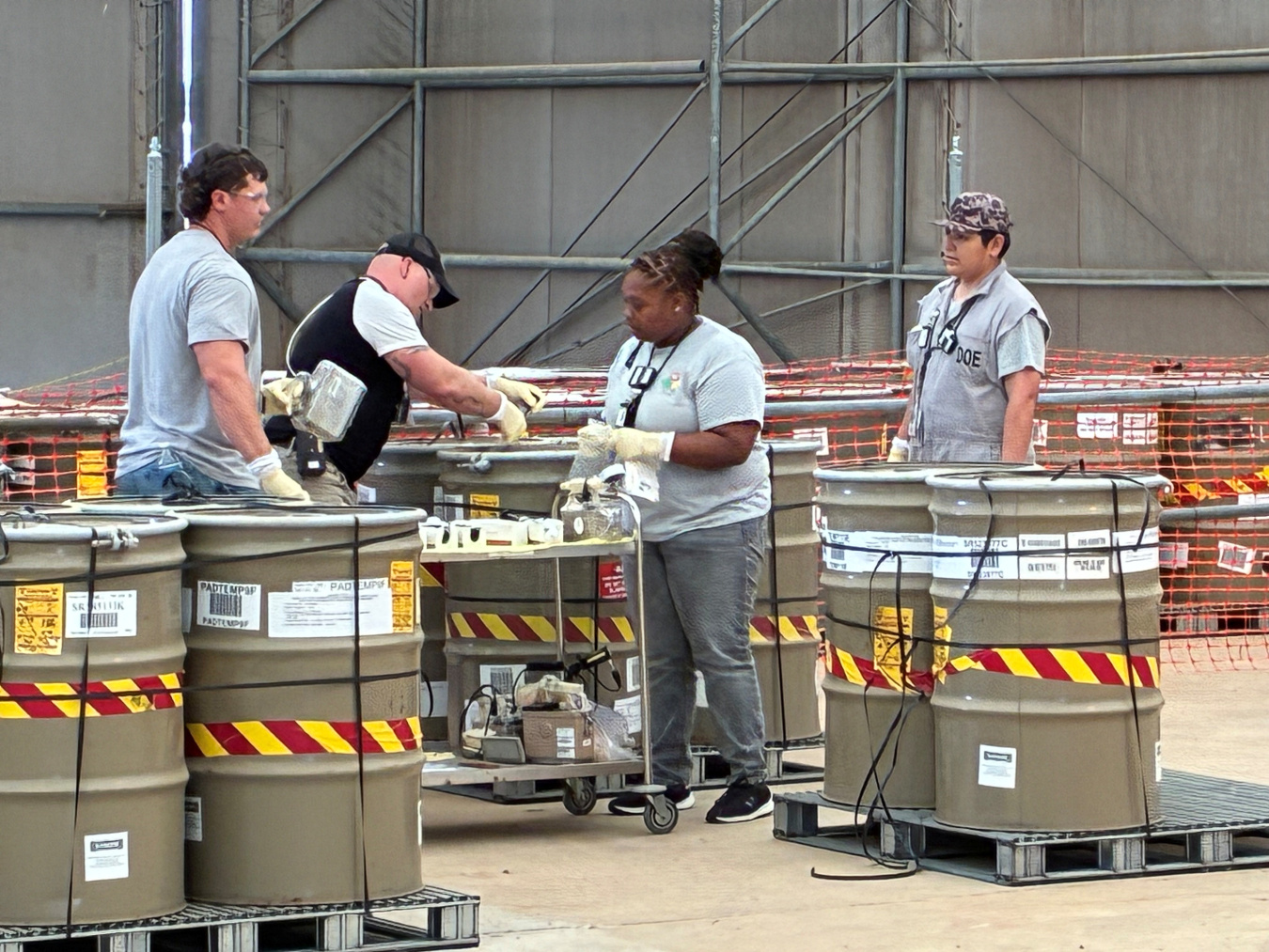
Team members conduct flammable gas sampling on high-activity waste containers at the Savannah River Site in South Carolina, supporting the safe and compliant shipment of remote-handled transuranic waste to the Waste Isolation Pilot Plant in New Mexico.
AIKEN, S.C. — The U.S. Department of Energy Office of Environmental Management (EM) will resume shipping remote-handled transuranic waste drums from the Savannah River Site (SRS) to the Waste Isolation Pilot Plant (WIPP) in New Mexico for permanent disposal after a flammable gas analysis confirmed the containers met safety requirements for transport to the underground waste repository.
Flammable gas sampling is not simply a box to check for regulatory purposes; it is a critical safety measure. By analyzing the gases present in each waste container, particularly hydrogen, methane and volatile organic compounds, the EM team can accurately assess the risk of internal combustion and verify that each drum is safe for transport and disposal.
The analysis is especially important for legacy waste drums, which have been stored for many years and may generate flammable gases due to their age and contents. Some of these containers are also remote handled, presenting additional challenges due to elevated radiation levels.
Transuranic waste consists of manufactured radioactive elements heavier than uranium on the periodic table. The remote-handled waste has higher radioactivity levels than the contact-handled waste and must be handled remotely with machinery designed to shield workers from radiation. Click here to learn more about this waste.
Anthony Carraway, the solid waste and deactivation facility manager with EM contractor Savannah River Nuclear Solutions (SRNS), emphasized the importance of the analysis, a vital step in a complex process that ensures safe, compliant and efficient shipment of transuranic waste to WIPP.
“The characterization of these containers is essential to meet our mission of shipping these transuranic waste containers out of South Carolina and getting them to permanent disposition at the WIPP facility,” he said. “Our team does great here ensuring that we follow all the right procedures and controls to keep everyone safe and to keep the mission moving forward.”
Completion of the analysis is particularly noteworthy given evolving challenges in transuranic waste management. In recent years, SRS has shipped most legacy transuranic waste at the site to WIPP. The more challenging legacy drums remain at SRS for processing, and many of them are more difficult to handle and characterize. Despite these obstacles, the team has consistently exceeded an annual goal of 12 shipments to WIPP, with 18 completed last year and 24 the year before.
Since the beginning of the SRNS contract in 2008, the contractor has successfully completed 929 shipments of transuranic waste to WIPP, reflecting a sustained commitment to safely and efficiently removing legacy waste from SRS.
“This recent flammable gas analysis campaign is a testament to the team’s professionalism, resilience and unwavering commitment to safety,” Carraway added. “As the challenges of transuranic waste management grow, so does the significance of each milestone. The team’s achievements not only protect workers and the public but also advance the broader mission of responsible environmental stewardship and safe, permanent waste disposition.”
-Contributor: Katie Gantt
To receive the latest news and updates about the Office of Environmental Management, submit your e-mail address.