



A tiny ally produces big results for manufacturing.
April 1, 2026 Estimated Read Time min
The Basic to Breakthrough series chronicles how investments from the Department of Energy’s (DOE) Office of Science at our National Laboratories have led to new technologies that are changing our world.
Fossil fuels do more than run our vehicles, heat our homes, and create our electricity. They are also the source of chemicals found in countless products we use every day, from plastics to soaps. In the search for alternatives, a team of scientists from LanzaTech, Northwestern University, and DOE’s Oak Ridge National Laboratory (ORNL) has developed technology that harnesses industrial emissions to produce valuable chemicals.
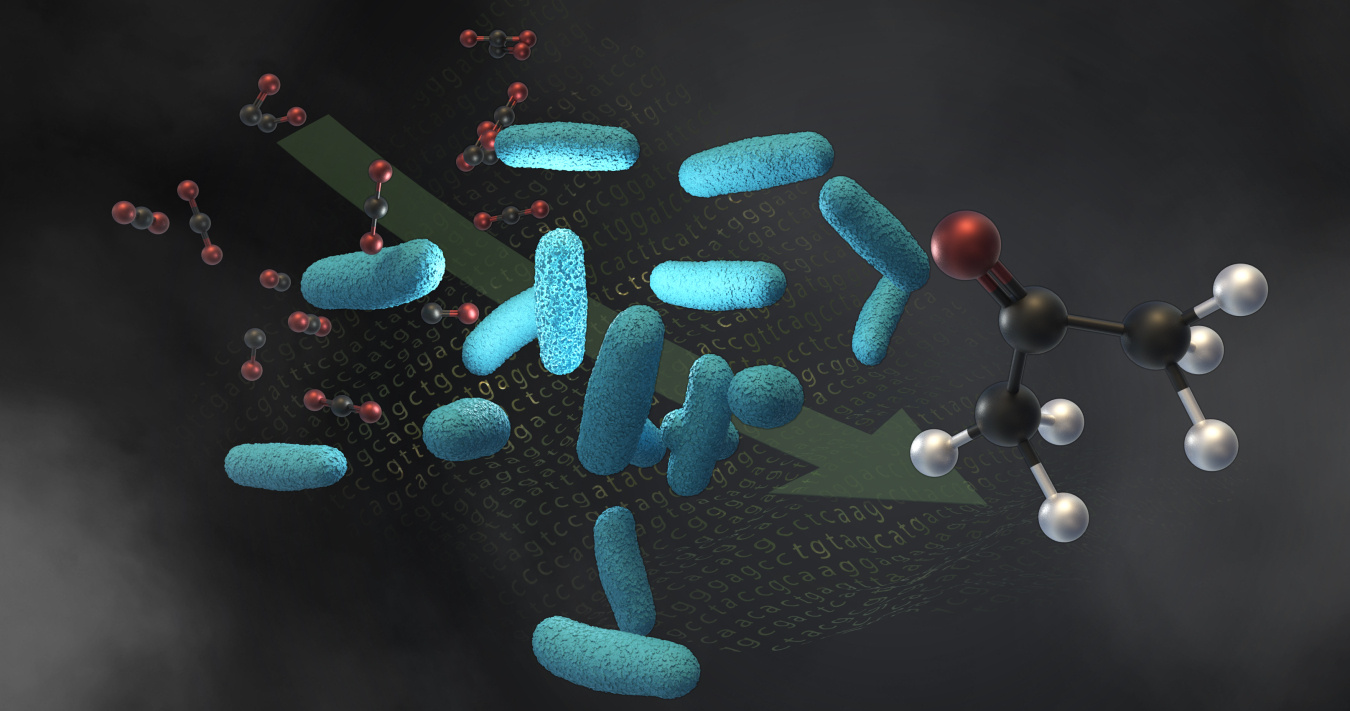
The platform uses microorganisms as tiny but powerful factories to convert carbon in gases released by agriculture, industry, and municipal waste into acetone and isopropanol (IPA). Companies use these chemicals to make thousands of products, from fuels and solvents to fabrics and clear acrylic. These chemicals are currently made using raw materials – called feedstocks – that come from fossil fuels.
Researchers built on existing LanzaTech technology to develop an efficient new process that converts waste gases, such as emissions from heavy industry, into either acetone or IPA. The process uses an engineered bacterium called Clostridium autoethanogenum, or C. auto.
Identifying the best enzymes for acetone and IPA production and engineering microbial strains to achieve efficient, high-yielding carbon-to-chemical conversion was a scientific challenge. The scientists used a three-pronged approach.
First, LanzaTech screened nearly 300 strains of the bacteria for enzymes that could be useful. Next, the researchers built a combinatorial DNA library – the largest ever for this class of microbe. This library allowed them to find enzyme variants that optimized acetone production. To further optimize the process, the team relied on cutting-edge synthetic biology tools. These tools included cell-free prototyping by Northwestern University, advanced modeling by LanzaTech, and molecular analyses by ORNL.
The work expanded on a 2015 project in which ORNL and LanzaTech scientists sequenced the entire C. auto genome. This work provided critical data necessary to make connections between the microbe’s genes and the desired traits. As work with C. auto progressed, the researchers employed ORNL’s comprehensive systems biology approach and analytical capabilities.
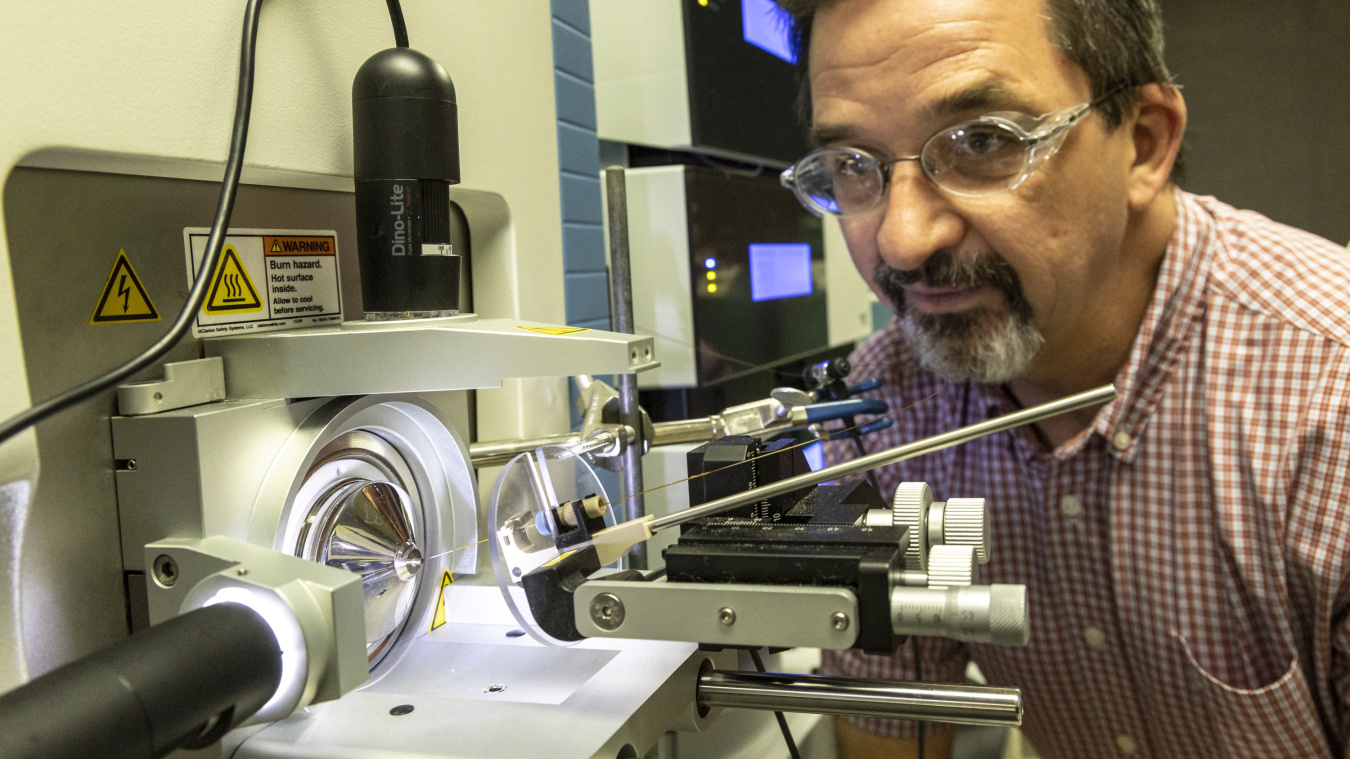
The work drew on two ORNL specialties: proteomics (the study of proteins) and metabolomics, the study of small molecules called metabolites. These research areas provide a molecular-level view of which specific chemicals are being used and produced by a microbe. Like any organism, when microbes consume or metabolize the substances they need to survive, they produce byproducts. For scientists engineering microbes to produce certain substances, these byproducts represent bottlenecks.
“The protein and metabolite profiles show where a production bottleneck is occurring inside the C. auto cell,” said Tim Tschaplinski, head of ORNL’s Biodesign and Systems Biology Section. “We can see what needs to be modified next in the pathways to flow more of the carbon to the product.”
Michael Köpke, LanzaTech’s vice president for synthetic biology, said, “Oak Ridge has very unique capabilities in terms of DNA sequencing, systems biology, and various metabolomics and proteomics. The lab’s expertise helped us troubleshoot the process to find out which steps may be limiting.”
“We found one of the enzymes in particular gave a significant boost once we increased production,” Köpke said. “And we found that through a lot of systems biology and proteomics analyses that were done by Oak Ridge.”
LanzaTech is currently scaling up the technology. The process can be inserted into existing systems and deployed for use around the world. In addition to Oak Ridge’s contributions, the research also used the Joint Genome Institute, a DOE Office of Science User Facility hosted by DOE’s Lawrence Berkeley National Laboratory.
“Our scientists use the laboratory’s world-class capabilities and work with industry to harness biological systems in support of a robust bioeconomy,” said ORNL Associate Laboratory Director Paul Langan.