



The U.S. Department of Energy (DOE) National Community Solar Partnership+ (NCSP+) offers free, rolling technical assistance to organizations deploying affordable distributed solar, providing them with the resources needed to successfully implement programs that ensure benefits flow to all. The technical assistance program connects these organizations with experts to provide personalized support to accelerate implementation, improve the performance of their program or project, and build capacity for future development. As of November 2024, NCSP+ has provided technical assistance over 185 times.
NCSP+ members can request technical assistance on policy, legislation, and regulatory research, project financing and analysis, outreach and engagement strategies, program design, and technical issues. Each month, members are paired with a technical assistance provider to help them plan and complete the necessary research, facilitation, or analysis. When the technical assistance engagement is complete, the technical assistance provider submits a final report and any deliverables to the NCSP+ member.
To share the best practices and expert advice from these technical assistance engagements, NCSP+ has provided several final reports and their summaries below. Organizations and individuals interested in developing, supporting, or improving such projects or programs can use these summaries to learn best practices and understand existing research and analysis on affordable and accessible distributed solar.
For additional questions on the NCSP+ technical assistance program or these summaries, please contact community.solar@ee.doe.gov.
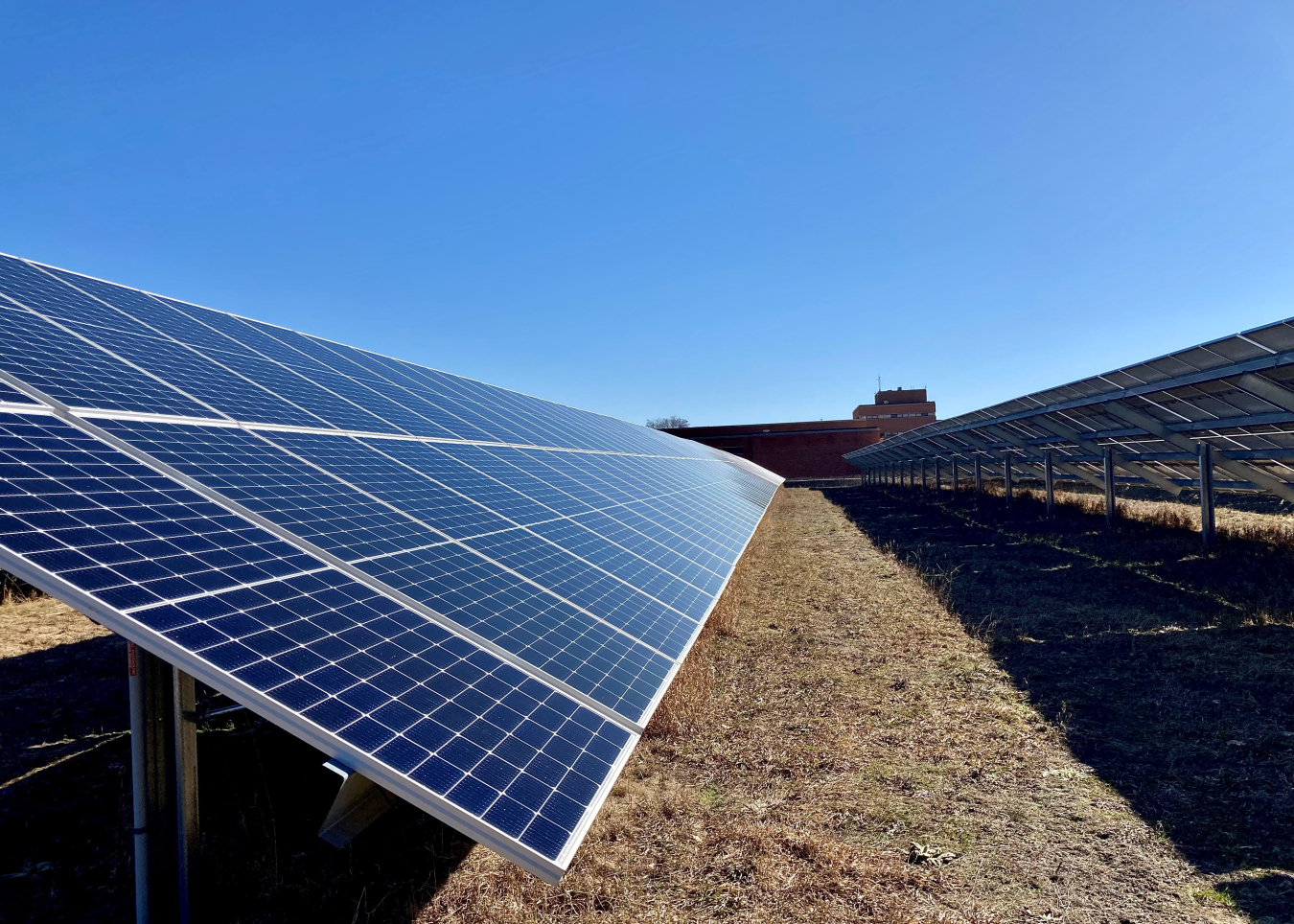
Solar array located at the Lake Michigan Filtration Plant in Grand Rapids, Michigan. Photo courtesy of John Kinch, Michigan Energy Options.
Technical Assistance Reports
Community Solar Model for Water Utilities
Recipient: Michigan Energy Options (MEO)
Organization Type: Non-governmental organization
Subject Area: Regulatory issues and jurisdiction of community solar implementation by non-
conventional entities
Target Audience: Non-governmental organizations, state, local, or tribal governments, electric utilities, water utilities
Technical Assistance Provider: Keyes & Fox
MEO, a non-profit that promotes energy efficiency and renewable energy throughout Michigan, sought technical assistance to determine whether water and wastewater utilities could offer community solar through water bill credits for participating customers. After analyzing local statutes and utility articles of incorporation, Keyes &Fox determined that these utilities may have the statutory authority to host community solar projects.
In their report, they describe the challenges and opportunities that water utilities would face in offering this type of program. Water utilities and their customers could benefit from lower operating costs, back-up power to operate water systems during grid emergencies, and stabilized water rates. The report also outlines how such systems could be financed via agreements with water utility customers and gives examples of water utility investment in solar energy.
Community Solar for Opportunity States
Recipient: Canal Line, LLC
Organization Type: Solar Developer
Subject Area: Community solar development models in states that lack explicit enabling policies
Target Audience: Solar developers
Technical Assistance Provider: LBNL
Canal Line, LLC. a community solar developer in Idaho, sought technical assistance to develop a 1 MW solar project in Marsing, Idaho to benefit the city's public schools. Traditional community solar models rely on third-party ownership and subscription-based benefits delivered through virtual net metering. Opportunity states like Idaho often lack the regulatory framework to support these models, hindering community solar development.
In this report Canal Line identifies and analyzes alternative models for developing community solar projects in states lacking enabling policies. The report provides examples of third-party owned projects that have used—or are in the process of setting up—three alternative models to offer the benefits of community solar in opportunity states: community benefit funds, cooperative ownership, and project configuration and technology.
Community Solar Program Design and Subscription Models
Recipient: NCSP Municipal Utility Collaborative
Organization Type: Utility
Subject Area: Program Design
Target Audience: Municipal Utilities
Technical Assistance Providers: DOE, National Renewable Energy Laboratory (NREL), American Public Power Association (APPA)
DOE, NREL, and APPA facilitated the Municipal Utility Collaborative working group for seven public power utilities interested in learning more about community solar. The collaborative aimed to help municipal utilities address many of these barriers and provide resources to aid in their development of community solar projects and programs.
Since municipal utilities have strong ties to their local government, they are well-positioned to pilot new renewable energy programs such as community solar. However, existing tariff structures and regulations can make these programs difficult to implement. Municipal utilities also face program design challenges, such as estimating customer demand, determining mix of subscribers, income qualification rules, ownership models, payment options, and system requirements for accounting, billing, and rate design.
NREL created a nine-session community solar curriculum to prepare municipal utilities to develop community solar project and program based on the lessons learn from the collaborative. Sessions included technical presentations from NREL staff and guest speakers, as well as peer learning opportunities amongst working group participants. This slide deck provides an overview of this curriculum, focused on best practices for community solar program design and subscription models.
Community Solar Program Design Considerations AND Modeling Inputs
Recipient: Southern Environmental Law Center
Organization Type: Nonprofit environmental law firm
Subject Area: Program Design and costs
Target Audience: Public officials, regulators, utilities, program administrators, government officials
Technical Assistance Provider: National Renewable Energy Laboratory (NREL)
The Southern Environmental Law Center (SELC) requested assistance from NCSP to review a community solar (CS) program model and the underlying assumptions to obtain feedback and proven practices from across the country to inform and improve the proposed program.
Designing and modeling a CS program is a complex process with numerous variable inputs that are interconnected. Modeling a CS program can be useful to inform the program design itself while also providing stakeholders with information. Accurate data inputs and assumptions are key to ensuring that a model is informative and as representative of real market conditions as possible.
The report compiled for SELC is an exploration of community solar program modeling considerations, especially as it relates to data inputs and costs, using a CS program in North Carolina as a case study.
Community Solar Ownership Models and Benefits of Locally-Owned Projects
Recipient: PACE Fund New Mexico (NM)
Organization Type: Solar developer
Subject Area: Program design, outreach and engagement strategies
Target Audience: Solar developers, government and public officials
Technical Assistance Provider: National Renewable Energy Laboratory (NREL)
PACE Fund NM is a financial institution that provides long-term financing for commercial solar projects and energy efficiency upgrades through Albuquerque’s Commercial Property Assessed Clean Energy (C-PACE) program. They requested technical assistance on creating introductory material about community solar, with a focus on the benefits, structure, and stakeholder roles of locally-owned community solar (as opposed to utility or third-party owned).
At the time of their request, New Mexico was just starting to implement state-level legislation to support community solar. PACE Fund NM wanted to convey the benefits and structure of community solar projects that are owned the subscribers, which can provide varied and localized economic and environmental benefits.
Through this technical assistance engagement, NREL delivered a slide deck for PACE Fund NM to use to communicate the benefits of locally-owned community solar to a broad set of stakeholders. The deck gives an overview of what community solar is, introduces community solar programs and their benefits, explains different ownership models, and presents best practices for starting a locally-owned community solar project.
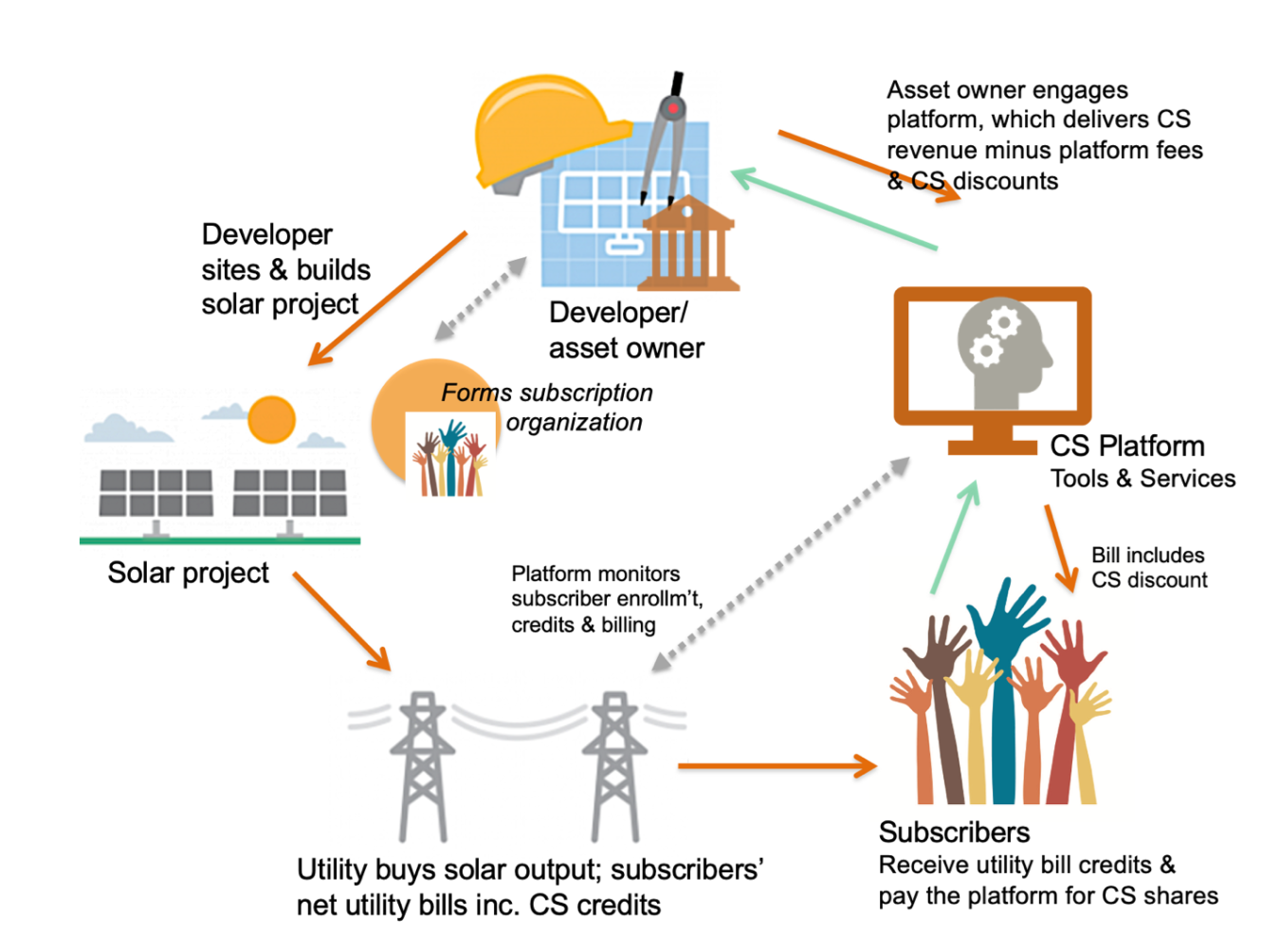
Community Solar Software and Services: A Primer for Developers and Owners, Subscriber Organizations, and Stakeholders
Recipient: Valley Wide Construction Services
Organization Type: Independent community solar developer
Subject Area: Outreach and engagement strategies, tools for community solar asset management, customer acquisition, customer relationship management, and billing
Target Audience: Community solar developers and owners, subscriber organizations, and stakeholders
Technical Assistance Provider: Jill K. Cliburn, Cliburn and Associates, LLC
Valley Wide Construction Services initiated several solar projects for Southern California Edison’s Enhanced Community Renewables (ECR) program. Valley Wide requested information to address customer relationship management (CRM) and billing needs under that program, as well to help the company prepare for widespread community solar opportunities under California’s emerging statewide program. An initial Technical Assistance (TA) review of community solar software resources and tools revealed a range of online (cloud-based) community solar software toolkits, referred to as software as a service (SAAS) platforms, or simply platforms. They offer CRM and billing services and much more. The TA also revealed interest nationwide among community solar developers, project asset holders, subscriber organizations, and other stakeholders who want guidance on how to choose a platform provider, how to work with the developers who are the primary clients for most platform providers, or how to customize platform tools to meet local needs.
The primer offers an overview of platform functions and providers. It roughly divides the market into types of platform providers, from those that seek to own or buy solar assets to those that showcase independent developers’ projects within a given market, to those that focus on low-income community outreach, performance analytics or other services, to white label products or platforms built from scratch. Across all these types of platforms, providers offer tools and services that differentiate them from their competitors and meet various price points. While this primer is explicitly not all-inclusive of this evolving business sector, it offers some examples of platform providers and what they do. A summary checklist encourages more research and discussion across the community solar sector, including established platform providers and newcomers alike. The primer concludes that community solar cannot succeed at scale without efficient business systems, but neither can it succeed without sustained, authentic relationships within the communities it serves.
Techno-economic Analysis of Community Solar Program Rules in New Orleans
Recipient: Together New Orleans (LA)
Organization Type: Non-governmental community organization
Subject Area: Project finance
Target Audience: Public officials, regulators, solar developers, government officials, utilities, program administrators
Technical Assistance Provider: National Renewable Energy Laboratory (NREL)
Together New Orleans requested technical assistance support in May of 2023 with the goal of better understanding how subscription rates and credits could impact the economic viability of community solar projects in the New Orleans area which had struggled to see projects be developed under existing program rules.
NREL performed a series of modeling exercises in the software System Advisor Model (SAM), also developed by NREL, to evaluate the economics of a community solar project located in New Orleans under the existing program rules. The techno-economic models explored multiple difference subscription rates and subscriptions credits to determine how shifts in these costs would impact the finances both from the developer and the subscribers' perspective. Conclusions from the modeling work identified that the previously adopted rules for community solar in New Orleans did not create enough revenue for a project developer to be incentivized to develop a project. Additional findings included how increases in subscription rate and credit rates would create an advantageous economic situation for both subscribers and developers. Additional considerations such as subscription type, subscription rate, and nuance of bill savings versus subscription credit were explored for consideration of New Orleans stakeholders.
After the passage of new community solar program rules, Together New Orleans returned with a subsequent technical assistance ask, this time looking for support doing a deeper dive into the customer credit rate and savings for residential and non-residential customer classes. NREL built on its initial work in SAM, completing a detailed analysis of existing customer classes rate structures, net metering rules, and proposed credit rate methodology to calculate theoretical customer bills with and without a community solar subscription. The resulting report provided Together New Orleans and stakeholders with an improved understanding of the proposed rate schedule and expected credit rate, as well as general guidance to follow or consider when developing credit rates.
Income Verification Strategies for Income-Based Solar Programs
Recipient: New Jersey Board of Public Utilities
Organization Type: State agency
Subject Area: Program administration, program design
Target Audience: Program administrators
Technical Assistance Provider: Lawrence Berkeley National Laboratory
A growing number of federal and state energy programs seek to reduce energy burdens and create energy justice opportunities for low-income households and disadvantaged communities.
Verifying the income of participating customers is an important component of these programs. Program managers are seeking ways to verify a large number of subscribing customers that are accurate, timely, and cost-efficient.
In a new report, Lawrence Berkeley National Lab reviews various strategies for income verification, discussing their strengths and weaknesses, the risk of errors, examples of how they are used, and how programs address administrative issues, audits, and other quality control measures.
A Path to Clean Energy: Cross-Subsidization Concerns From Local Solar Development in Frankfort, Kentucky That Can Apply to Other Communities
Recipient: City of Frankfort
Organization Type: Municipal Utility
Subject Area: Cross subsidization, public power, city government
Target Audience: General public, city government, public power, municipal utilities
Technical Assistance Provider: National Renewable Energy Laboratory
Municipal electricity utilities and communities with public power are increasingly interested in locally sited solar projects. Understanding the allocation of costs and benefits of a solar project across affected entities and stakeholders can be critical for community buy-in. This case study reviews work conducted for the City of Frankfort to assess how plans to meet 100% of the city government’s electricity loads with renewable energy by 2023 impacted the regional electricity provider.
While the results are specific to Frankfort and the electricity contracts in place at the time of the study, it is an example of how the question of cross-subsidization can be addressed using a quantitative study, with the goal of increasing transparency and buy-in across multiple stakeholders.
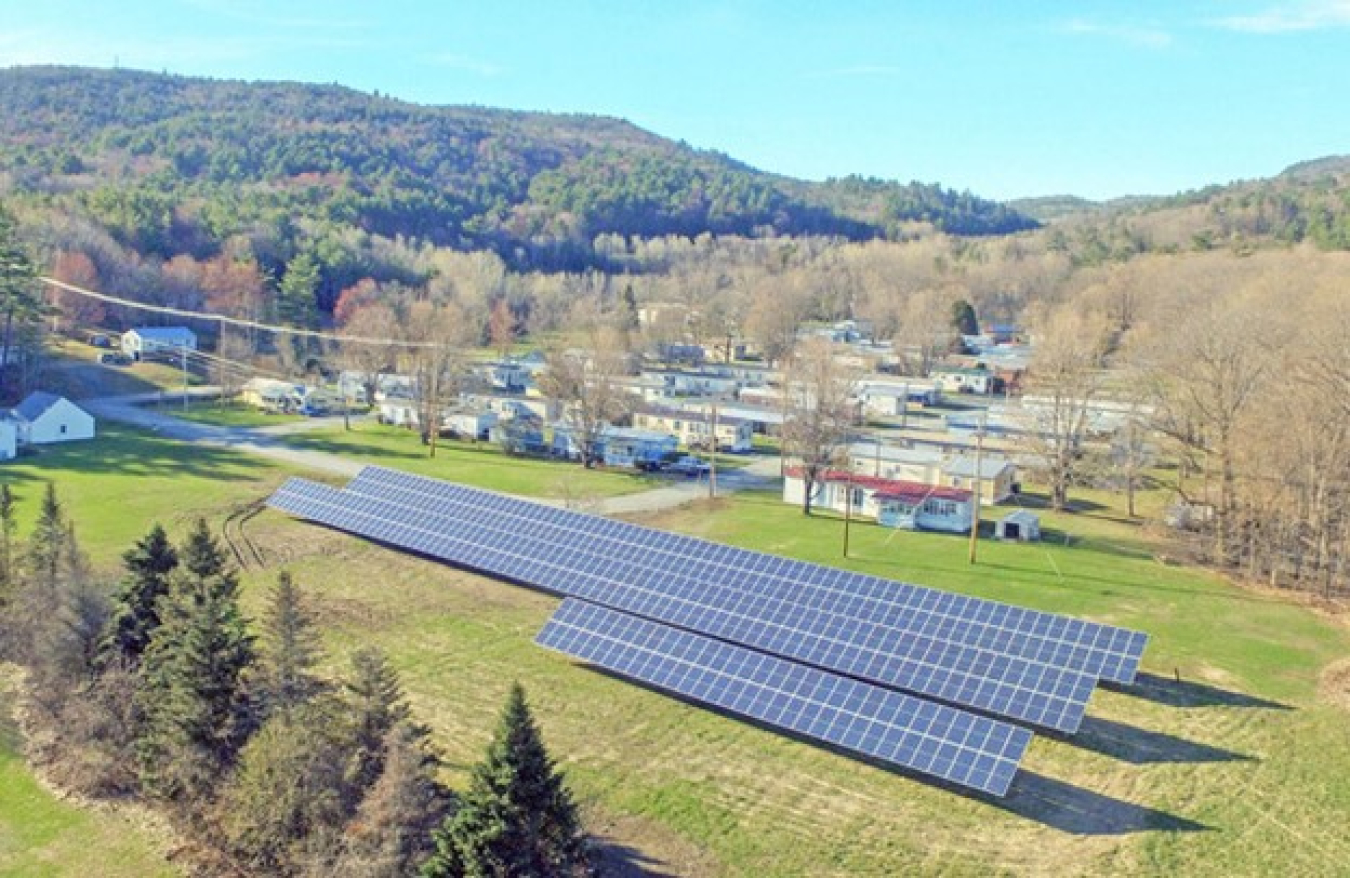
Program Design Combining Community Solar and Weatherization for Manufactured Homes in Michigan
Recipient: Michigan Department of Environment, Great Lakes, and Energy (EGLE)
Organization Type: State Energy Office
Subject Area: Program Design
Target Audience: State Energy Offices, state and local housing agencies, affordable housing providers, weatherization program administrators and delivery agencies, social service agencies, community action agencies.
Technical Assistance Provider: Lawrence Berkeley National Laboratory
EGLE requested technical assistance for a program that would combine community solar with weatherization programs for manufactured homes. This paper characterizes the manufactured home landscape in Michigan, then explores opportunities for weatherization and community solar. It recommends a program that combines community solar with efficient electrification of manufactured homes, especially space heating, to reduce the burden of winter heating bills, the largest source of residential energy expenditure in Michigan. Specifically, it envisions community solar subscriptions for occupants of manufactured homes that have been converted to high-efficiency, cold weather heat pumps, managed to alleviate seasonal variations in both solar and heating bills.
Additional Information
- Learn more and apply for the NCSP+ technical assistance program.
- Register to become an NCSP+ member.
- Discover more about NCSP+.
- Explore the DOE solar office’s community solar work.
- Send questions to communitysolar@ee.doe.gov.