



The western spadefoot toad, which was rediscovered at SSFL in 2024 after more than a decade, is now a candidate to be listed as a threatened or endangered species under the California Endangered Species Act.
Energy Technology Engineering Center
September 22, 2026 Estimated Read Time min
Two years after western spadefoot toad tadpoles were discovered at the Former Sodium Disposal Facility in Area IV at the Santa Susana Field Laboratory (SSFL) for the first time in over a decade, the tiny amphibian is once again in the spotlight.
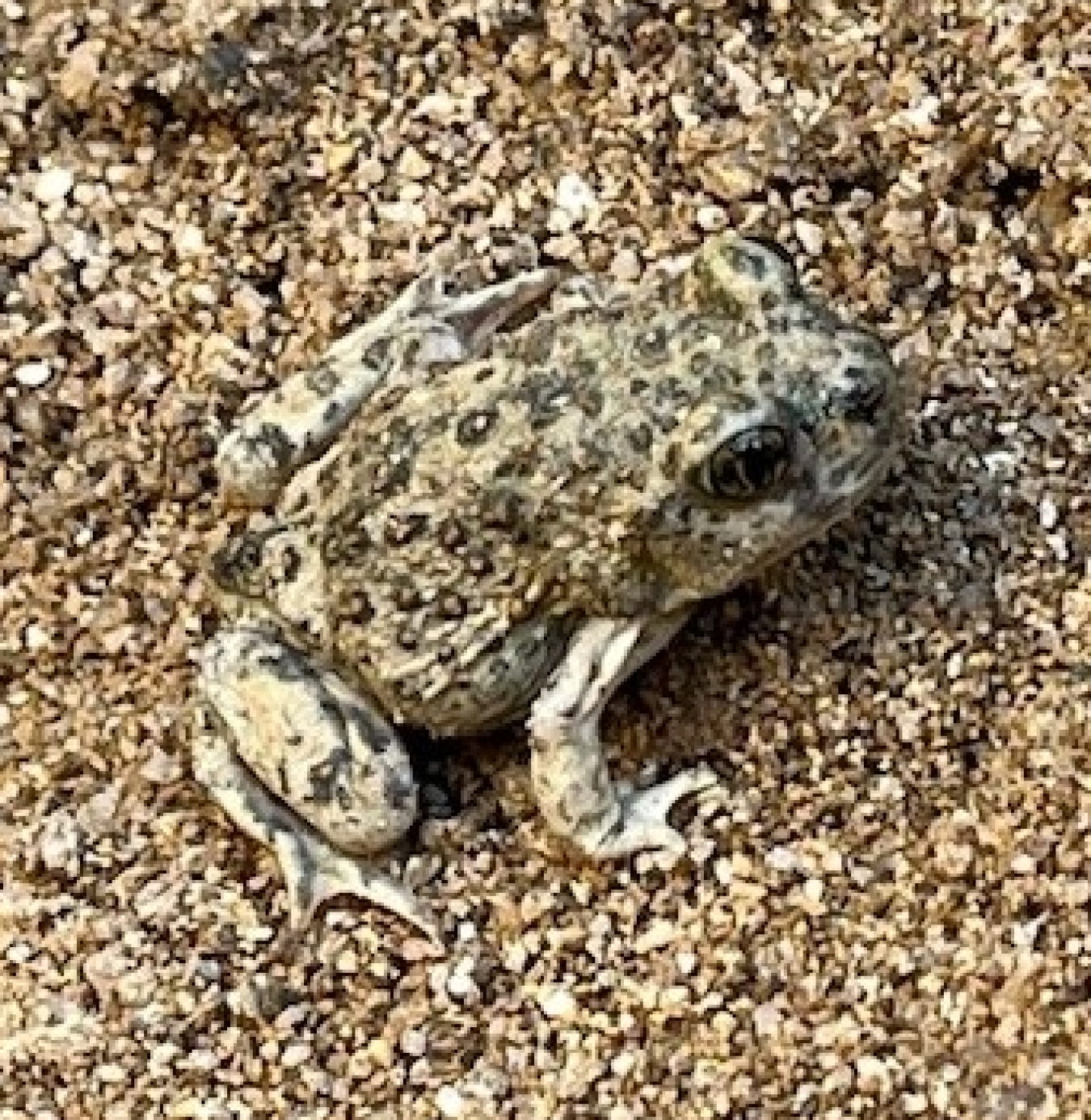
On August 13, the California Fish and Game Commission unanimously approved a 2025 petition from the Center for Biological Diversity (CBD) to list northern and southern populations of the western spadefoot toad (Spea hammondii) as
candidates for threatened and endangered species status, respectively, under the California Endangered Species Act. The commission’s decision has started a one-year review for the listing.
Dr. Tara Schoenwetter, a biologist who has worked at SSFL since 2011, discovered about 150 tadpoles while conducting biological monitoring at the site in 2024. It was the first time the spadefoot toad had been seen since 2012.
In addition to the recently approved petition, CBD also attempted to get the amphibian listed on the federal Endangered Species Act in 2012.
The U.S. Fish and Wildlife Service issued a proposal in December 2023 to list spadefoot toads as threatened on the Endangered Species List but a ruling has not yet been made.
Spadefoot toads are currently listed as a species of special concern by the California Fish and Wildlife Service. Being designated as a threatened species would be a federal listing.
While the spadefoot toads were not addressed in the biological assessment the Department of Energy (DOE) conducted
for SSFL, if they are added to the federal Endangered Species List, then DOE will continue to coordinate with wildlife
services on next steps.
-Contributor: Melissa Simon