



The CONNECT Series meeting on August 12 focused on DOE's response during the Sandy Fire in May 2026, air monitoring wildfire response and other recent activities at SSFL
Energy Technology Engineering Center
September 22, 2026 Estimated Read Time min
Air monitoring results were top of mind for many attendees at the Community Outreach, Neighbor Notifications, Engagement, Collaboration and Training (CONNECT) Series meeting recently hosted by the Department of Energy (DOE).
About 35 people attended the August 12 meeting to hear about DOE’s recent activities at the Santa Susana Field Laboratory (SSFL) and learn about wildfires, air monitoring and response during the Sandy Fire in May.
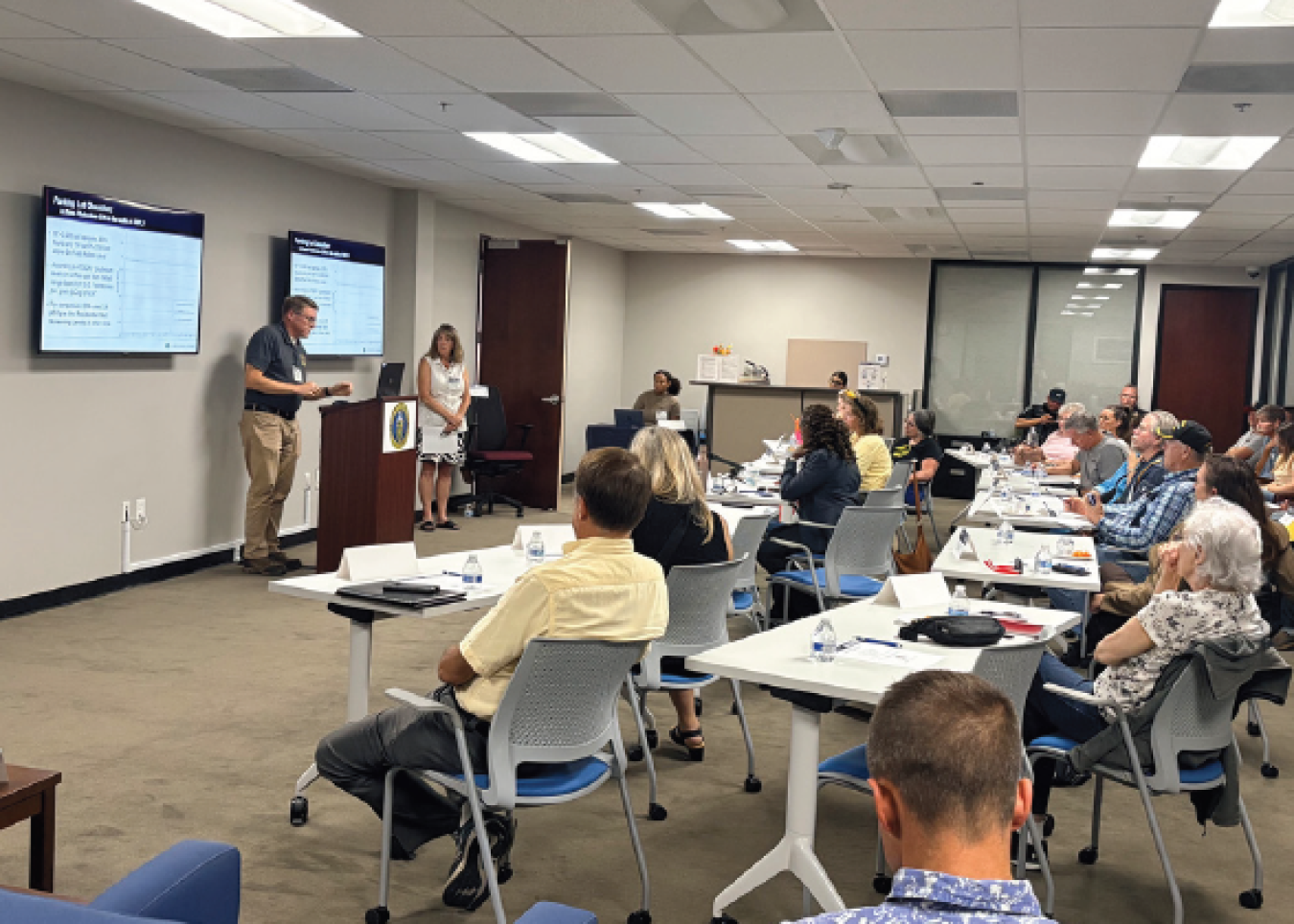
DOE previously conducted liquid metals and nuclear energy research in the Energy Technology Engineering Center (ETEC) in Area IV at SSFL, where the department is now tasked with remediation.
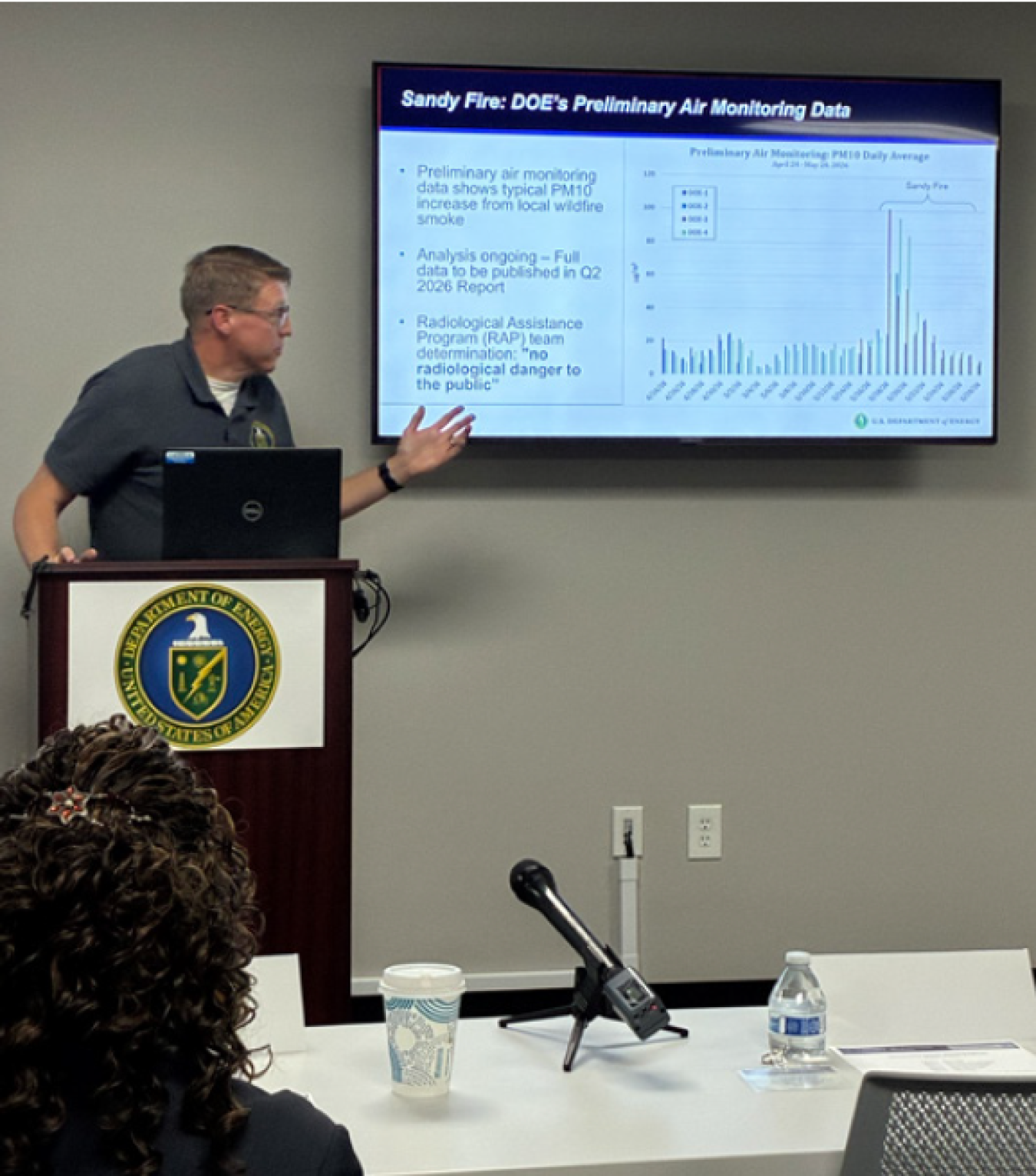
Josh Mengers, DOE’s federal project director for ETEC, discussed the site’s response during the Sandy Fire, including coordination with site partners and emergency responders.
As part of the response, the California Department of Toxic Substances Control (DTSC), the state regulator overseeing final cleanup plans at SSFL, deployed the National Nuclear Security Administration’s Radiological Assistance Program (RAP) team to gather air monitor data.
“The RAP team personnel deployed and determined that there was no radiological danger to the public from the Sandy Fire,” Mengers said, adding that the blaze did not cross onto SSFL.
Mengers shared preliminary data from DOE’s air monitoring network established in 2018, which includes four perimeter monitors that collect data on radionuclides, volatile organic compounds and particulate matter (PM).
While early data is still being analyzed, results for PM10 collected before, during and after the Sandy Fire are typical of a normal increase due to wildfire smoke, Mengers said. Final results will be available in the second quarter 2026 air monitoring report.
“I’ve seen requests for getting the data out and we’re looking to see how we can facilitate sharing all of the data with the community,” he said.
Mengers then provided a look at the 2018 Woolsey Fire that burned across 80% of SSFL, including portions of Area IV where ETEC is located. Because of this, there were community concerns that contamination from previous operations was released.
DTSC led a multi-agency response to evaluate this possibility and concluded in its 2020 final summary report there was no release of contaminants from SSFL.
“The risk of exposure to wildfire smoke during the Woolsey Fire was no higher than what’s normally associated with any standard forest or brush fire,” Mengers said. “Looking back at both fires . . . the data supports the conclusion that neither fire released site-related contamination.”
In the months since the Sandy Fire, Mengers said DOE has been working to improve processes and procedures, including increasing existing vegetation clearance practices, looking into hardening air monitor stations and enhancing communication and partnerships.
“We’re aiming to strike a balance between protecting the site’s ecosystem and securing our critical monitoring infrastructure (because) safety is always our top priority,” Mengers said.
The community also heard about updates on a groundwater treatment pilot and other studies supporting final cleanup plans, ongoing sampling and monitoring efforts, and demolition work plans for the basement of Building 4024.
“DOE is really eager to make progress on (cleanup) . . . and I understand that there’s challenges and a long history, but I’m hopeful we can come together and make that progress we’re all looking to make,” Mengers said.
The August 12 presentation recording and slides are available on the CONNECT Series page.
Join the ETEC team for the next CONNECT tentatively scheduled for November 12.
Check the CONNECT Series page for upcoming sessions or topics. To suggest future topics or provide feedback, fill out the CONNECT feedback form.
-Contributor: Melissa Simon