



Early results are promising for an innovative groundwater treatment pilot study in Area IV at SSFL, where DOE previously conducted liquid metals and nuclear energy research.
Energy Technology Engineering Center
September 22, 2026 Estimated Read Time min
The U.S. Department of Energy (DOE) is making progress on an innovative pilot study that is successfully reducing groundwater contamination at the Santa Susana Field Laboratory (SSFL). The study is designed to evaluate a potential treatment approach for volatile organic compounds (VOC) in Area IV.
DOE previously conducted liquid metals and nuclear energy research at the Energy Technology Engineering Center (ETEC) in Area IV at the 2,850-acre SSFL and is tasked with remediation for that portion of the site.
“We are committed to finding the most effective and sustainable methods to address legacy contamination,” said Dr. Josh Mengers, DOE ETEC Project Director. “This pilot study is a perfect example of that commitment in action, allowing us to test and validate an innovative approach in the field.”
The small-scale study in the Hazardous Material Storage Area (HMSA) uses an in-situ, or in-place, treatment method that combines biological and chemical processes to help break down contaminants underground.
This location was selected for the pilot because the treatment is ideal for its specific hydrogeology and contaminant conditions, Mengers said.
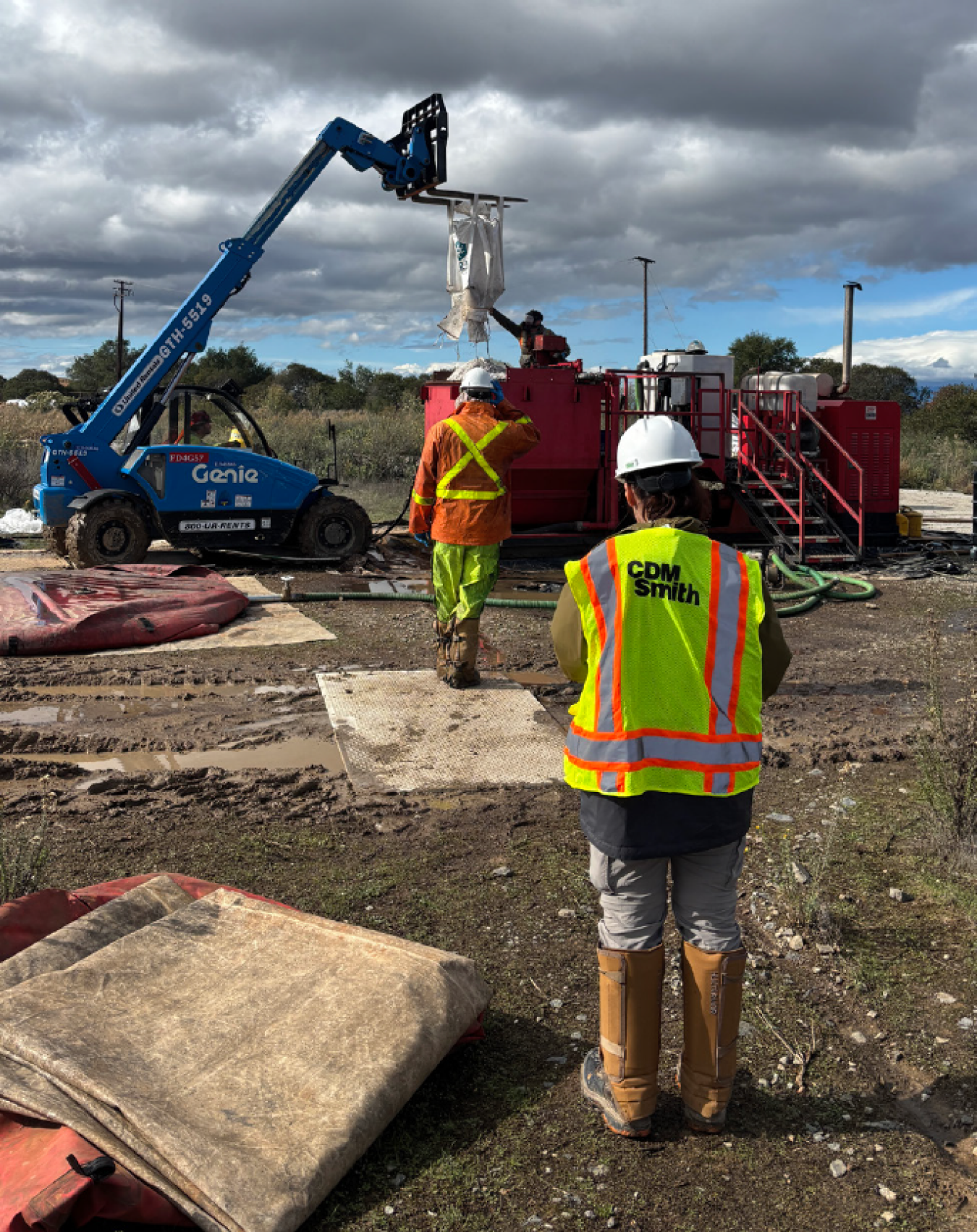
In September 2025, DOE completed seven injection wells used to deliver food-grade emulsified vegetable oil and zero-valent iron into the subsurface to create conditions that support contaminant degradation. Naturally occurring bacteria known as Dehalococcoides were also introduced to help degrade the VOCs through biological activity, while the zero-valent iron supports a separate chemical treatment pathway.
Two rounds of these injections were completed in November 2025 and April 2026. In total, more than 12,000 gallons of amendment were injected, including more than 8,000 pounds of emulsified vegetable oil and nearly 40,000 pounds of zero-valent iron.
As of July 2026, DOE has collected seven months of groundwater samples from monitoring wells.
“The early results are highly encouraging, showing that treatment is performing as expected and beginning to reduce VOC concentrations,” Mengers said. “These early findings provide the sound, scientific basis we need to inform the design of a final remedy that is protective of the community and the environment.”
DOE will continue quarterly monitoring to evaluate how effectively the pilot study is at reducing contamination in the HMSA. The data collected is critical as it will inform the design of future groundwater remediation to complete the cleanup mission in Area IV.
-Contributor: Melissa Simon