



Beneficial Reuse
From adapting Cold War-era infrastructure to serve the missions of tomorrow, to recovering strategic materials for America's energy economy, EM's recycling efforts demonstrate that smart stewardship of federal resources and mission success go hand in hand
Reuse at EM cleanup sites spans a wide range of activity, from reclaiming tens of thousands of pounds of scrap metal normally destined for disposal, to unlocking the energy potential from legacy nuclear byproducts. What connects every effort, large or small, is a shared commitment: When federal assets have served their original purpose, the responsible and fiscally sound course is often to find an efficient and effective next use for them. That commitment reduces taxpayer costs, shrinks the environmental footprint of the cleanup program, and returns value directly to American communities. It also places EM at the center of the administration's broader agenda to maximize the productive use of federal resources, accelerate domestic energy production, and support supply chains that strengthen national security.
Assets vs. Waste
Some of the most consequential recycling happening across the EM complex involves not raw materials, but entire buildings, industrial systems, and legacy nuclear inventories. Rather than demolishing every Cold War-era structure outright or treating legacy byproducts purely as waste disposal challenges, EM and its contractors regularly assess whether aging assets can be adapted, upgraded or converted to serve new purposes, saving tens of millions of dollars in construction costs, accelerating mission timelines, and directly advancing the energy and national security goals set by the administration.
One of the most striking examples of asset repurposing is underway at the Hanford Site in Washington state, where 1,936 cesium and strontium capsules, sealed inside an aging, energy-intensive underwater storage basin since the mid-1970s, are being transferred to a modern passive dry-storage system. The transition is far more than a safety upgrade. By moving from a water-cooled facility to a passive, air-cooled dry-storage pad, Hanford stands to save an estimated $6 million per year in operating costs. More significantly, the strontium-90 inventory itself carries meaningful potential for beneficial reuse, with established and emerging applications in medical devices, remote power generation, and nuclear battery technology. The capsule transfer project actively enables future beneficial reuse of the strontium-90 inventory, positioning a Cold War-era liability to serve the energy and medical innovation missions of the 21st century, consistent with executive orders to maximize productive use of federal assets.
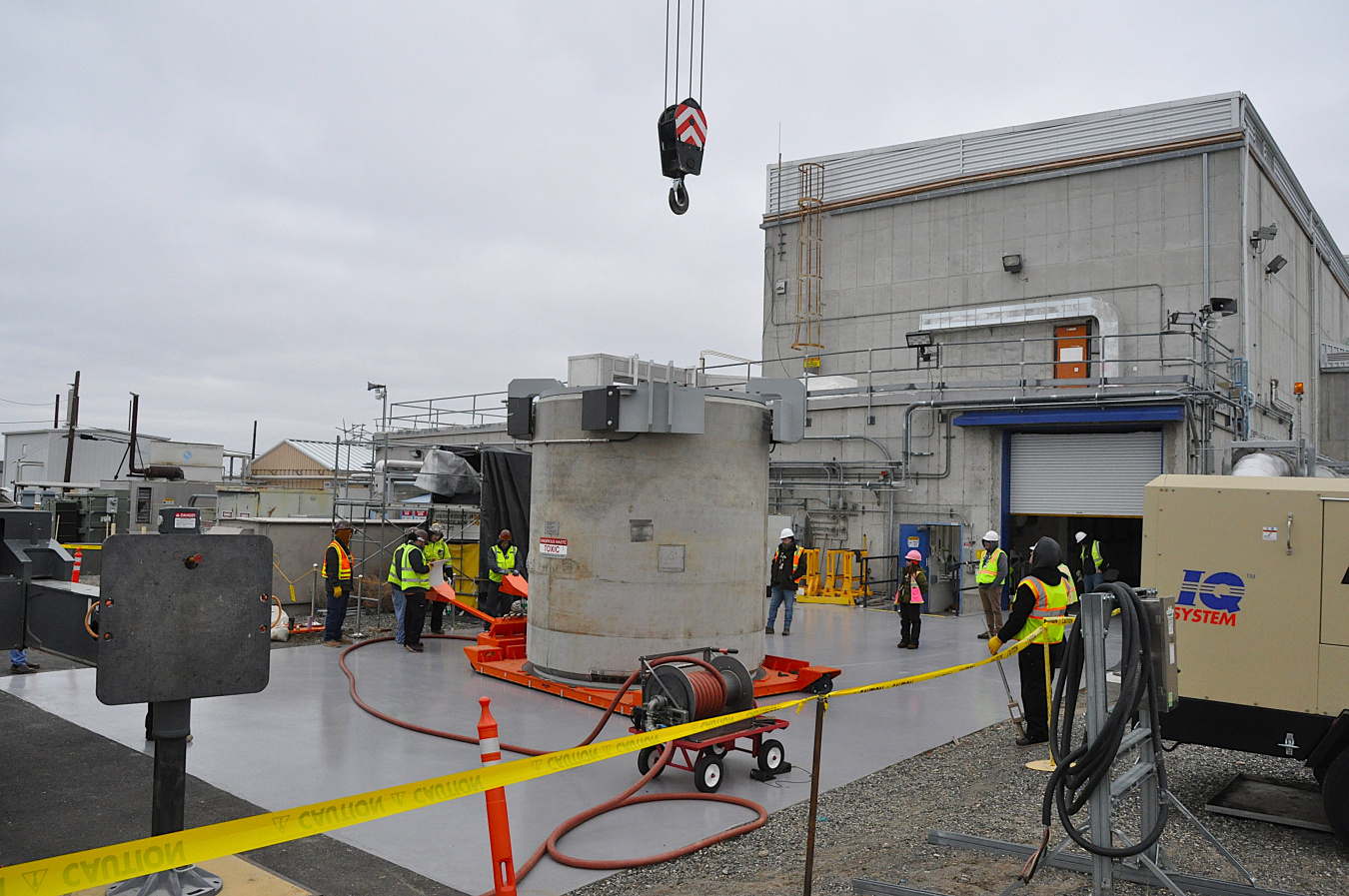 The first engineered concrete cask filled with radioactive capsules is moved out of the Waste Encapsulation and Storage Facility and loaded for the quarter-mile journey to the Capsule Storage Area.
Paducah's DUF6 cylinders: enrichment byproduct to energy feedstock
At the Paducah Site in Kentucky, more than 40,000 cylinders of depleted uranium hexafluoride (DUF6), a direct byproduct of Cold War-era uranium enrichment, represent one of the most tangible examples of legacy liability becoming strategic energy asset. EM is making a portion of that DUF6 inventory available to commercial partners for re-enrichment, providing a stable domestic feedstock for uranium enrichment operations that directly support the nuclear fuel supply chain President Donald Trump's May 2025 executive order directed DOE to rebuild.
“With a portion of the depleted uranium hexafluoride cylinders available for re-enrichment, the Paducah Site has the ability to jump-start domestic uranium enrichment with commercial partnerships. Through these innovative partnerships, the DUF6 inventory will help expedite future enrichment activities by providing a stable feed of uranium hexafluoride for multiple projects.”
— Joel Bradburne, EM Principal Deputy Assistant Secretary, August 2025
The Portsmouth Site in Pike County, Ohio, holds a substantial share of the approximately 740,000 metric tons of depleted uranium hexafluoride stored across the Portsmouth and Paducah sites, a legacy of more than six decades of uranium enrichment at the former gaseous diffusion plant that is now being strategically managed as both a cleanup obligation and a resource for the emerging nuclear renaissance. EM crews at Portsmouth are actively converting DUF6 into uranium oxide and hydrofluoric acid through on-site conversion facilities, and in 2025 the Portsmouth Paducah Project Office met an EM priority by converting more than 1,000 cylinders combined across both sites with converted uranium oxide available for beneficial reuse and hydrofluoric acid sold to industry to help offset project costs. Looking ahead, Portsmouth's DUF6 inventory is positioned to play a direct role in fueling the next generation of nuclear power, with Global Laser Enrichment set to receive approximately 25,000 cylinders from the Portsmouth Paducah Project Office as feedstock for a new laser enrichment facility to be built adjacent to the Paducah site, a partnership that exemplifies EM's mission to transition from nuclear remediation to nuclear revitalization.
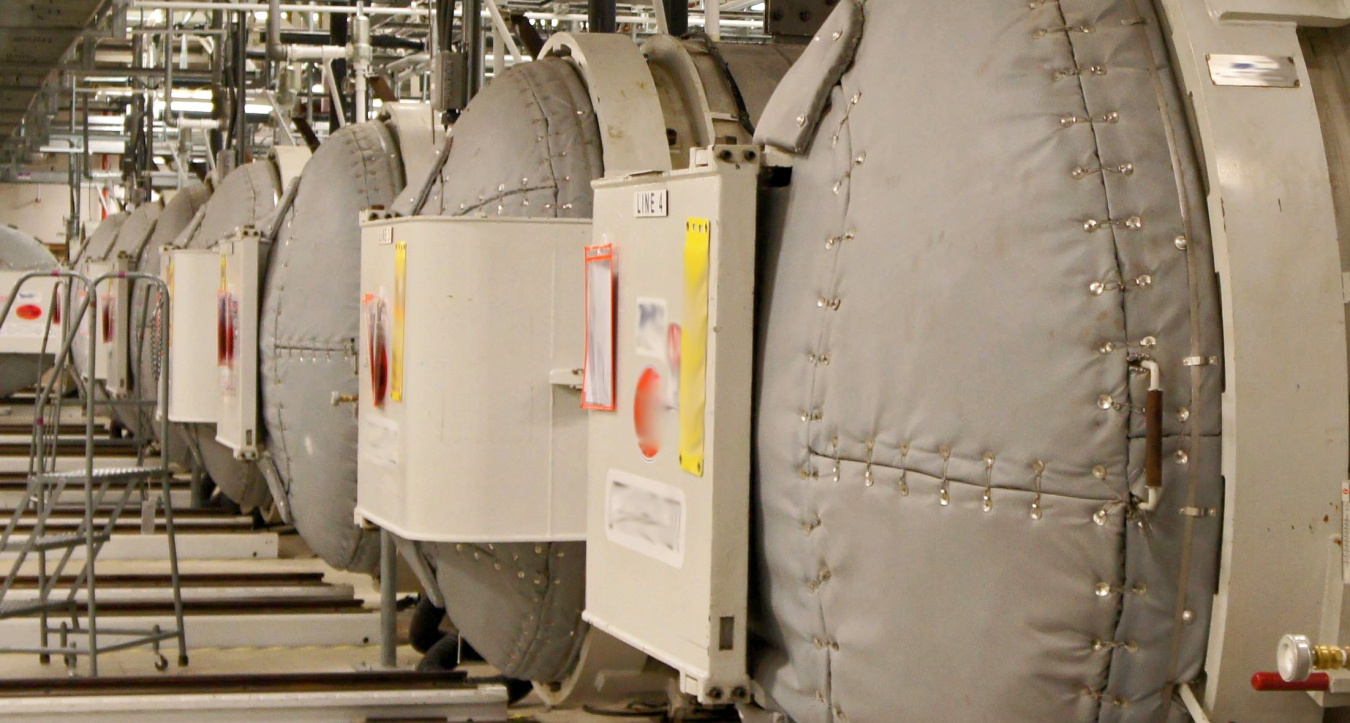 Decades of uranium enrichment operations at two former gaseous diffusion plants yielded thousands of cylinders of depleted uranium hexafluoride, or DUF6, that accumulated in storage yards.
One of the most forward-looking recycling initiatives in the EM complex involves approximately 9,700 tons of volumetrically contaminated nickel stored at the former Paducah Gaseous Diffusion Plant and a separate inventory of up to 6,400 tons of radiologically surface-contaminated nickel at the Portsmouth Site in Ohio. Both inventories were generated during decades of uranium enrichment operations and have long been classified as legacy liabilities requiring costly long-term management.
In November 2025, DOE issued an Expression of Interest seeking input from industry on technologies capable of selectively extracting high-purity nickel from the Paducah ingots, leaving behind radiological contaminants and producing a product suitable for unrestricted commercial release. Potential reuse of the extracted nickel is consistent with executive orders on increasing American mineral production and unleashing American energy, making this a recycling effort that is also a national security and energy initiative.
A parallel effort at Portsmouth is evaluating whether the same decontamination approach can recover high-purity nickel for domestic manufacturing, electric vehicle batteries, and the nuclear industry, potentially transforming one of the most persistent legacy liabilities at both gaseous diffusion plant sites into a contribution to American energy dominance.
The Oak Ridge Office of Environmental Management's (OREM) Uranium-233 Disposition Project stands as one of the most compelling examples of EM's commitment to treating legacy nuclear material as a resource rather than simply a liability — recognizing that what previous generations considered unusable waste can hold extraordinary value for future generations. The nation's inventory of uranium-233 was originally created in the 1950s and 1960s for potential use in reactors but proved to be an unviable fuel source, and for decades it sat in storage at Oak Ridge National Laboratory in a 1940s-era building posing escalating safety, security, and cost burdens that made its disposition OREM's highest cleanup priority. Rather than simply converting the entire inventory to a form safe for disposal, OREM and contractor Isotek made a deliberate strategic choice to first extract thorium-229, an extraordinarily rare medical isotope present in trace quantities within the uranium-233, before downblending and disposing of the material, a decision driven by the recognition that thorium-229 only comes from uranium-233, and that once the Oak Ridge material is dispositioned, no more thorium-229 will be available from this source. Through an innovative public-private partnership with nuclear innovation company TerraPower, Isotek has increased the global supply of thorium-229 by almost 2,000%, and the first treatments using this material are expected to enter the marketplace in 2027, with TerraPower using the extracted thorium-229 to produce actinium-225, the active ingredient in a next-generation cancer treatment called targeted alpha therapy that is showing promise against breast, prostate, colon, neuroendocrine, and other cancers considered difficult to treat.
Isotek is using the proceeds from the sale of thorium-229 to privately fund portions of the Uranium-233 Disposition Project, allowing downblending operations to begin a year ahead of schedule and saving approximately $90 million in taxpayer dollars, a demonstration that strategic reuse of legacy nuclear material can simultaneously advance cleanup, accelerate mission completion, and deliver measurable value to the American people. Isotek has already extracted more than 17 grams of thorium-229, representing a 1,700% increase in the world's supply, and by the time the full uranium-233 inventory is processed, the project expects to deliver 40 grams total to TerraPower — enough to make available 100 times more doses of next-generation cancer treatments annually than currently exist worldwide.
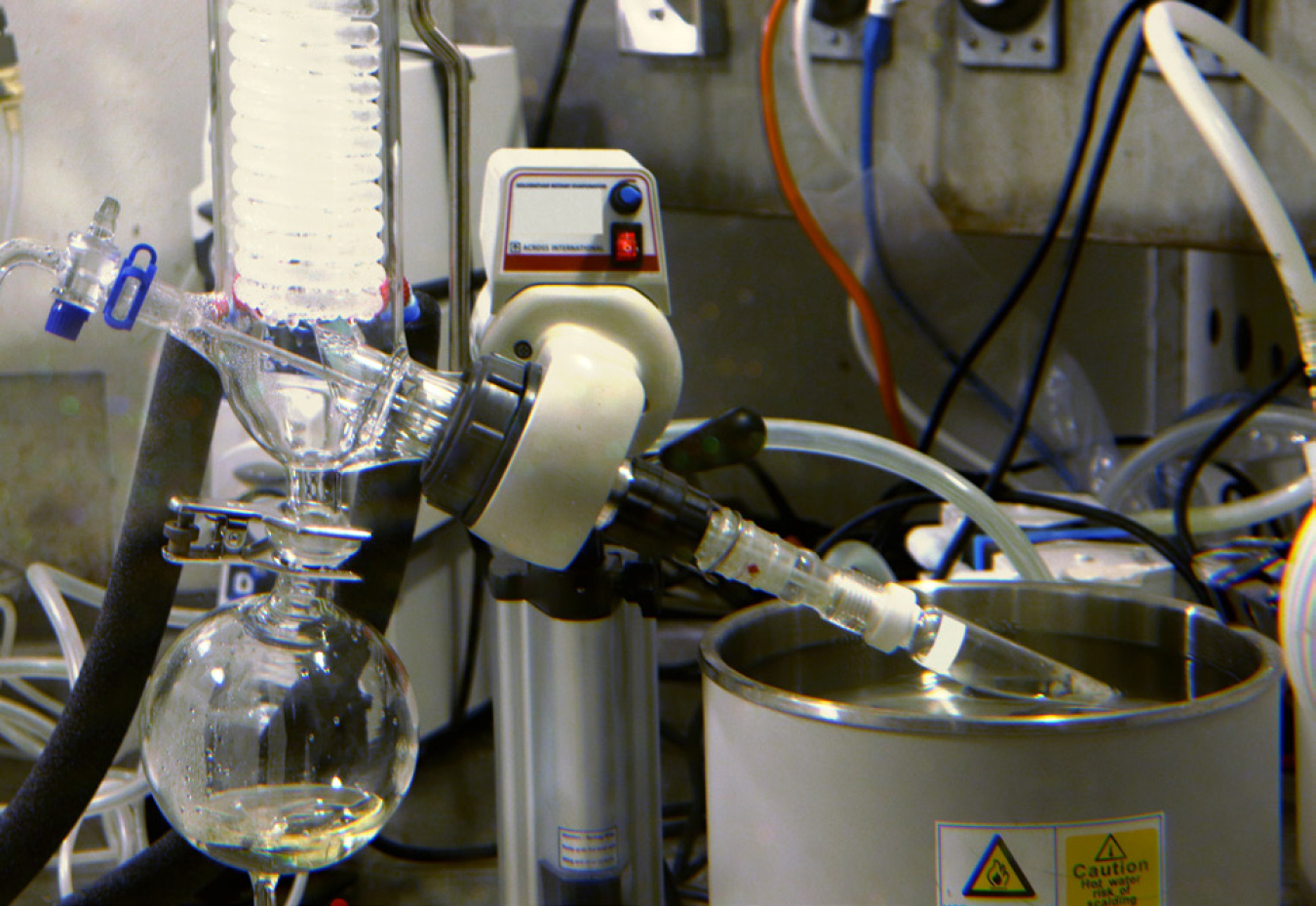 Extracting thorium-229 from U-233 prior to processing and disposal
Reuse & Recycling
Every demolition project, facility deactivation, and cleanup operation across the EM complex generates large quantities of materials including metals, concrete, industrial equipment, and electronics that carry real economic value. Rather than routing these materials to landfill disposal at taxpayer expense, EM sites systematically recover and reuse or recycle them when possible, offsetting cleanup costs, generating revenue for community reuse organizations, and reducing the environmental footprint of the cleanup program itself.
The Savannah River Site (SRS) in South Carolina has emerged as a model for the EM complex in converting cleanup materials into economic value. In fiscal year 2024, contractor Savannah River Nuclear Solutions recycled more than 26 million pounds of materials including 19.5 million pounds of concrete and asphalt, 5.3 million pounds of scrap metal, 881,000 pounds of office paper, and 383,000 pounds of office furniture.
26M+
Pounds of materials recycled at SRS in FY2024
5.3M
Pounds of scrap metal recycled at SRS in FY2024
100,000
Pounds each: five switchgear transformers donated to community reuse
Among the standout projects is the recycling of five 115-kilovolt switchgear transformers, each weighing 100,000 pounds, which had reached the end of their 70-year operational lifespans. Rather than incurring landfill disposal and handling costs, the site donated the transformers to the Savannah River Site Community Reuse Organization, directing the proceeds toward attracting new industry and jobs to the Aiken, South Carolina region.
“The recycling of these components mitigates safety and congestion issues in active construction zones and aligns with the Department of Energy's push for effective resource utilization. Given the transformers' large size and valuable components, they were perfect resources to allocate to SRSCRO (SRS Community Reuse Organization).”
— Andrew Ellsworth, Savannah River Nuclear Solutions
EM's personal property team is making measurable strides in DOE's 2026 asset optimization and cost savings initiative and the results speak for themselves. Through a concerted effort to reutilize excess property and generate revenue through sales across multiple EM sites, the team has collectively driven over $4 million in cost savings and avoidances, contributing to the department's broader goal of achieving $25 million in savings this year. This achievement is not the result of a single transaction or a single site. It reflects an EM complex-wide commitment to smarter stewardship of government assets.
Turning Excess and Surplus Into Savings
Rather than allowing equipment to sit idle or incur disposal costs, the personal property team identified opportunities to put surplus property back to work. From small all-terrain vehicles to heavy forklifts, from cameras and specialized lab tools, excess assets are screened, matched to program needs, and transferred or sold, avoiding the need for new procurement and returning value to DOE elements.
How the Process Works
The personal property team works closely with their contractors, who communicate directly with one another to advertise assets within DOE, or have excess items another site has a need for the assets. It is a relationship-driven process built on coordination and trust across the complex. For personal property that is not successfully transferred to another project or site, the team leverages GovDeals, an online government auction platform, to connect surplus assets with non-federal buyers and generate revenue through sales of surplus assets. This resource is a valuable partner in moving surplus property efficiently and maximizing returns for the department.
The Reuse and Recycle Community of Practice (CoP) is a voluntary department-wide collaboration among interested program offices and sites to reduce costs for new acquisitions and disposal through reuse and recycle of excess materials. Primary objectives include:
- Utilize excess inventories to the best extent possible to reduce - project costs, supply chain interruptions, landfill use, and asset lifecycle costs.
- Provide a centralized forum to share knowledge regarding regulatory and policy, procurement, and technical information between program offices.
- Promote and engage in cost-sharing initiatives across programs and sites, share project lessons learned, and seek support to address materials and equipment gaps.
The CoP is comprised of subject matter experts across DOE in the fields of waste management, contracts and procurement, property management, deactivation and decommissioning, federal project management, and packaging and transportation.
Recent Success Story
Through the Reuse and Recycle Community of Practice, Argonne National Laboratory in Illinois transferred four clean portable units for the safe storage of chemical and radiological hazardous waste to Brookhaven National Laboratory in New York for reuse, saving $250,000. Read the full story here.
Contact
If you are interested in the CoP or have questions about the effort, please contact Shannon Chester at DOEReuseRecycle@doe.gov.