



Sharing knowledge of the best approaches to deactivating process buildings is one of the ways the two Portsmouth Paducah Project Office sites align to advance cleanup of former uranium enrichment plants and free up land for America’s golden era of energy dominance and strong national security. January 27, 2026
Office of Environmental Management
January 27, 2026 Estimated Read Time min
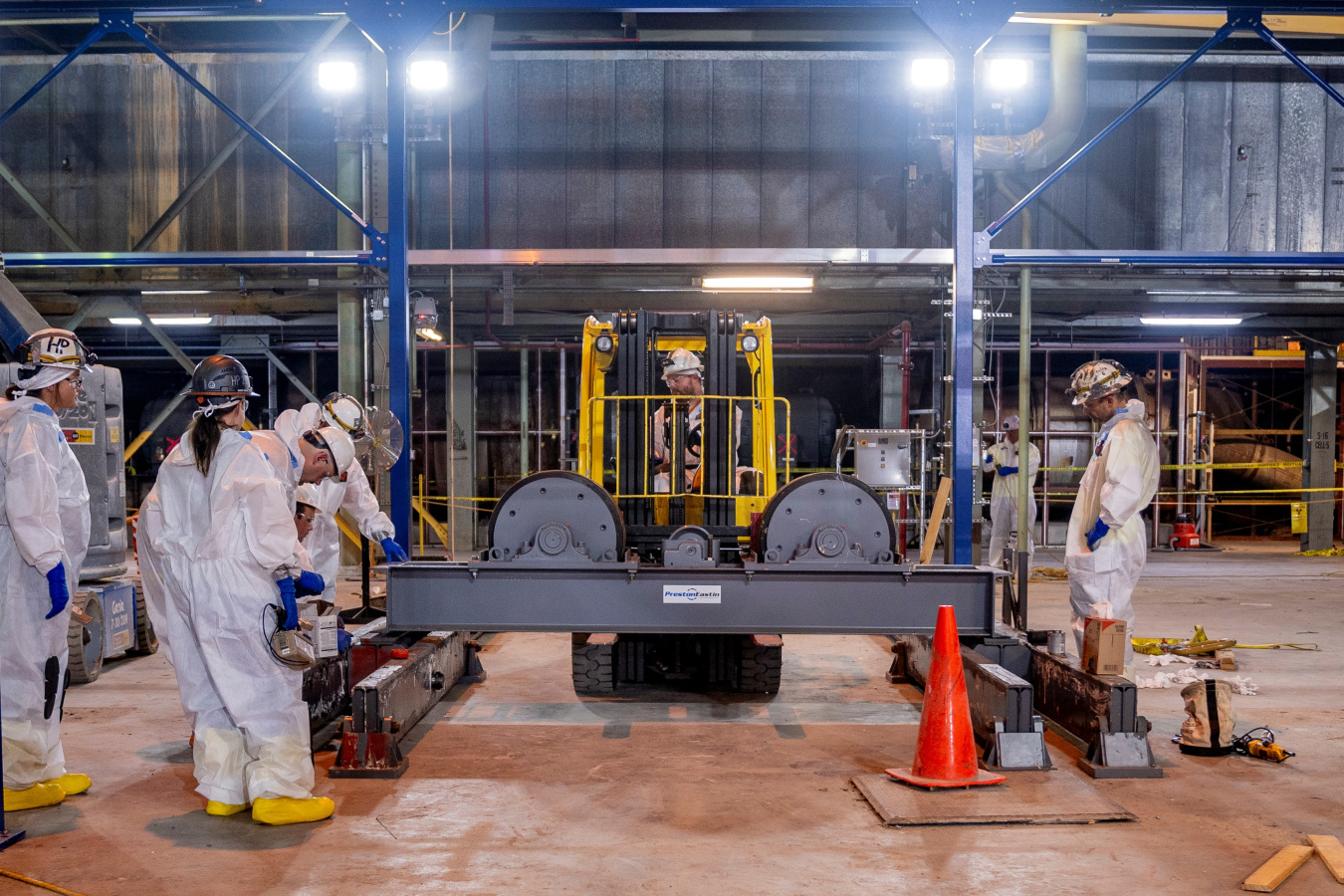
Crews lay out a process gas converter roller stand in the Paducah C-333 Process Building. Drawing from the Portsmouth Site’s lessons learned, the Paducah Site integrated a floor-mounted roller stand into the design and construction of the dust collection system for the segmentation area in C-333. The roller stand is used to efficiently cut converter shells.
LEXINGTON, Ky. — Sharing knowledge of the best approaches to deactivating process buildings is one of the ways the two Portsmouth Paducah Project Office (PPPO) sites in Ohio and Kentucky align to advance cleanup of former uranium enrichment plants and free up land for America’s golden era of energy dominance and strong national security.
“At Portsmouth, we are farther along in the cleanup process than Paducah, so we’ve been able to share some of our key successes in deactivation with them, such as how we handle process gas converters and compressors, compact or crush converter bundles, and track components to disposal,” acting Portsmouth Site Lead Jud Lilly said. “By sharing knowledge and helping each other, we can work more efficiently and optimize our efforts.”
The Portsmouth team completed demolition on the first of its three massive process building and is currently demolishing a second while simultaneously deactivating the final process building before tearing it down. At the Paducah Site, two of the four process buildings are currently undergoing deactivation prior to demolition. These buildings house gaseous diffusion process equipment once used at the former gaseous diffusion plants at each site.
“Deactivation is an especially methodical process necessary to safely demolish a building,” Paducah Site Lead April Ladd said. “By understanding lessons learned from the Portsmouth Site, we’re able to be more calculated and refine our deactivation process at the Paducah Site.”
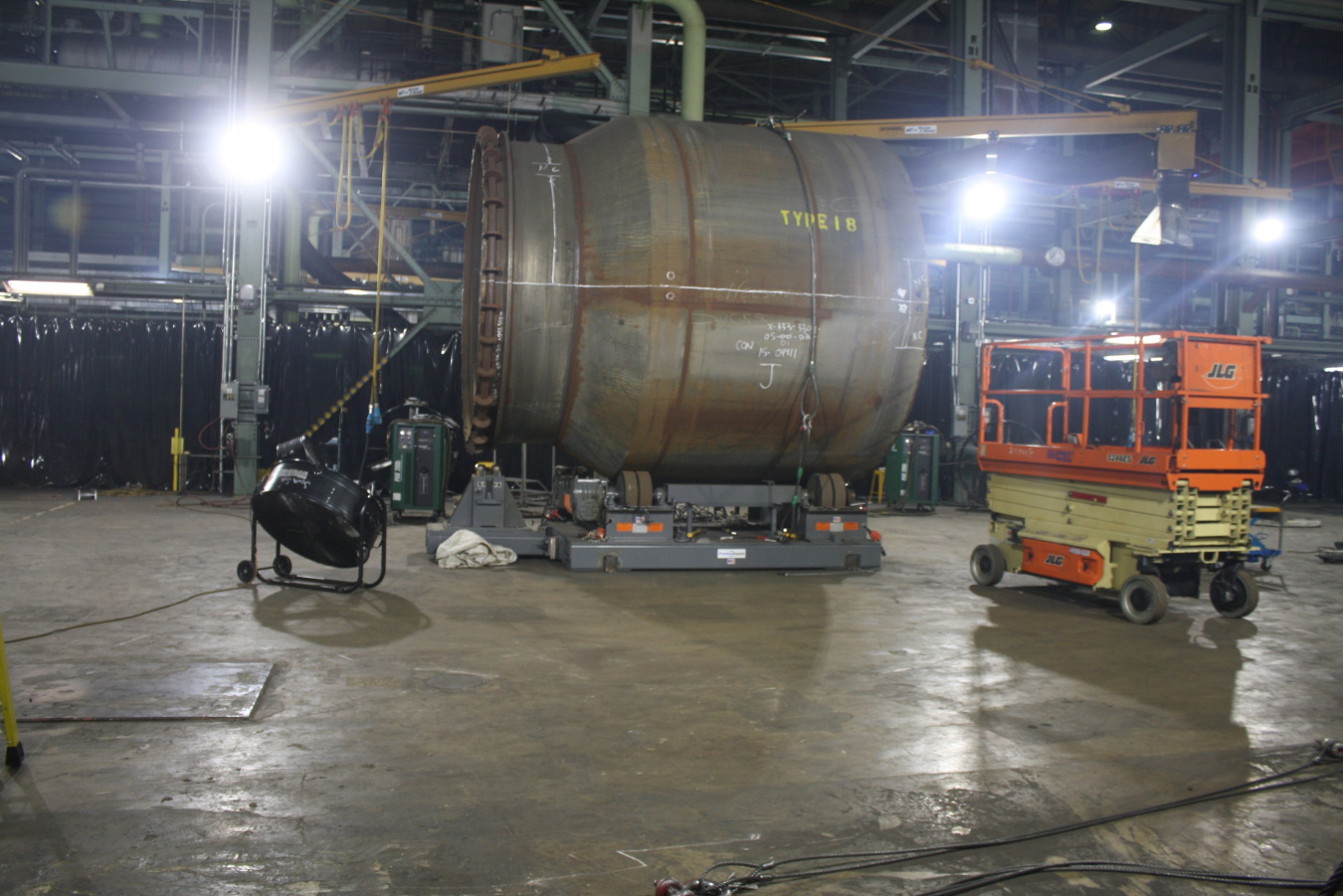
A side-by-side view of a process gas converter sitting on a roller stand, left, and an omnidirectional cart at the Portsmouth Site. The switch from the cart to the roller stand for use in cutting converter shells resulted from a lesson learned: metal dust caused the cart to short circuit the electronics, resulting in prolonged downtime from operations.
Deactivation involves characterizing the building and equipment; disconnecting process equipment; preparing waste for disposal; identifying and removing equipment and material for potential reuse or recycling; removing asbestos and other hazardous waste; isolating and disconnecting utilities; and other work necessary to ensure adequate protection of workers, public health and safety, and the environment.
“When workers initially used plasma cutters to decouple converters and compressors, they needed better airflow, and the purified air-powered respirators were insufficient,” Portsmouth Deactivation Manager Carla Salisbury said. “To improve air flow, we removed panels from cell housings, used ventilation fans and mobilized the wet air system to pull hazardous smoke away from workers.”
Such lessons learned from Portsmouth allowed Paducah to hit the ground running. Although Paducah crews had previously disabled the wet air system, they took a page from Portsmouth’s lessons by streamlining the panel removal process and adding more ventilation fans to improve airflow.
“By sharing knowledge between the two sites, we addressed a number of challenges before work began and continue to share best practices while each site maintains progress,” Paducah Deactivation Manager Donnie Harris said. “For example, with the help of a lesson learned from Portsmouth, we developed a dust collection system that captures smoke from the plasma cutting process and reduces the amount of dust and other particles generated during cutting of the converter shells.”
A best practice shared between the sites was the shift from omnidirectional carts that radiate in all directions equally to floor-mounted roller stands for better ergonomics and worker safety, allowing two workers to efficiently cut the converter shell simultaneously. Team members integrated the lesson learned from this efficiency into the design and construction of the segmentation area at the Paducah Site when work began in the C-333 Process Building.
Another improvement involved upgrading the crusher for bundles, which are internal parts of the converters that are recycled. The upgrades allowed workers to crush the bundles four times faster. Drawing from a lesson learned from Portsmouth, Paducah has since modified its equipment to address wear and tear during bundle crushing.
“It’s all about maximizing opportunities to deliver more at a good value for American taxpayers,” Paducah’s Ladd said. “Anytime we can be more efficient and learn from teams who have successfully completed this type of work before, it benefits everyone.”
PPPO conducts cleanup activities at the Portsmouth Site in accordance with a consent decree with the state of Ohio and the director’s final findings and orders with the Ohio Environmental Protection Agency. At Paducah, cleanup is being conducted in accordance with the Comprehensive Environmental Response, Compensation, and Liability Act.
-Contributors: Dylan Nichols, Michelle Teeters
To receive the latest news and updates about the Office of Environmental Management, submit your e-mail address.