



Thirty years ago this summer, people were still using dial-up Internet, renting movies at brick-and-mortar stores and learning how to do the Macarena. Meanwhile, the U.S. Department of Energy was marking the grand opening of the Environmental Restoration Disposal Facility, an engineered landfill designed to support then-fledgling environmental cleanup efforts at the Hanford Site. August 11, 2026
Office of Environmental Management
August 11, 2026 Estimated Read Time min
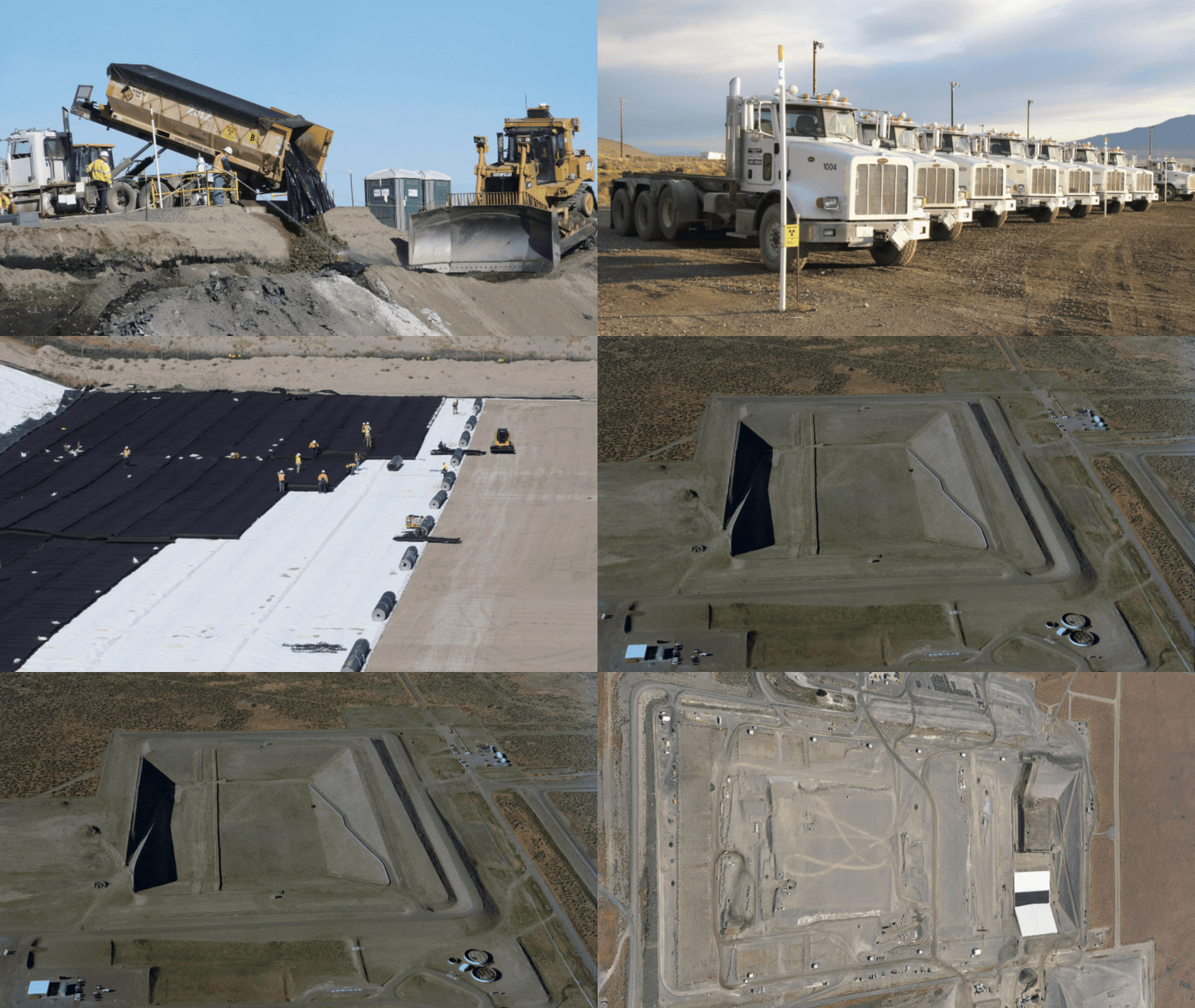
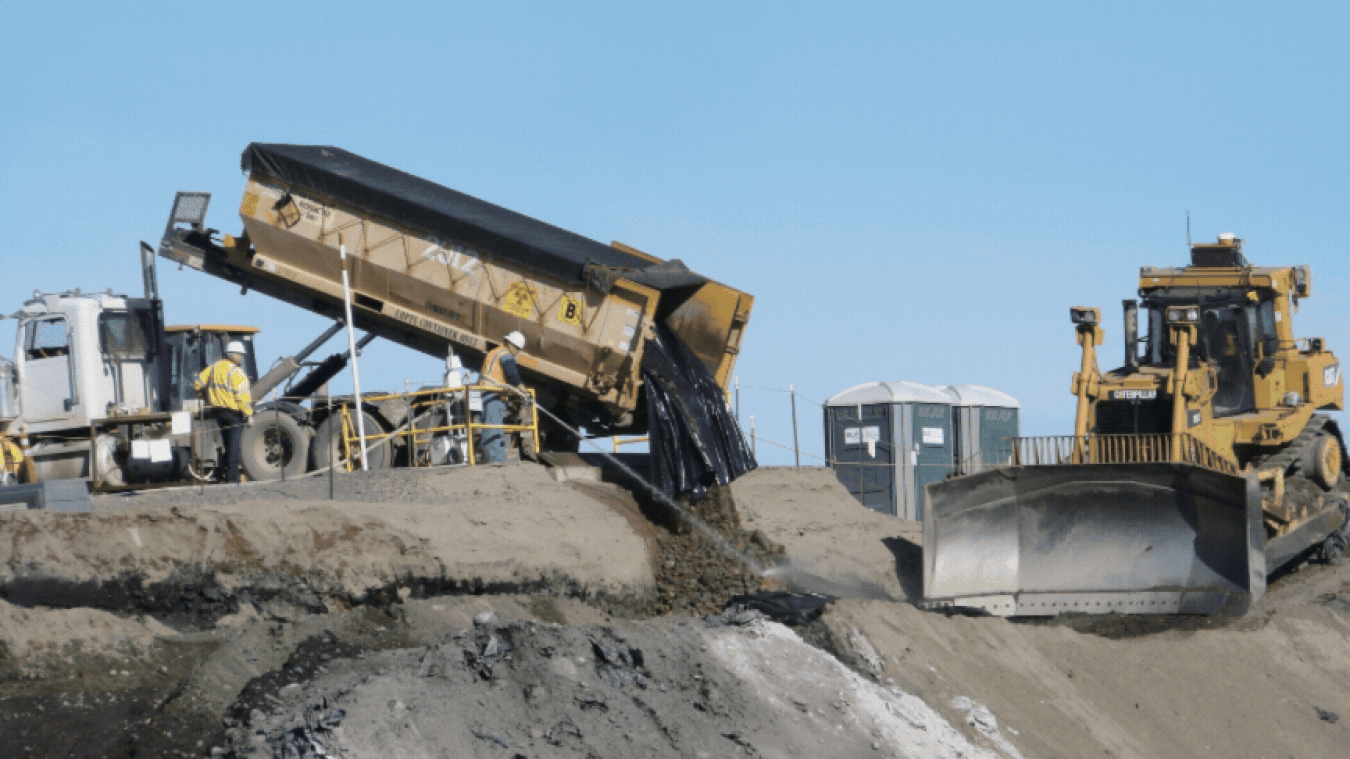
Workers at the Environmental Restoration Disposal Facility have logged more than 30 million safe miles transporting more than 19 million tons of waste from cleanup projects across the 580-square-mile Hanford Site since the engineered landfill began operations in 1996.
RICHLAND, Wash. — Thirty years ago this summer, people were still using dial-up Internet, renting movies at brick-and-mortar stores and learning how to do the Macarena. Meanwhile, the U.S. Department of Energy (DOE) was marking the grand opening of the Environmental Restoration Disposal Facility (ERDF), an engineered landfill designed to support then-fledgling environmental cleanup efforts at the Hanford Site.
Three decades later — and more than 19 million tons of waste disposed of — ERDF continues to play a pivotal role in DOE’s Office of Environmental Management (EM) mission to shrink the site’s cleanup footprint. The facility offers a safe and compliant location for the disposal of low-level radioactive, hazardous and mixed waste generated during cleanup activities on Hanford’s Central Plateau and the nearby Columbia River Corridor.
“Since beginning operations in 1996, ERDF has been a cornerstone of our cleanup mission, allowing risk-reduction activities to advance across the Hanford Site,” said Kelly Ebert, director of the Project and Facilities Division at EM’s Hanford Field Office. “Today, the facility remains a key part of DOE’s overall strategy at the site, providing a safe, permanent destination for contaminated material to ensure protection of workers, the public and the Columbia River.”
Located at the center of the 580-square-mile site and spanning 107 acres — an area equivalent to 52 football fields — ERDF is one of EM’s largest engineered landfills. Since operations began, workers have disposed of demolition material from more than 800 facilities and 1,300 waste sites.
To protect the environment from contamination, ERDF has an engineered liner with multiple layers that capture precipitation from rain, snowmelt and dust control, directing it to holding tanks for treatment and further safeguarding the groundwater.
The ERDF workforce also boasts an impressive safety record, with truck drivers logging more than 30 million safe miles — equivalent to circling the earth 1,200 times — since the facility opened.
To ensure continued support for the cleanup mission, ERDF has undergone several expansions, including one that began last summer. Workers with EM contractor Central Plateau Cleanup Company (CPCCo) are expected to complete construction this year on Super Cell 11, an 80-foot-deep, 500-foot-wide and 1,000-foot-long disposal area that adds about 2.8 million cubic yards of capacity.
“I’m proud of the role our experienced crews — past and present — have played in supporting cleanup progress across the Hanford Site,” said CPCCo ERDF Facility Manager David Duranceau, who worked on construction of the first disposal cell in 1996. “Our commitment to safe and efficient operations and environmental protection has not wavered in three decades, and we look forward to that continuing through the life of the mission.”
To receive the latest news and updates about the Office of Environmental Management, submit your e-mail address.