



Advancing the Cleanup Mission
Office of Environmental Management
August 5, 2026 Estimated Read Time min
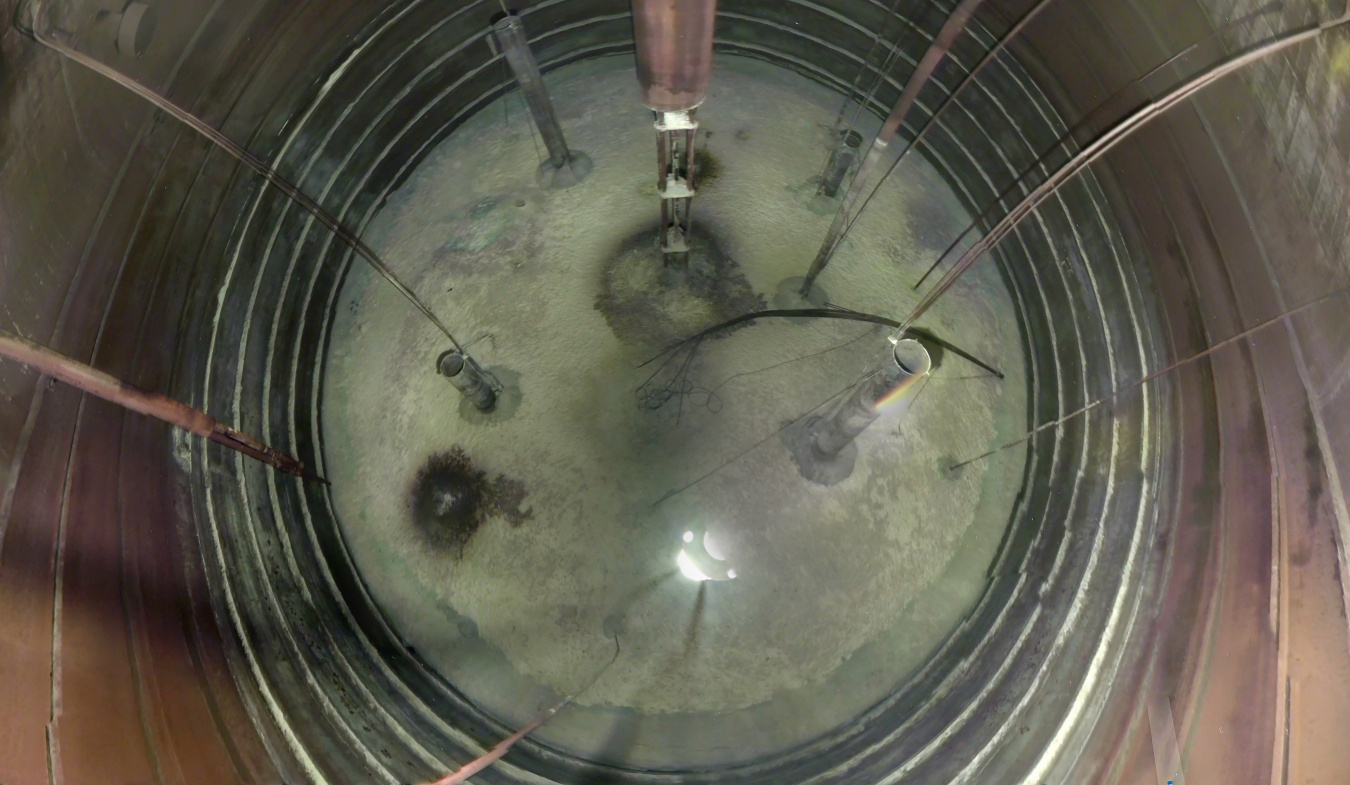
Radioactive and chemical waste is shown inside Tank A-106 at the Hanford Site before Hanford Tank Waste Operations & Closure workers started pumping it out to a double-shell tank for safe storage in January.
RICHLAND, Wash. – The U.S. Department of Energy’s (DOE) Office of Environmental Management Hanford team continues advancing the cleanup mission, with radioactive waste now removed from the 24th underground storage tank.
“We’re not just emptying tanks, we’re creating momentum,” said Hanford Field Office Manager Ray Geimer. “Every completed retrieval reduces the risk in the single-shell tanks and positions more waste for treatment through our dual glass-plus-grout strategy, allowing us to safely increase the pace of progress.”
In under seven months, Hanford Tank Waste Operations and Closure (H2C) workers transferred about 79,000 gallons of decades-old waste from Single-Shell Tank A-106 to a double-shell tank for continued safe storage. The contractor initially used water to dissolve the surface salt-based waste, then reutilized transferred liquid waste to mobilize sludge — a method last used nearly 10 years ago.
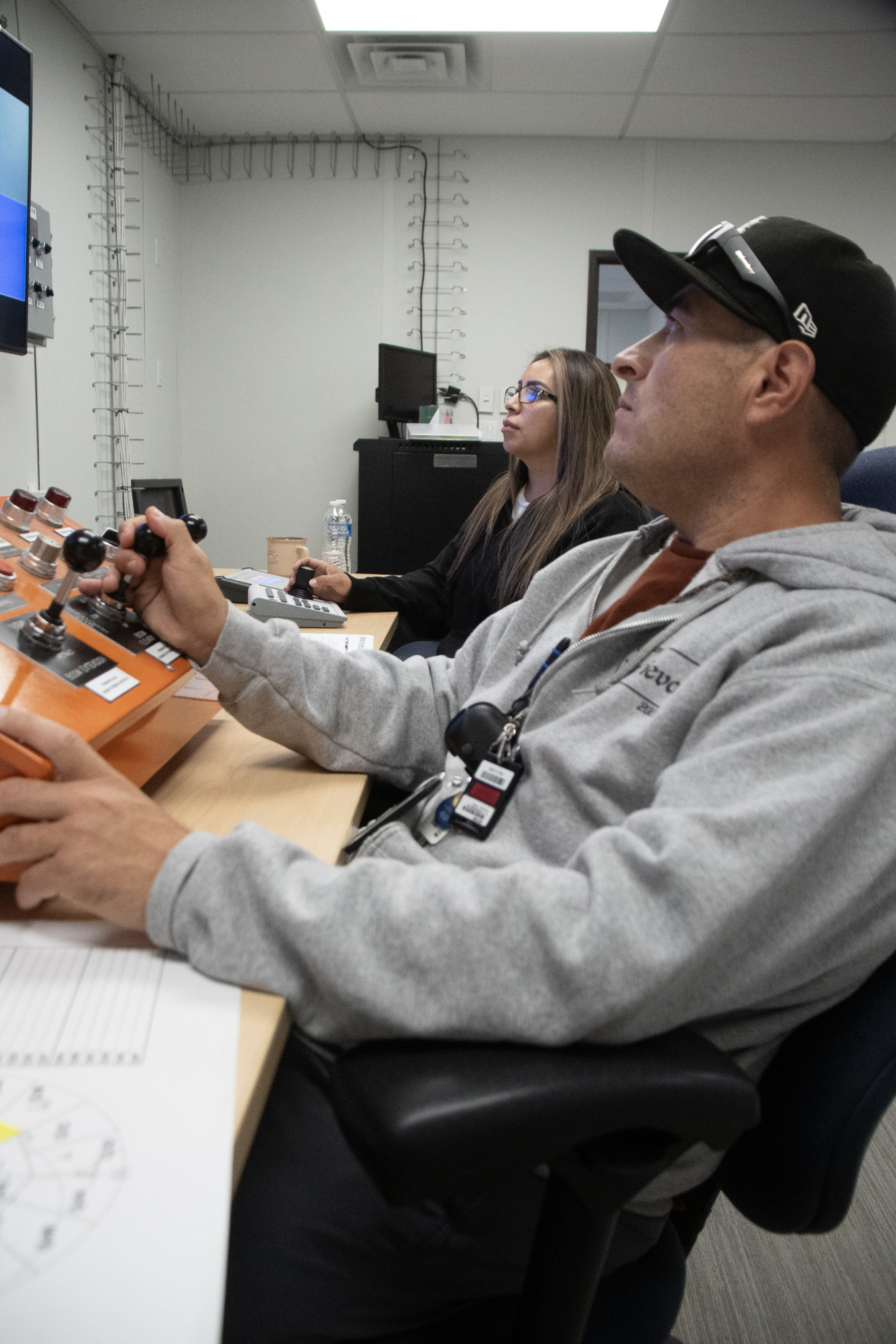
Jackie Mendoza-Zuniga, left, and Enoc Flores Robles, nuclear chemical operators with Hanford Tank Waste Operations and Closure, operate high-pressure water spray nozzles and cameras inside Tank A-106 during the final days of waste retrieval activities last month.
From 1944 to 1989, Hanford produced 74 tons of plutonium for the country’s nuclear weapons program. To store the radioactive and chemical byproducts, the site built thick, reinforced concrete tanks lined inside with steel and buried under several feet of soil to shield workers from radiation. The tanks held up to a million gallons each, and when production stopped at the end of the Cold War, 56 million gallons of waste was in 177 of the large tanks.
The Energy Department and its contractors have completed retrieval operations in two of the Site’s tank farms. A Tank Farm is the third farm to have waste moved out of the older tanks with a single steel liner into newer tanks that have a second liner for added leak protection. To date, about 3.5 million gallons of waste have been removed from
24 single-shell tanks.
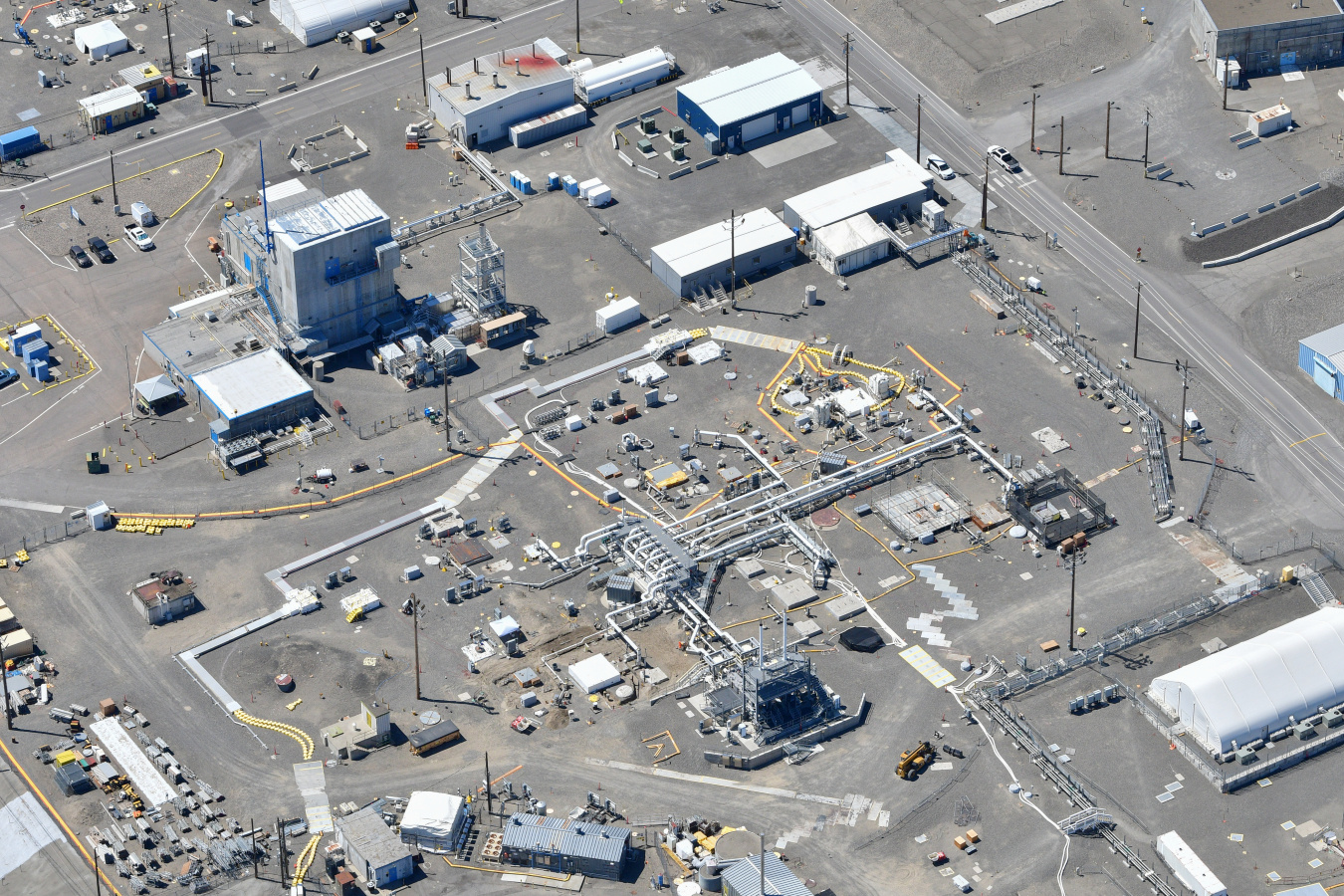
Completion of waste retrieval from Single-Shell Tank A-106 marks the third tank where retrieval activities are done in the Hanford Site’s A Farm, seen in this aerial photo.
“This achievement reflects the expertise and determination of the H2C workforce, who continue to push the limits of available technology to safely retrieve this challenging waste,” said Phil Breidenbach, H2C’s chief operating officer. “We’re proud to support DOE in making steady, measurable strides toward a cleaner Hanford for future generations.”
Next up is Hanford’s 25th single-shell tank, A-103, with retrieval activities scheduled to begin in October and continue as long as double-shell tanks space allows. With space in the double-shell tanks currently at capacity, the Department’s science backed dual glass-plus-grout approach would protect the ability to continue retrieving waste from aging single shell tanks, enable tank waste treatment to resume and maximize opportunities to speed up the Hanford tank waste mission.
Media Contacts:
Cerise Peck, Hanford Field Office, 509-980-8466, Cerise_m_peck@rl.gov
Destry Henderson, Hanford Tank Waste Operations and Closure, 509-376-8644, Destry_j_henderson@rl.gov
To receive the latest news and updates about the Office of Environmental Management, submit your e-mail address.