



Pacific Northwest National Laboratory showcased its science-based solutions to the nation’s most complex nuclear waste cleanup challenges during Assistant Secretary of Environmental Management Tim Walsh’s first visit to the laboratory. August 4, 2026
Office of Environmental Management
August 4, 2026 Estimated Read Time min
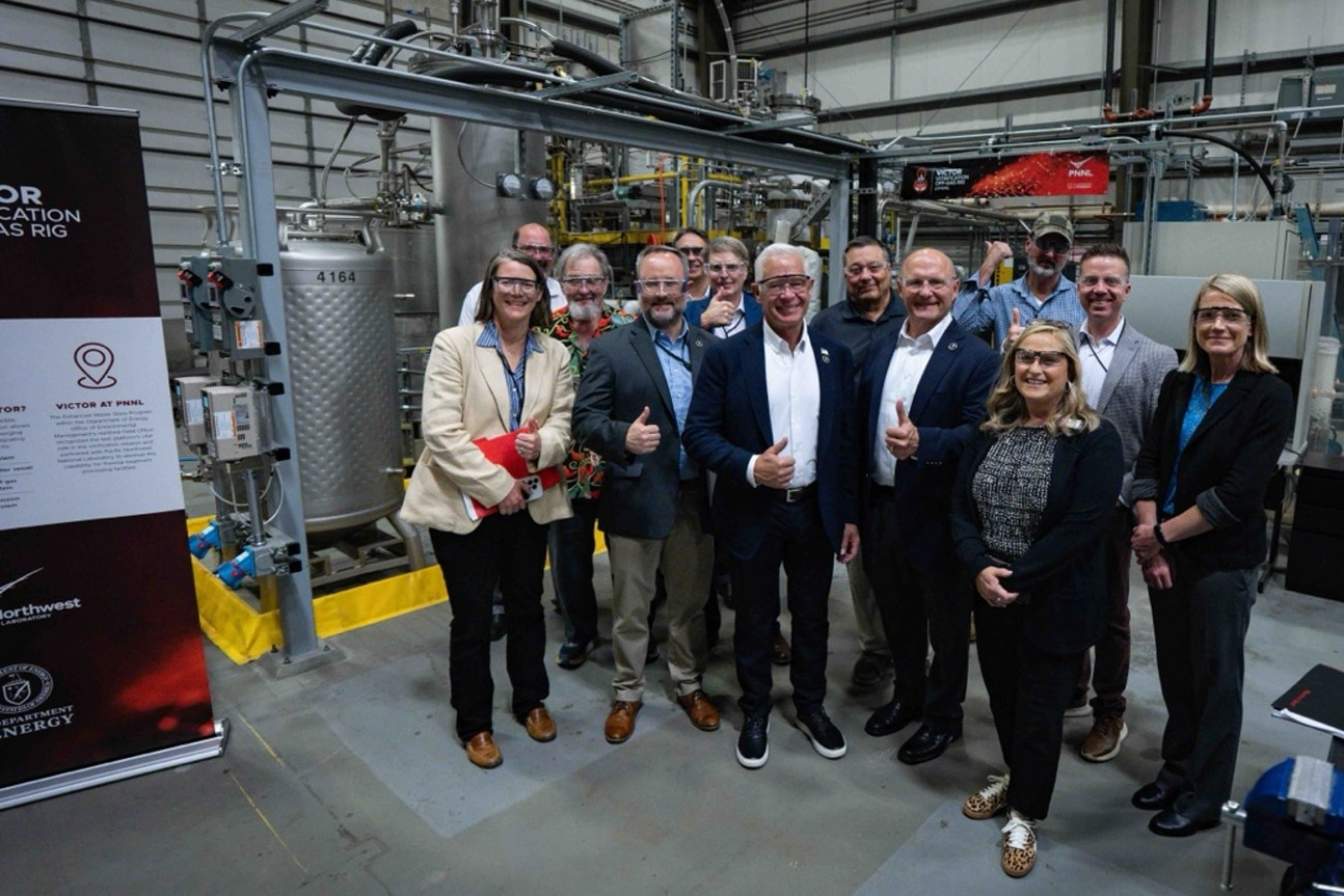
Assistant Secretary of Environmental Management Tim Walsh, front row, third from left, toured the Vitrification Off-gas Rig, aka VICTOR, during a recent Pacific Northwest National Laboratory visit.
RICHLAND, Wash. — Pacific Northwest National Laboratory (PNNL) showcased its science-based solutions to the nation’s most complex nuclear waste cleanup challenges during Assistant Secretary of Environmental Management (EM) Tim Walsh’s first visit to the laboratory.
“What’s really exciting to me is the history of the lab. It’s really evolved in the diversity of the scientific discoveries they’re doing here,” Walsh said of PNNL. “They support EM’s mission in a multitude of areas, everything from groundwater remediation to dealing with one of our largest tasks: safely retrieving and treating tank waste.”
EMTV: In this video, Assistant Secretary of Environmental Management Tim Walsh discusses the nuclear science expertise Pacific Northwest National Laboratory brings to the cleanup mission.
Walsh, EM Chief Operating Officer David Brunnert and EM Deputy Chief of Staff John Howard toured PNNL with U.S. Department of Energy (DOE) Hanford Field Office Manager Ray Geimer and Deputy Site Manager Corey Low, and DOE Pacific Northwest Site Office Acting Manager Ashley Morris.
PNNL grew out of the Manhattan Project and brings 60 years of nuclear science expertise to the DOE cleanup mission at the adjacent Hanford Site, EM sites across the DOE complex and international partners.
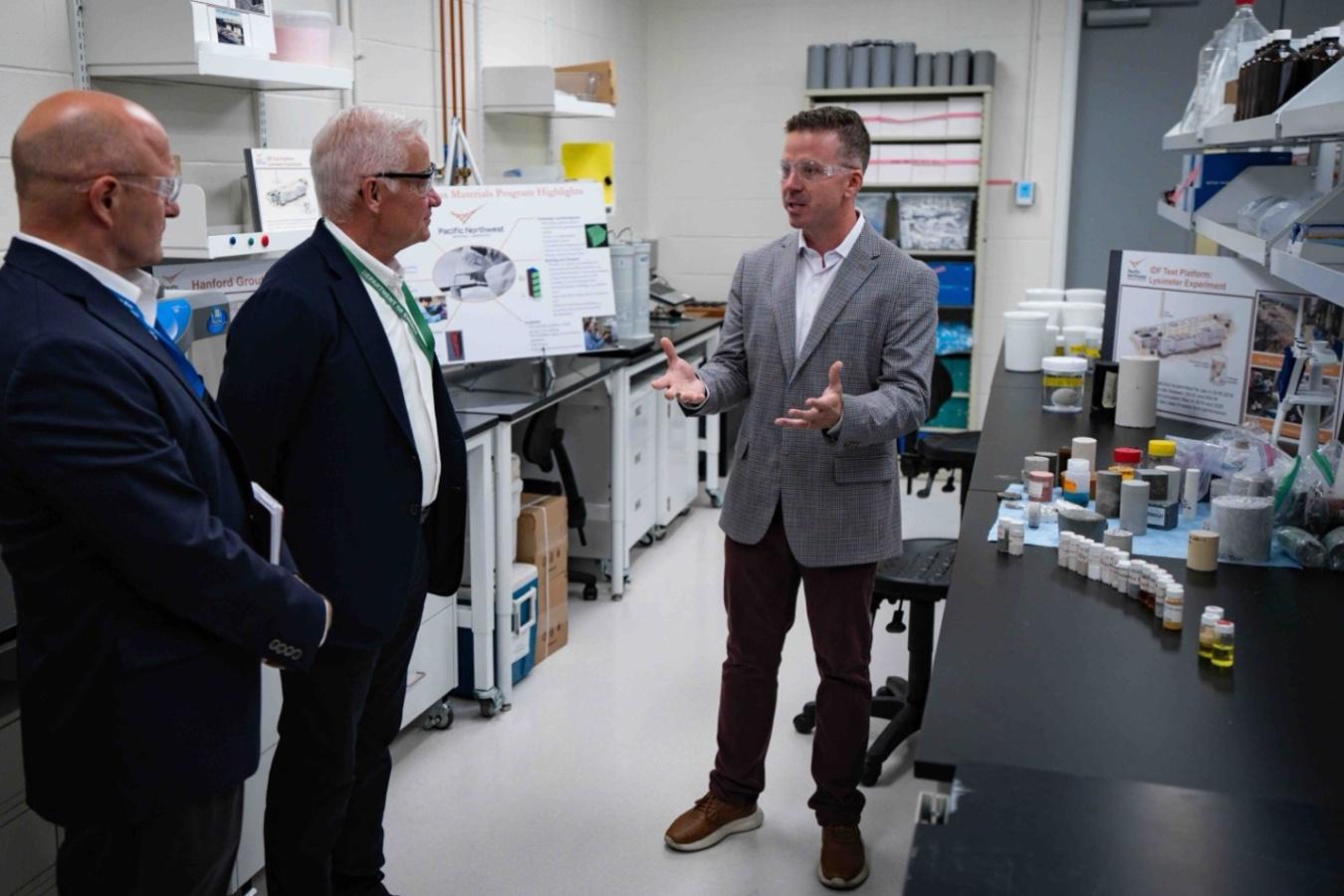
Pacific Northwest National Laboratory (PNNL) chemist Matt Asmussen explains how PNNL has been a leader since the 1970s in testing and evaluating specialized grout waste forms for the solidification of Hanford Site wastes.
“As an Office of Science national laboratory, PNNL advances the scientific discoveries that strengthen today’s cleanup efforts and make tomorrow’s solutions possible,” PNNL Director Deb Gracio said. “During Assistant Secretary Walsh’s visit, we demonstrated how our expertise in chemistry, materials science, computing and AI is helping the Office of Environmental Management tackle its most complex challenges with greater confidence, speed and long-term impact.”
PNNL helps transform radioactive waste into glass as a partner in the startup and ongoing operations of the Hanford Site’s Waste Treatment and Immobilization Plant. In addition to glass science, PNNL’s waste form team analyzes options to immobilize waste in a scientifically formulated cementitious material called grout.
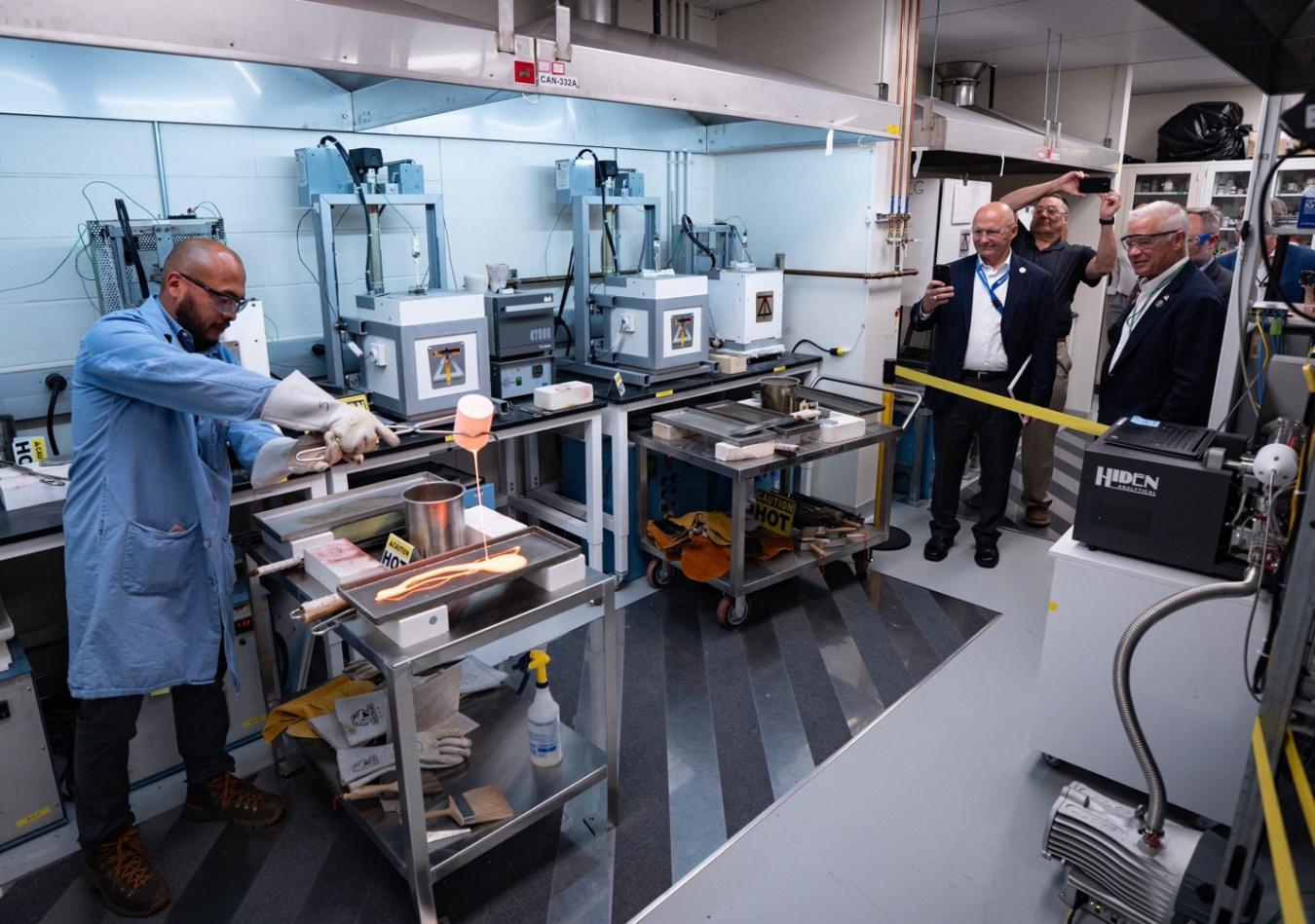
Pacific Northwest National Laboratory materials scientist José Marcial, left, demonstrates a glass pour, one of the research methods used to evaluate which compositions most effectively vitrify various Hanford Site tank wastes. The goal is to reduce the mission’s cost and timeline.
“It’s really fascinating to see the vitrification process, the different glass-forming products that go into it and how we can safely handle the off-gassing that occurs,” Walsh said. “I’m also excited about grouting, so some of the low-activity waste can be safely grouted, and the chemistry involved with that.”
PNNL is leading and partnering on three DOE Genesis Mission projects dedicated to supporting the artificial intelligence (AI) acceleration of EM’s cleanup goals.
“We’re now at the era of AI, and we’re going to apply AI and machine learning to further accelerate how we can safely treat the tank waste mission here,” Walsh said.
-Contributor: Melissa Perdue
To receive the latest news and updates about the Office of Environmental Management, submit your e-mail address.