What Are Onsite Fuels and Energy Sources and Why Are They Important?
Onsite fuels are materials that, when burned, provide thermal energy to directly heat industrial processes, to produce steam, or to generate electricity for industrial facilities, such as in combined heat and power systems.
Fuels are typically the main source of thermal energy in American manufacturing. They are energy-dense, meaning they store a significant amount of energy per unit of volume or mass, which makes them easy to store and transport. Releasing the energy stored in these fuels through combustion has historically been the most economic way to produce the large amounts of heat needed for industrial processes.
However, to increase competitiveness in evolving global markets, manufacturers are exploring alternatives to traditional fuel combustion for industrial applications.
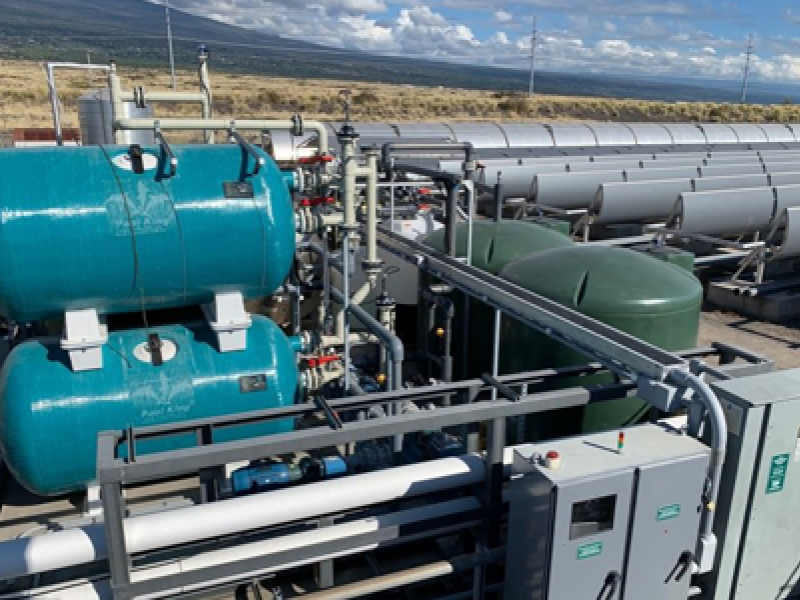
There is also an opportunity for industrial sites to replace fuels entirely with other cost-effective, efficient energy sources. Rather than burning fuels, industrial sites can directly use nuclear, geothermal, solar thermal power, and a variety of other energy sources.
How Do Industrial Facilities Use Onsite Fuels and Energy Sources?
Integrating new onsite energy sources creates a unique set of challenges for existing industrial facilities. For example, integrating geothermal heat typically requires installing new capital equipment to support energy collection, transportation, and storage and is generally untested at an industrial scale. Moreover, in a globally competitive marketplace, it is difficult for operators to incur the cost of replacing functional, already-installed equipment before its end-of-life. For this reason, in addition to funding R&D to lower the costs of deploying these technologies, the U.S. Department of Energy's Industrial Technologies Office provides technical assistance to industrial facilities aiming to integrate onsite energy resources into operations through its onsite energy program.