



Overview
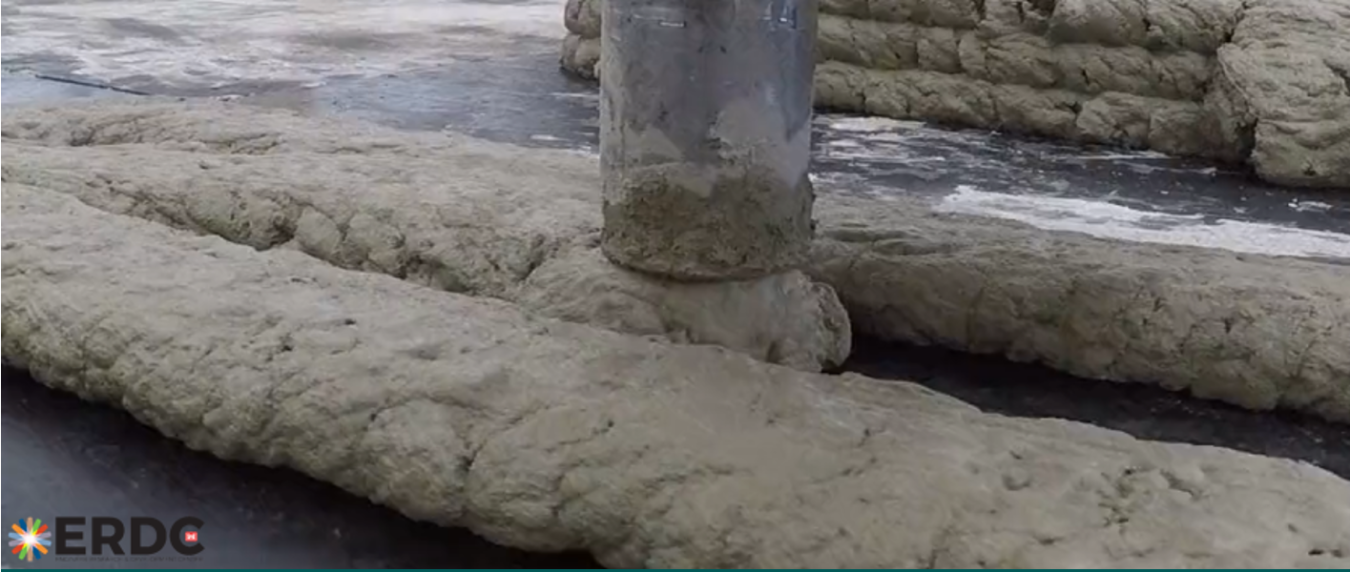
This Notre Dame project aims to achieve high energy and construction efficiency through additive manufacturing (i.e., 3D printing) of concrete walls in buildings. 3D printing concrete offers new opportunities for advancing energy efficiency and manufacturing in building construction, with demonstrated savings in construction cost and time. This project will provide improved thermal efficiency while achieving the strength and ductility required for commercial, public works, and multistory residential buildings.
| Project Type | Problem to Solve | Solution | Location | Timeline | Partners |
| Commercial and residential new construction | Time consuming and labor-intensive construction method | 3D concrete printing with high energy and construction efficiency | University of Notre Dame | July 2020–December 2024 |
|
Project Goals
The proposed technology aims to achieve superior thermal performance (i.e., 50% improvement in thermal resistance) without compromising structural performance at no additional first cost. The project team conducts experimental and numerical thermal and structural investigations to develop design and construction methods. They will then demonstrate and validate the performance of the 3D-printed concrete walls.
Impacts
Achieving the target energy performance of 50% higher thermal resistance while providing 100% strength and ductility as conventional (non-3D-printed) walls at no additional first cost will significantly advance U.S. building construction. The project will impact commercial, public works, and multistory residential buildings, particularly in cold, mixed-humid, and marine climates, as these structures have some of the highest average site energy use intensity.
Technology Impact
The Notre Dame 3D-printing technology will reduce labor costs, increase efficiency, and provide thermal insulation, promising to improve both cost-effectiveness and energy efficiency.
Market Impact
This project’s successful implementation could lead to the widespread adoption of more efficient building practices, benefiting both the environment and building occupants.
In additive manufacturing the opportunities are unlimited. Our interdisciplinary team is exploring ways to print reinforced concrete walls that are strong and more energy efficient, without additional first costs and potentially reducing material use.
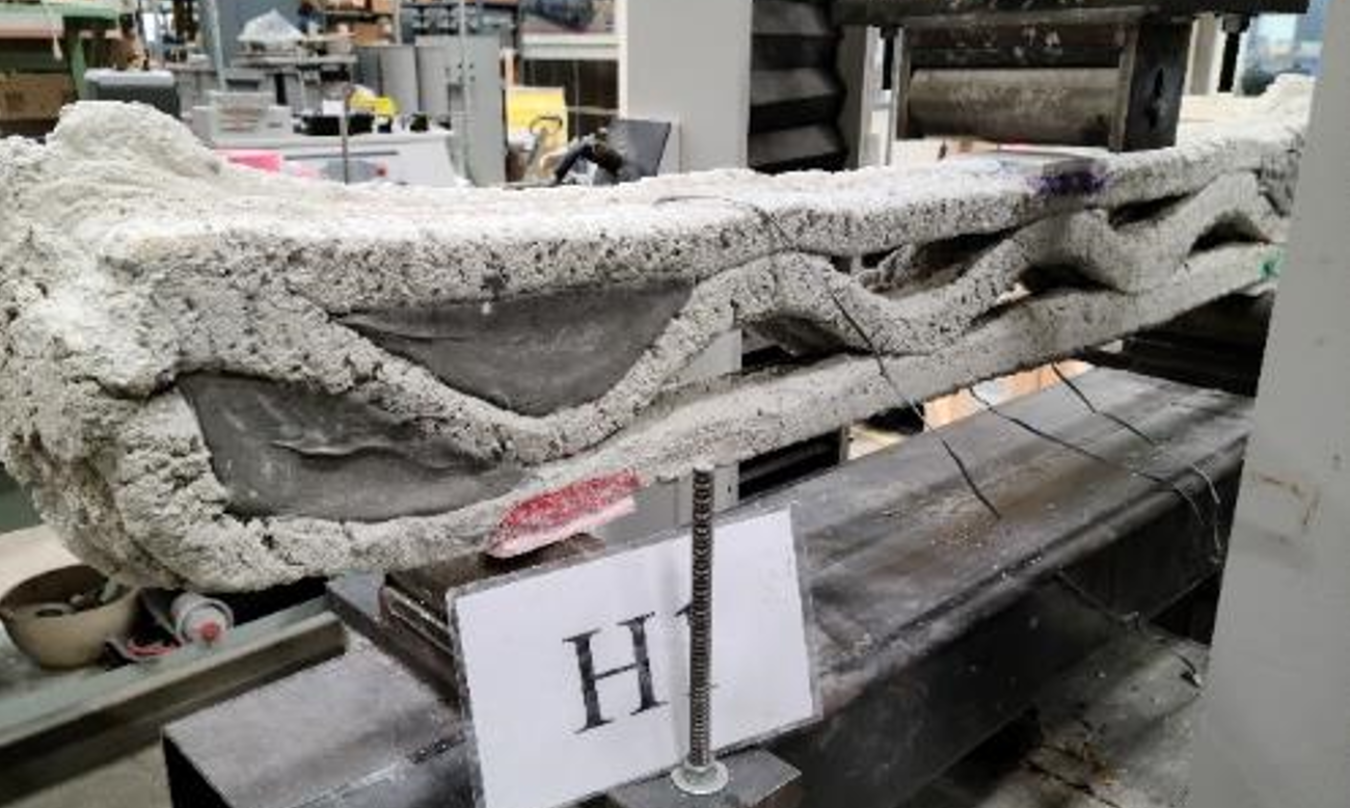
- Printing wall stubs demonstrated constructability.
- Wall stubs underwent thermal testing, using a variety of insulating materials. Models were able to predict thermal performance within 20%.
- Structural testing of full-scale wall stubs found that the investigated reinforcement strategy was able to achieve > 100% of the peak load as compared to the state-of-the-practice reinforcement.
- The feasibility of the proposed co-design approach, including integrally and optimally placed insulation for thermal performance and innovative reinforcing layouts for structural performance, is being demonstrated through rigorous experimental testing and numerical modeling.
- The economic feasibility of this approach has also been demonstrated through cost analyses.
- Structural and thermal testing will be performed on full-scale wall prototypes.
- Measured behavior will be compared with rigorous numerical modeling, culminating in validated modeling approaches.
- The team will disseminate knowledge through journal publications and a final report, with an emphasis on developing guidelines and recommendations for industry adoption.
- The team will promote means for technology transition.
General Inquiries: abc@ee.doe.gov
About the ABC Initiative
The Advanced Building Construction (ABC) Initiative, led by the Building Technologies Office (BTO), integrates energy efficiency and advanced technology solutions into industrialized construction processes to drastically increase the speed and scale of high-performance, energy-efficient building retrofits and new construction.
.....
Page last updated: May 1, 2025