



Cleanup at the Paducah Site is advancing thanks to new technology to efficiently scan equipment for uranium deposits as crews deactivate a second former uranium enrichment process building at the site to prepare it for eventual demolition. February 17, 2026
Office of Environmental Management
February 17, 2026 Estimated Read Time min
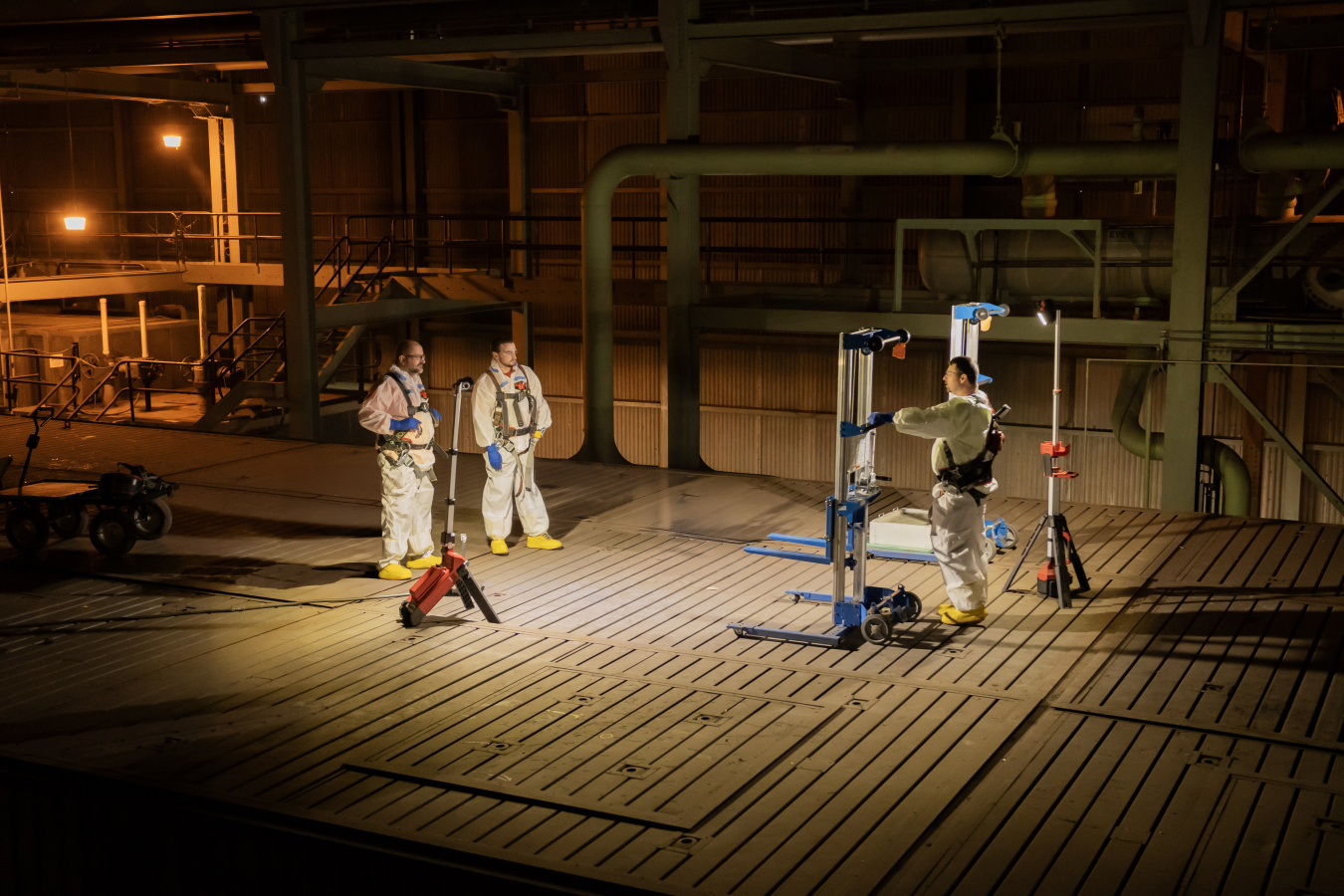
Technicians position instruments for the Rapid In Situ Screening for Converters and Compressors atop the housing of process gas equipment to measure components in place at the Paducah Site’s C-337 Process Building.
PADUCAH, Ky. — Cleanup at the Paducah Site is advancing thanks to new technology to efficiently scan equipment for uranium deposits as crews deactivate a second former uranium enrichment process building at the site to prepare it for eventual demolition.
Developed at the Paducah Site, the new component measurement method is designed to improve safety, reduce costs and significantly accelerate project schedules as U.S. Department of Energy Office of Environmental Management (EM) crews work to turn liabilities into assets for the American people. This initiative also demonstrates how EM incorporates innovation and efficiency into cleanup, focusing on priorities and reining in costs without sacrificing safety or effectiveness.
In the C-337 Process Building, nondestructive assay (NDA) experts are deploying the new technology, Rapid In Situ Screening for Converters and Compressors (RISCC), to scan process gas equipment in place, leading to significant efficiencies in preparing buildings for future demolition. NDA is a process of scanning without modifying or changing the condition of equipment being scanned.
“The C-337 Process Building is a complex facility, and its components pose new challenges as crews begin removing equipment from the former uranium enrichment process building,” Portsmouth Paducah Project Office (PPPO) Interim Acting Deputy Manager and Paducah Site Lead April Ladd said. “RISCC gives us a way to receive effective, defensible measurements without dismantling equipment, a major step forward for safety and efficiency.”
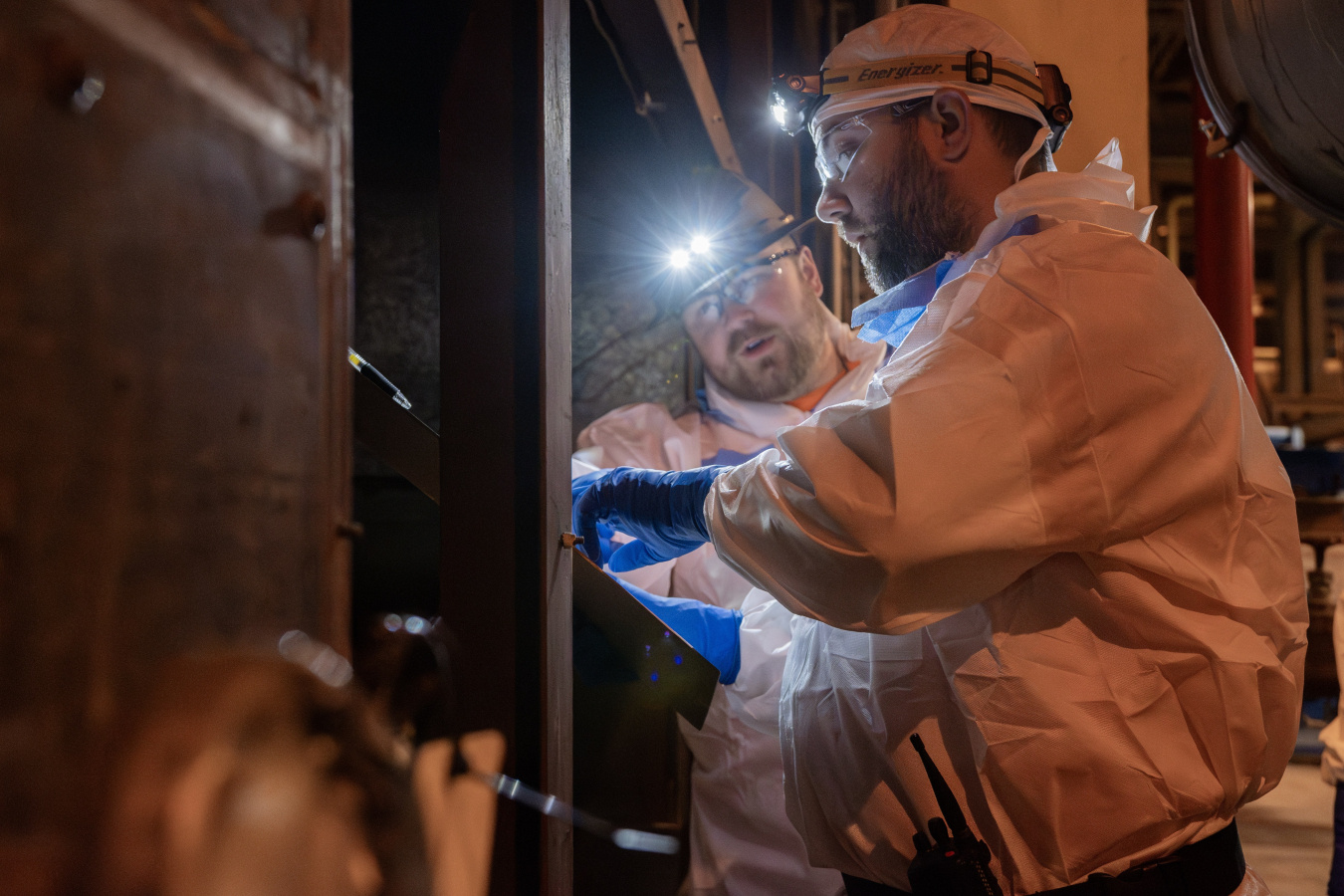
Johnathan Vaughan, right, and Chris Toon inventory process gas equipment to be scanned prior to removal in the Paducah C-337 Process Building.
NDA crews must measure equipment to determine if uranium deposits are present and whether any special handling is required. Historically, multiple NDA measurements were required for each component, a labor-intensive process. RISCC allows workers to obtain the necessary data in a safer, more efficient manner, reducing risk to workers, project costs and schedule durations.
The RISCC method is being deployed to scan nearly 1,000 components in C-337, leveraging lessons learned from the other methods developed at the Paducah Site. Implementing the RISCC approach before process gas equipment is processed for disassembly allows analysts to screen equipment against established criteria and potentially remove the special handling and spacing requirements that slow removal and transportation.
Previously, there was no way to scan components in place without modifying or removing other systems and structures in C-337. Crews partially disassembled the equipment, or moved it before taking measurements, adding time, cost and increased risk of exposure to hazardous conditions for personnel.
“By applying RISCC ahead of disassembly, we’re reducing the projected schedule for the C-337 Process Building significantly,” Ladd said. “It’s a novel methodology developed at the Paducah Site and will only become more accurate as we collect additional scans.”
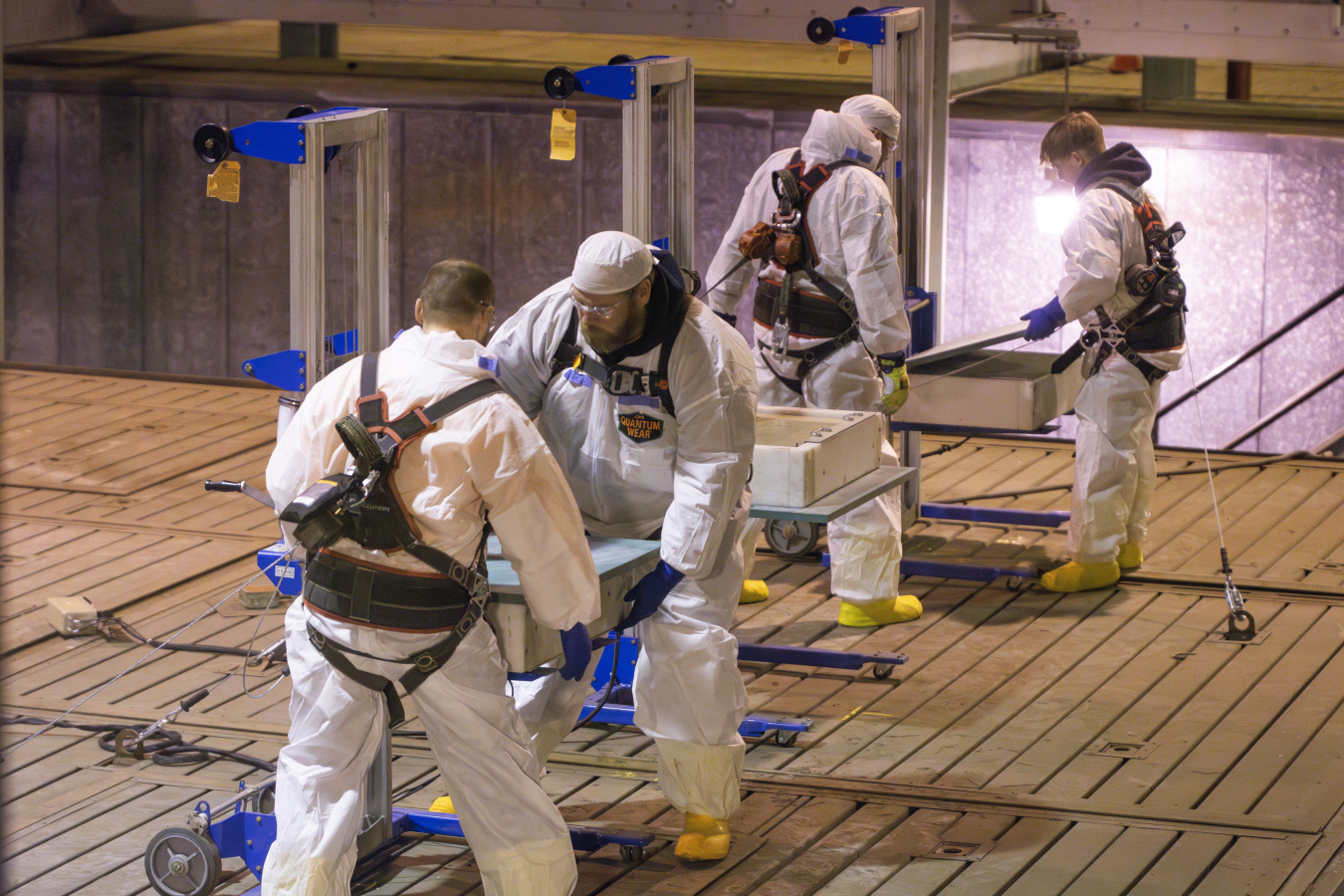
Nondestructive assay technicians set up detectors used for scanning methods to support Rapid In Situ Screening for Converters and Compressors at the Paducah Site’s C-337 Process Building.
Using existing equipment, RISCC takes advantage of spallation and atmospheric data collected during scanning from other NDA methods, ensuring valid measurements throughout the process to provide data that reduce operational costs with an expected acceleration of deactivation activities. Spallation is the process where small particles break away from an atom.
“The RISCC method significantly reduces the time required for each measurement,” Four Rivers Nuclear Partnership Program (FRNP) Manager Myrna Redfield said. “By gathering high quality data up front, we decrease the need to duplicate measurement efforts as components move through the removal process, saving a tremendous amount of time.”
FRNP is the Paducah Site deactivation and remediation contractor.
Removal of process gas equipment from C-337 is essential to prepare the facility for future demolition. PPPO conducts cleanup activities at the Paducah Site in accordance with the Comprehensive Environmental Response, Compensation, and Liability Act.
-Contributor: Dylan Nichols
To receive the latest news and updates about the Office of Environmental Management, submit your e-mail address.