



Since work began to prepare the first former uranium enrichment process building for eventual demolition at the Paducah Site, one number loomed large: 497. February 10, 2026
Office of Environmental Management
February 10, 2026 Estimated Read Time min
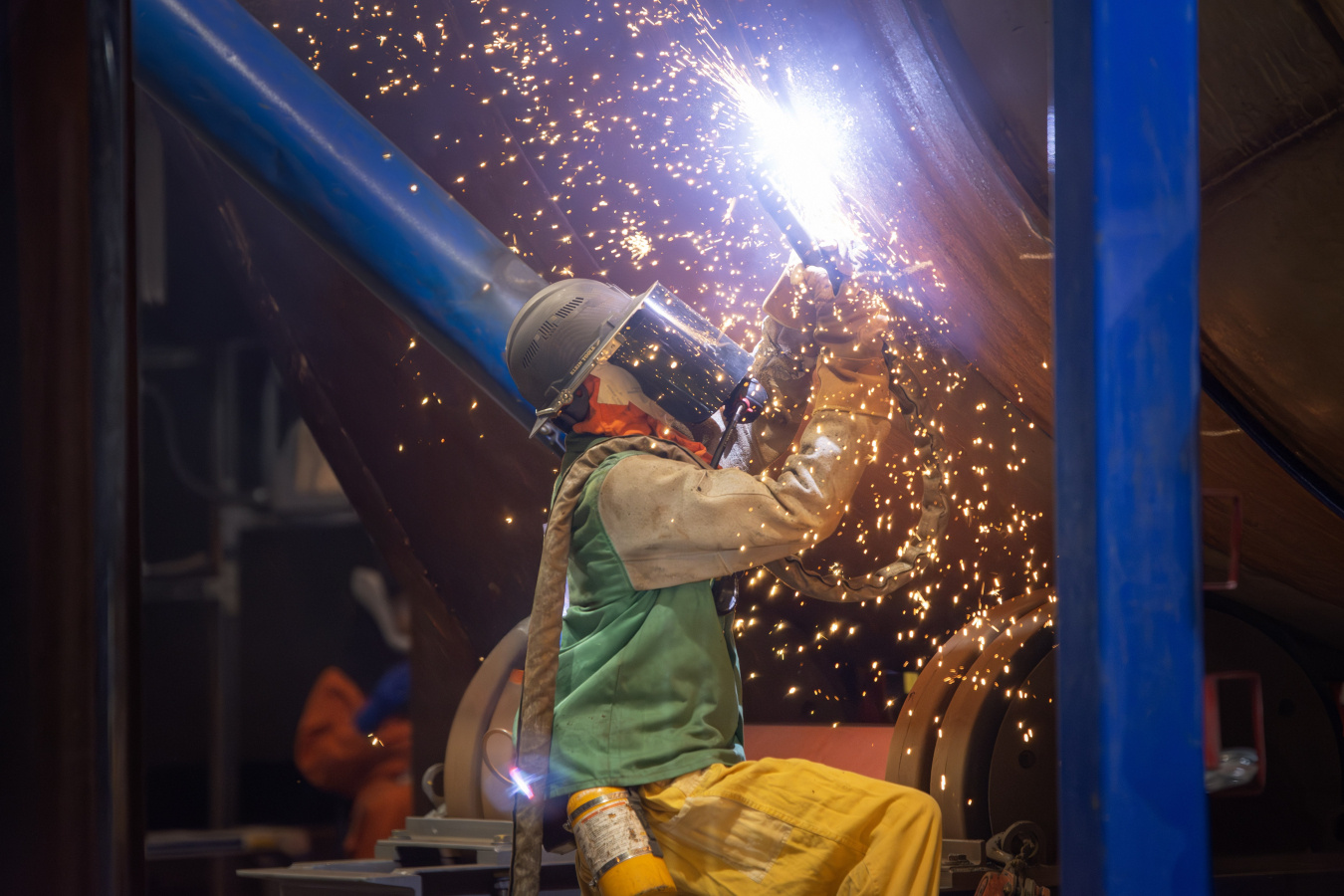
A crew member safely segments a converter in the C-333 Process Building at the Paducah Site. Workers recently segmented the 497th and final converter from the facility, allowing crews to now turn their attention to the segmentation of converters from the C-337 Process Building.
Pursuit of innovation, efficiency helped crews accomplish goal as EM focuses on priorities, curbs costs without sacrificing safety or effectiveness
PADUCAH, Ky. — Since work began to prepare the first former uranium enrichment process building for eventual demolition at the Paducah Site, one number loomed large: 497. That’s the total number of large process components, called converters, the team needed to remove from the C-333 Process Building.
U.S. Department of Energy Office of Environmental Management (EM) crews recently reached their goal of clearing all 497 of them from the facility.
“Every step of this work was planned and executed with worker safety at the forefront,” EM Portsmouth Paducah Project Office Interim Acting Deputy Manager and Paducah Site Lead April Ladd said. “The technological advancements and disciplined approach the teams brought to this effort not only helped safely achieve this milestone but positioned us for continued success as deactivation activities transition to the C-337 Process Building.”
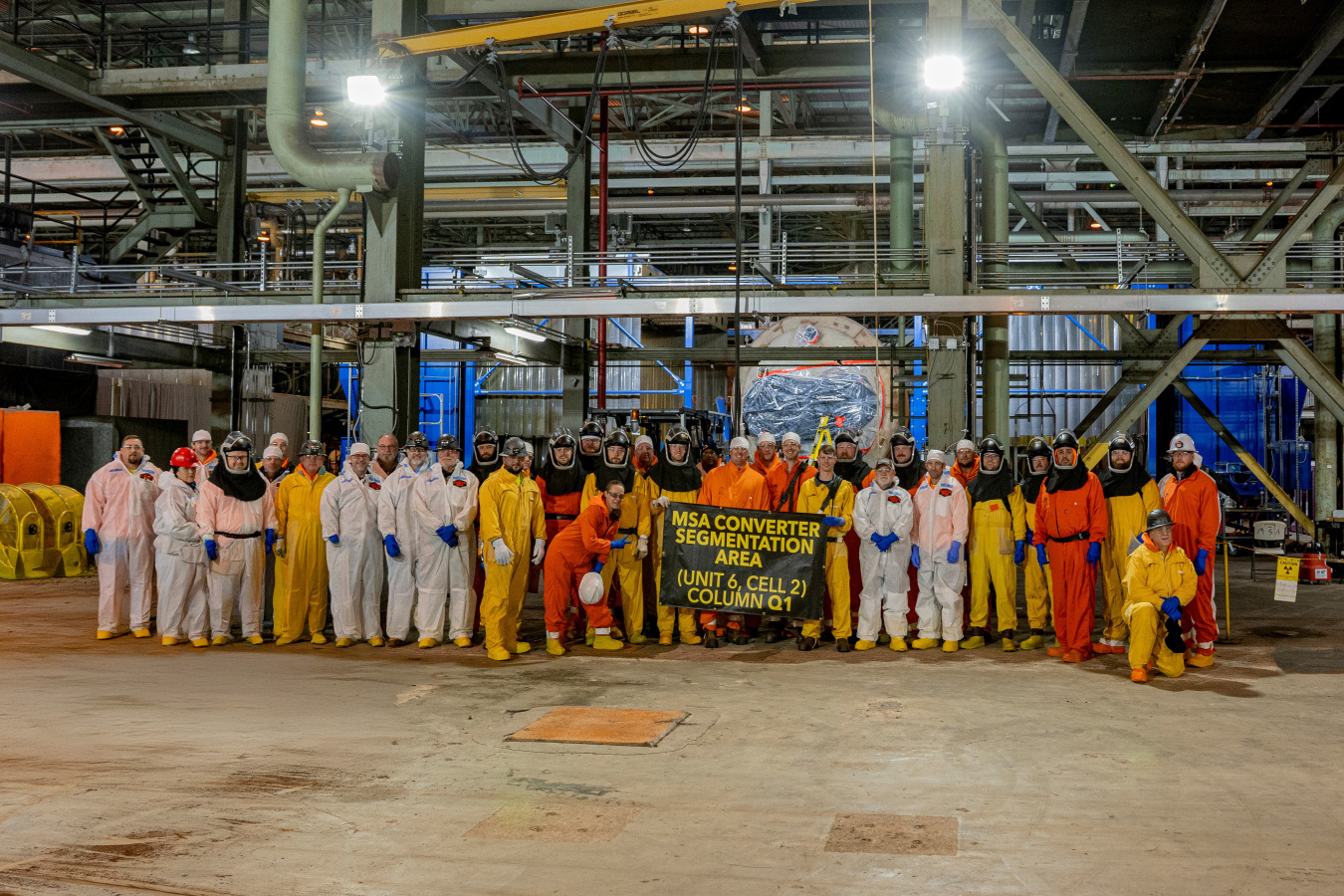
Workers gather in the C-333 Process Building with a banner that says, “MSA Converter Segmentation Area.” Crews recently completed the safe segmentation of all 497 converters from the facility. MSA stands for Material-Sizing Area.
Team members removed, precisely cut and downsized the converters through a process called segmentation. With converters weighing upward of 70,000 pounds, some of their contents were reclaimed, compacted and stored onsite for possible reuse.
Use of new tools, procedures and knowledge-sharing from their sister site, Portsmouth, allowed Paducah team members to dramatically increase productivity while process improvements shortened time for segmentation from roughly 14 days per converter during startup operations to as many as two converters daily. Meanwhile, compaction crews kept pace to prepare and store the contents of the converters onsite, maintaining rigorous safety standards that made the project a success.
Innovation and enhanced methods from custom dust-collection systems to advanced handling equipment for compacting the contents of the converters were essential to optimizing performance and safeguarding personnel during the segmentation process.
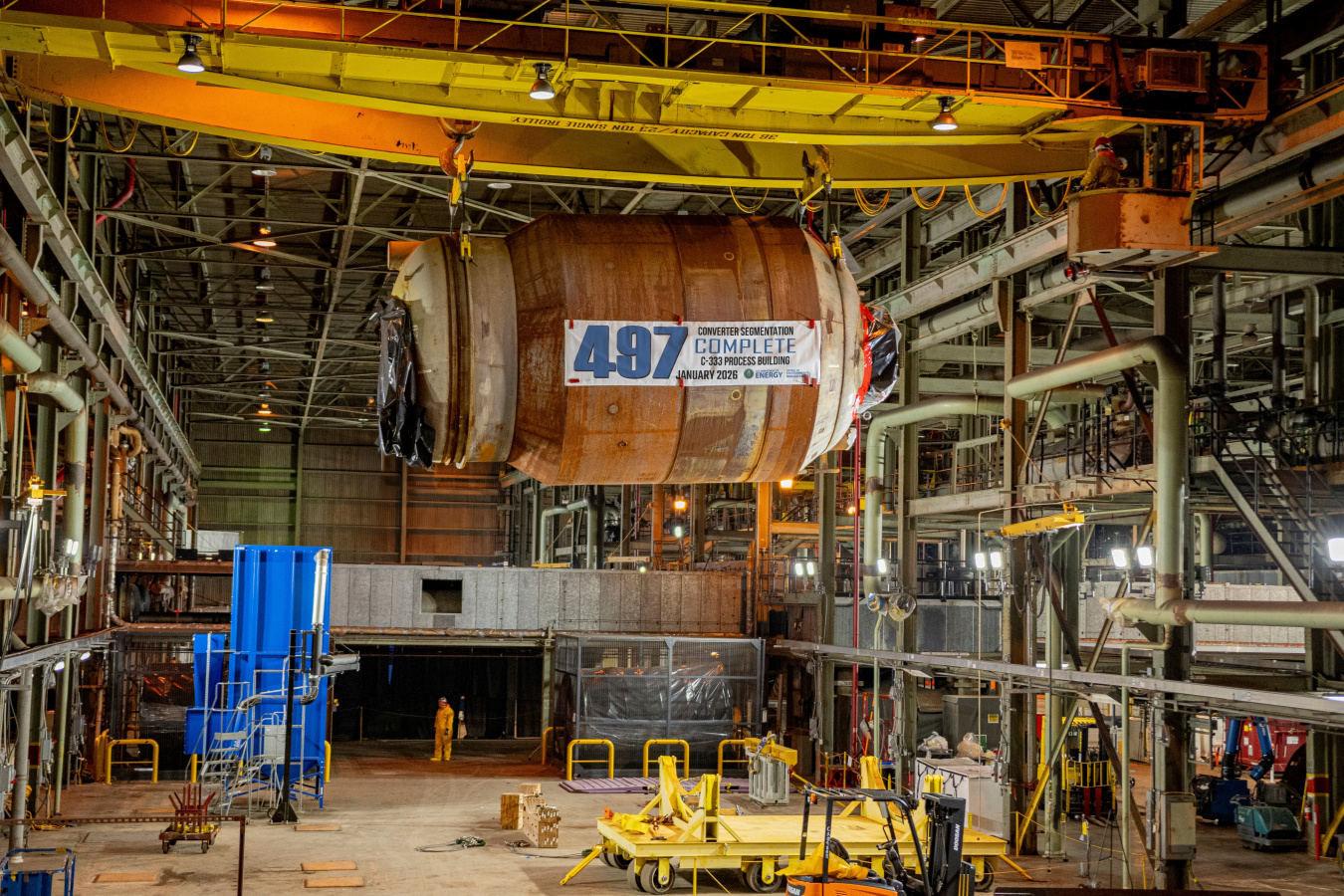
Crews hoist the final converter for segmentation in the C-333 Process Building. A banner on the equipment reads “497,” the total number of converters they segmented to prepare the facility for future demolition.
Crews will apply lessons learned from deactivating C-333 to future process buildings, supporting EM’s long term vision for holistic cleanup at the Paducah Site. This holistic approach focuses on end use fueled by community interest in site reuse for economic development while targeting land that has the highest potential for reuse.
“By embracing innovative technologies, engaging in continuous improvement from our workforce, and incorporating feedback from field operations and partner sites, our team set a strong foundation for the next phase of deactivation,” Four Rivers Nuclear Partnership (FRNP) Program Manager Myrna Redfield said. “Everyone involved showed an exceptional commitment to safety and excellence to complete this milestone for the Paducah Site.”
FRNP is the deactivation and remediation contractor at the Paducah Site.
The Paducah Site conducts cleanup in accordance with the Comprehensive Environmental Response, Compensation, and Liability Act.
-Contributor: Dylan Nichols
To receive the latest news and updates about the Office of Environmental Management, submit your e-mail address.