



The Hanford Site’s Waste Treatment and Immobilization Plant is enhancing worker safety with next-generation physiological monitoring technology following a successful pilot program at the High-Level Waste Facility. January 27, 2026
Office of Environmental Management
January 27, 2026 Estimated Read Time min
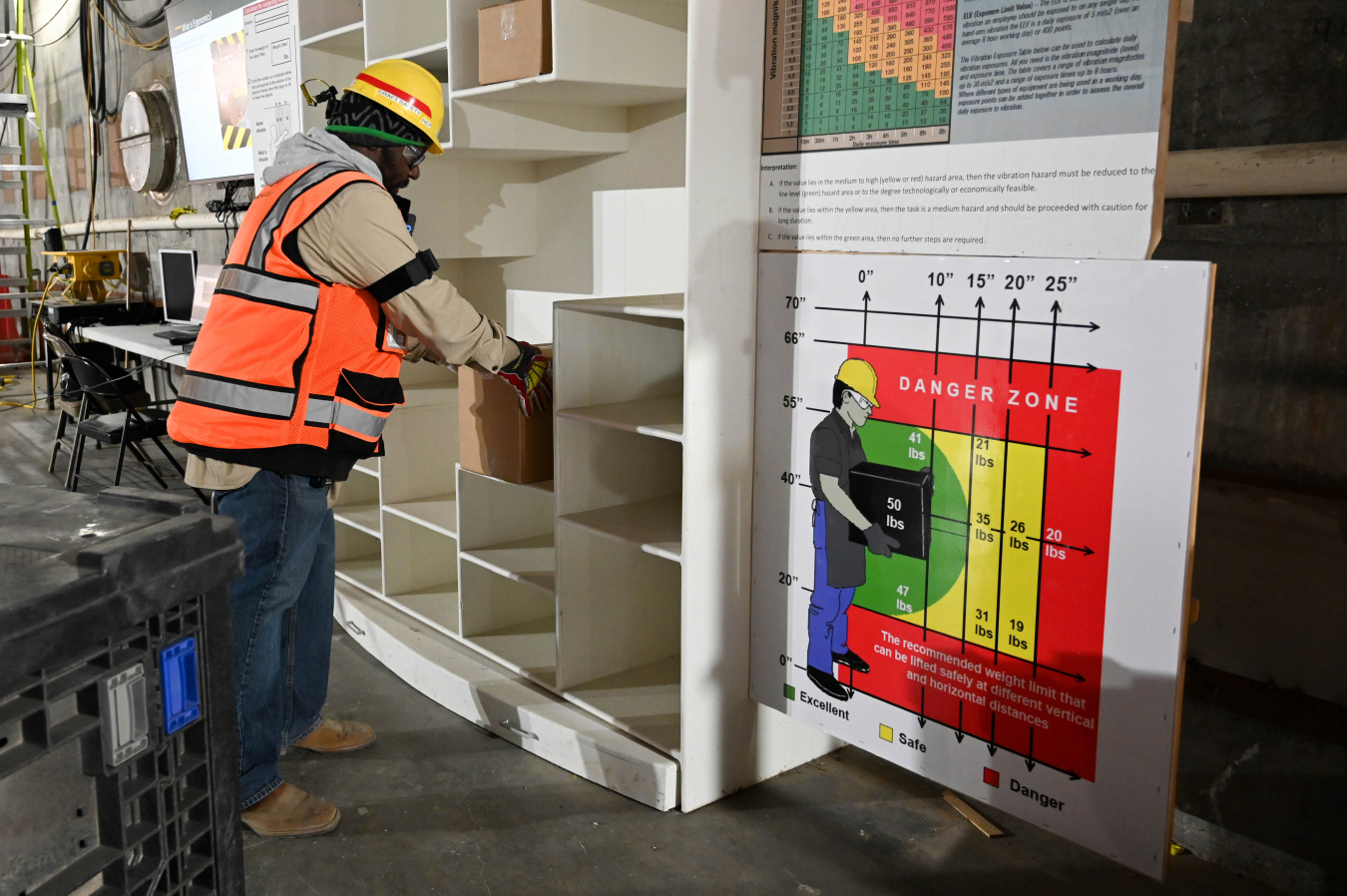
A Waste Treatment and Immobilization Plant safety representative demonstrates use of a new ergonomics monitor, located on his upper arm.
RICHLAND, Wash. — The Hanford Site’s Waste Treatment and Immobilization Plant (WTP) is enhancing worker safety with next-generation physiological monitoring technology following a successful pilot program at the High-Level Waste (HLW) Facility.
The program equipped selected workers with two wearable monitors that track movement and vital signs, helping identify potential risks before they result in incidents or injuries.
“Innovation plays a critical role in keeping our people safe,” said Bill Clarno, acting HLW project manager. “By applying new technology in the field, we can identify risks earlier and better protect the people doing the work.”
The two monitors serve different purposes, each tracking specific aspects of worker health and movement. One monitor tracks posture and body movements relevant to ergonomic risk such as poor lifting technique, sustained arm elevation and twisting motions. The device warns users with audio and vibration alerts when unsafe movements are detected.
The second measures exertion by continuously monitoring heart rate as a potential sign of heat stress. Safety professionals can configure individualized thresholds for each worker, and the monitor will alert the workers and supervisors if thresholds are exceeded.
“These wearables track workers’ movements and physiological data to reduce strain, monitor vital signs in real time and flag potential risks before they become incidents,” said Mark Johnson, principal vice president for Bechtel National Inc., the U.S. Department of Energy Office of Environmental Management contractor designing, building and commissioning the Direct-Feed High-Level Waste plant. “So far, early results show measurable improvements in worker health and safety, as well as increased productivity.”
Hanford is home to 56 million gallons of radioactive and chemical waste stored in 177 massive underground tanks. The waste was generated as part of the nation’s efforts to end World War II and win the Cold War.
WTP will transform the waste into a stable glass form for long term disposal using a process known as vitrification.
The plant facilities can be viewed using the self-guided Hanford Virtual Tour available here.
To receive the latest news and updates about the Office of Environmental Management, submit your e-mail address.