



U.S. DOE Office of Energy Dominance Financing (EDF) leadership looks back on accomplishments during 2025 and forward to goals for 2026
Office of Energy Dominance Financing
January 22, 2026 Estimated Read Time min
Gregory A. Beard
Director, Office of Energy Dominance Financing (EDF)
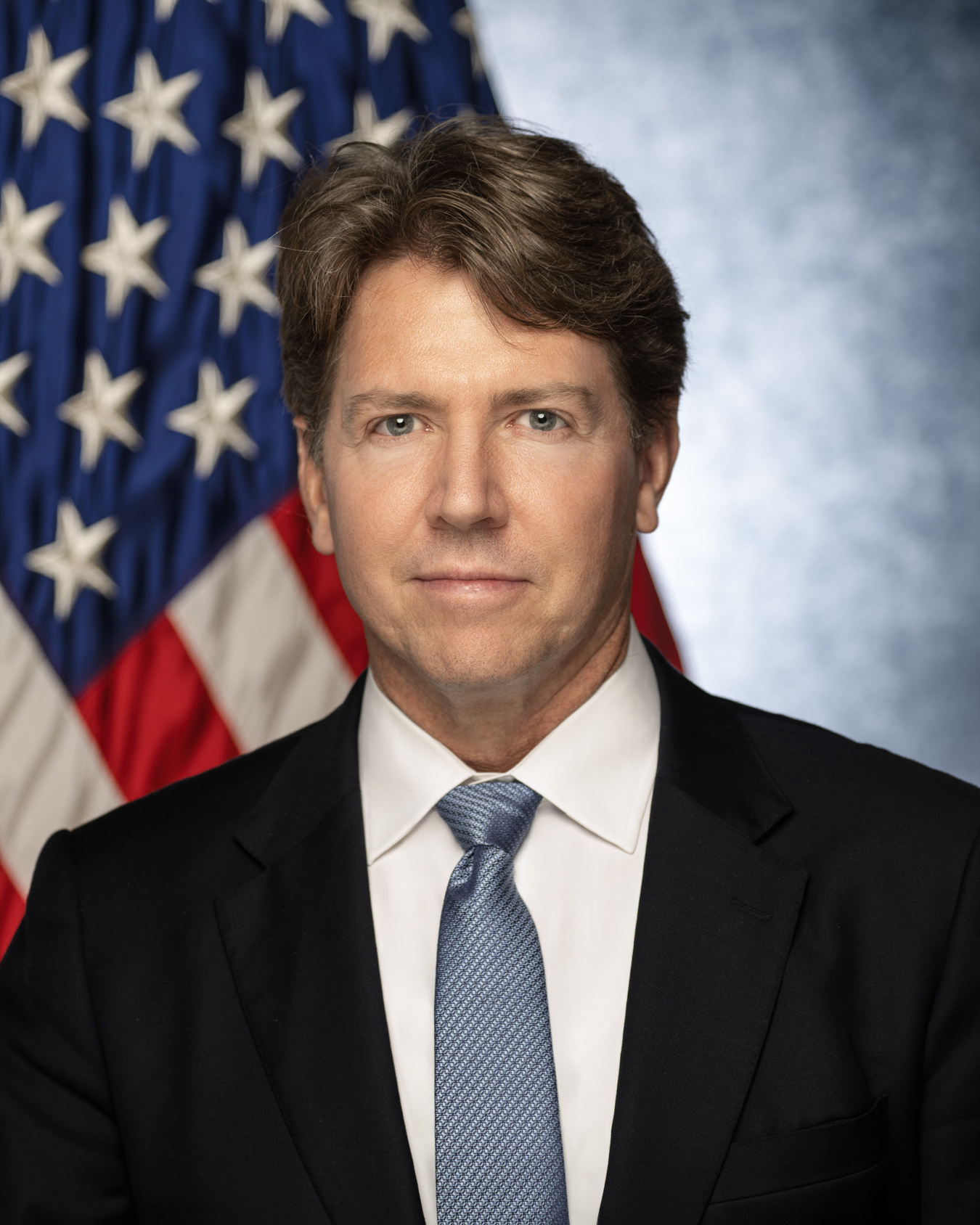
Gregory A. Beard is the director of the U.S. DOE Office of Energy Dominance Financing (EDF), appointed in January 2026. Previously, Director Beard was appointed by the President in April 2025 to serve as a Senior Advisor to the Office of Energy Dominance Financing (EDF) at the U.S. Department of Energy. He is a senior executive with extensive experience in natural resources investment, private equity, and capital markets, having sourced and led more than 25 energy investments over more than 30 years.
Before entering government service, Director Beard was previously a senior partner on the management committee at Apollo Global Management, leading natural resources investing for 10 years, as well as in a senior energy investment role at Riverstone Holdings LLC. Additionally, as the Co-Founder, Chairman, and Chief Executive Officer of Stronghold Digital Mining, Inc., Mr. Beard launched the first company to integrate waste-to-power generation within co-located data centers to mine Bitcoin. He simultaneously founded and served as the Chairman and Chief Executive Officer of Beard Energy Acquisition Corp., where he raised a $200 million special purpose acquisition corporation and evaluated more than 200 potential transactions in the energy transition space. Director Beard began his career as a Financial Analyst at the Goldman Sachs Group Inc. and received his Bachelor of Arts from the University of Illinois at Urbana-Champaign.
President Trump and Secretary Wright have made commitments to the American people to unleash American energy dominance, and the Office of Energy Dominance Financing (EDF) is on the front lines of delivering affordable, reliable, secure energy.
Upon taking office in January 2025, senior leadership at the Department of Energy (DOE) immediately worked to reverse the damaging Biden-era energy policies that led to energy price inflation and grid destabilization. Under the Biden Administration, electricity prices increased by 30%—13 times faster than the previous seven years—and more than 100 gigawatts (GW) of firm reliable power were projected to retire by 2030.
President Trump has taken decisive action to redirect DOE's mission through energy-related Executive Orders, including Unleashing American Energy, Reinvigorating the Nuclear Industrial Base, and Strengthening the Reliability and Security of the United States Electric Grid. Thanks to Secretary Wright’s leadership, DOE has recentered around data-driven, common-sense policies that return the country to energy abundance and prioritize baseload power–both key to driving down prices and stabilizing the grid. DOE is steadfastly pursuing policies to lower prices, make energy more affordable, and win the AI race.
Within the first part of 2025, we here at EDF raised serious concerns that between 2021 and January 2025, the Biden Administration committed over $104 billion in financing, of which $85 billion was closed or committed between Election Day 2024 and Inauguration Day 2025. It was imperative that we conduct a thorough review of each applicant and borrower, to ensure every taxpayer dollar is being used to advance the best interest of the United States.
As a result of this review, DOE and EDF leadership are restructuring, substantially revising, or eliminating over $83.6 billion in loans and conditional commitments, representing over 80% of the Biden-era loan portfolio.
- Out of the $104 billion in Biden-era principal loan obligations, EDF has completed or is in the process of de-obligating over $29.9 billion (approximately 29%) and has completed or is in the process of revising another $53.6 billion (approximately 51%) of this total.[1]
- EDF has eliminated ~$9.5 billion in government-subsidized, intermittent wind and solar projects, and where possible replacing those projects with natural gas and nuclear uprates that provide more affordable and reliable energy for the American people.
By conducting a thorough review to determine which projects do not serve the best interest of the American people, we are restoring public trust in the federal government and working to fully achieve this Administration's energy dominance agenda.
EDF currently has more than $289 billion in available loan authority, including in the Energy Dominance Financing Program with expanded eligibility criteria thanks to President Trump’s Working Families Tax Cut. This funding makes EDF the largest energy lender in the world. Emboldened by this Administration's clear energy mandate and EDF's important role in fulfilling that mandate, EDF has re-structured around a foundational mission to achieve the Administration's objectives, prioritizing six sectors:
- Nuclear: EDF financing is supporting the reinvigoration of America's nuclear industrial base to help meet increased demand.
- Coal, oil, gas, and hydrocarbons: EDF financing is reinvigorating America’s clean coal, oil, gas, and hydrocarbons industries to unleash sources of affordable, reliable, and efficient energy.
- Critical materials and minerals: EDF financing is increasing American mineral production to ensure national security and economic resilience.
- Geothermal: EDF financing is supporting new innovations in geothermal technologies, helping to unleash a potent source of domestic energy.
- Grid and transmission: EDF financing is helping strengthen the reliability and security of the national electric grid through transmission, storage, and utility upgrades.
- Manufacturing and transportation: EDF financing is serving as an investment accelerator for U.S. manufacturing and transportation, supporting job creation and supply chains.
Through this restructuring, EDF is already delivering results for the American people. In the final months of 2025, EDF closed three new loans totaling $4.1 billion: 1) a loan to Constellation for the Crane Restart project (formerly known as Three Mile Island), a key step in reinvigorating the nuclear industry; 2) a loan to a subsidiary of AEP to improve America’s electric grid through reconductoring and rebuilding transmission lines; and 3) a loan to Wabash Valley Resources to utilize a coal plant to produce fertilizer in America’s Corn Belt.
This is just the beginning. In 2026, EDF will prioritize financing energy and manufacturing projects that meaningfully contribute to U.S. energy security, grid reliability, and lowering costs for all Americans. EDF is partnering with the private sector to strengthen America’s energy foundation and support U.S. leadership in emerging AI technologies. The need is significant, and EDF is ready to meet the challenge.
[1] "Revising" may include various loan actions such as amendments, modifications, or restructurings.
