Protecting Our Homeland: NNSA successfully secured communities against radiological threat and “dirty bombs.”
National Nuclear Security Administration
February 4, 2026 Estimated Read Time min
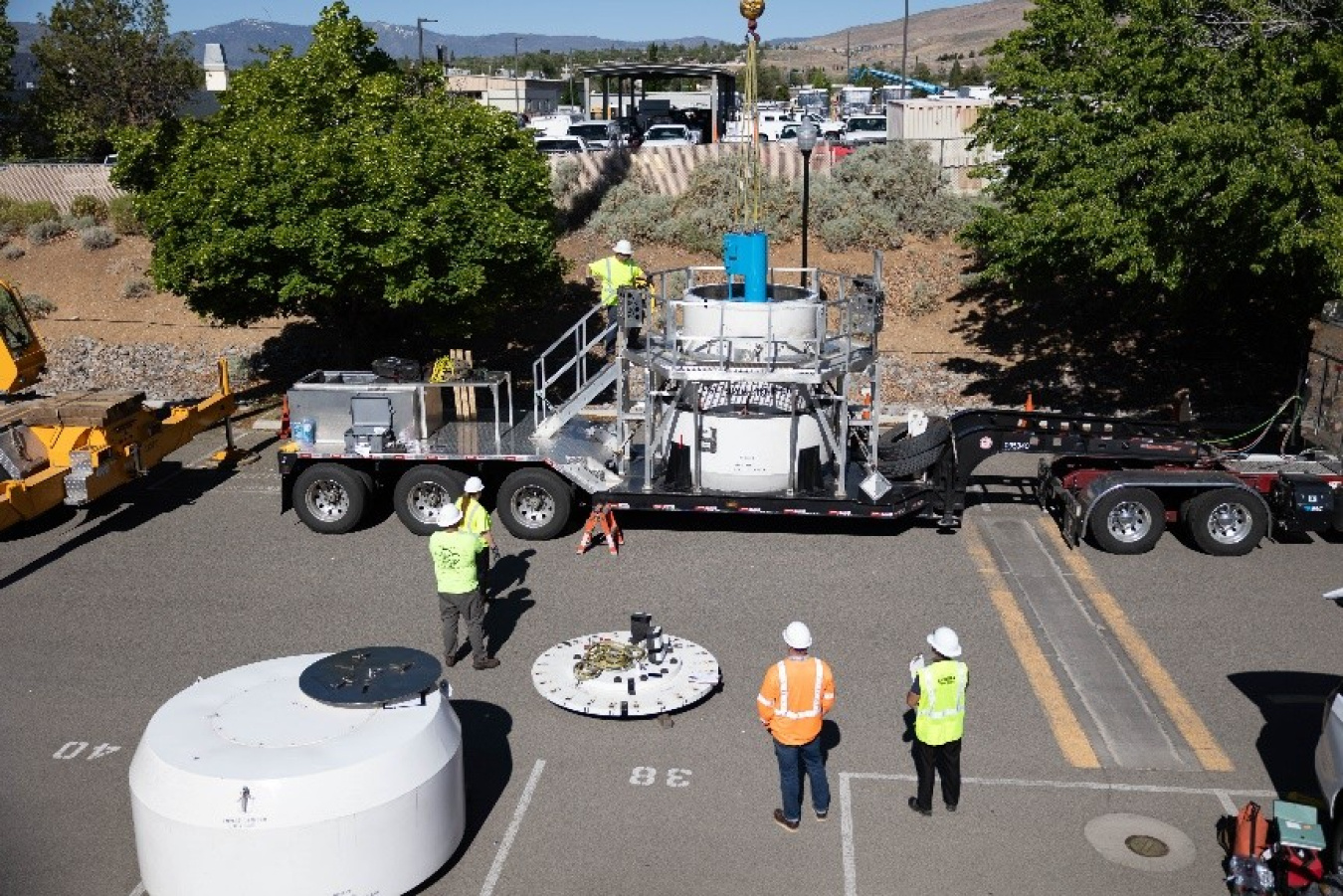
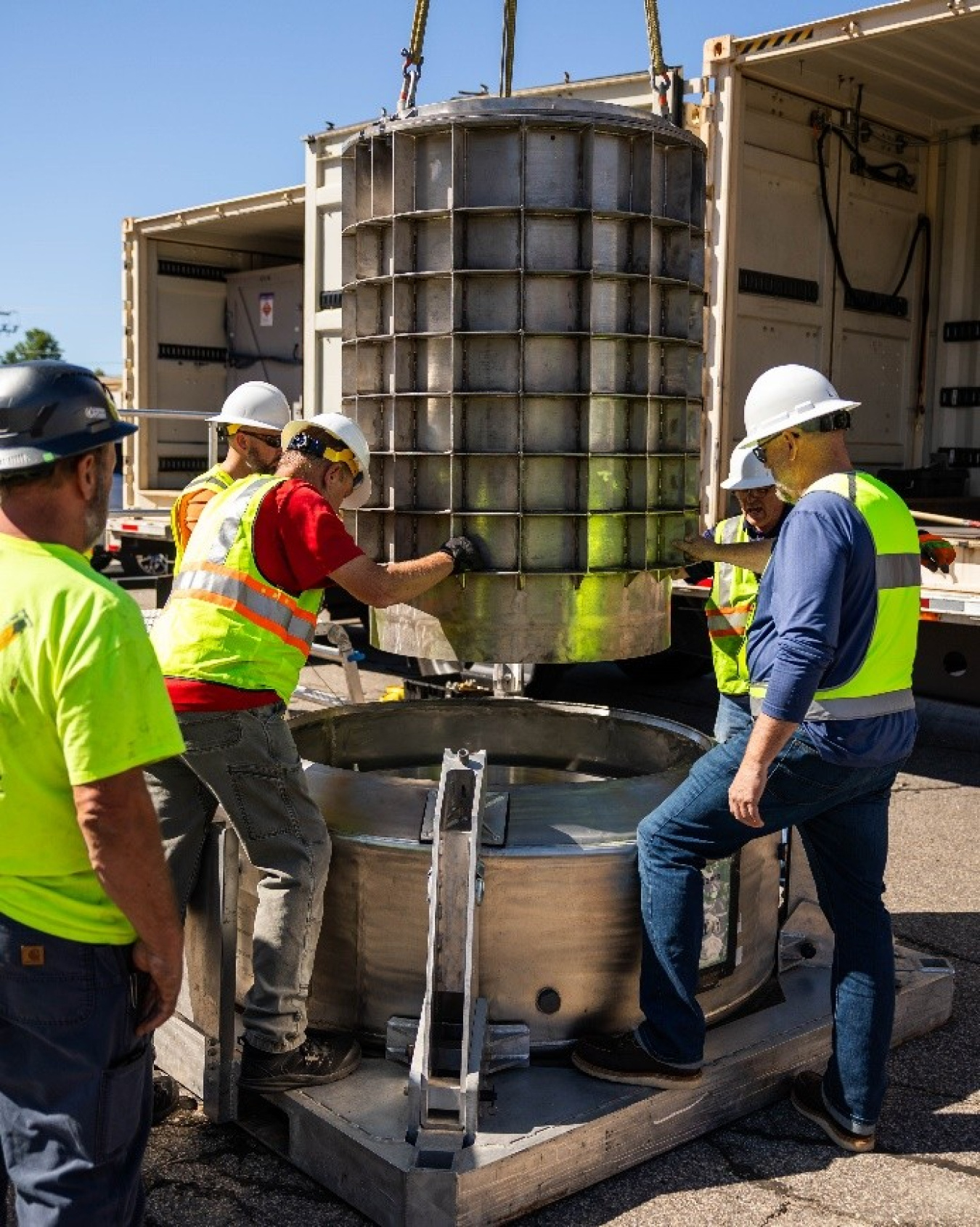
In a significant achievement, NNSA successfully removed 68 devices containing radioactive materials in 2025. This achievement of the agency’s Office of Radiological Security (ORS), is a critical step in denying adversaries the materials needed for “dirty bombs,” contributing to a safer U.S. homeland.
While radioactive source-based irradiators can be used for treating blood and cancer, they could have devastating consequences if they fall into the wrong hands. In response to this threat, ORS is eliminating risks by removing obsolete or unwanted radioactive devices and replacing them with advanced, safer technologies.
This year’s removals are part of two national security initiatives: the Cesium Irradiator Replacement Project (CIRP) and the Off-Site Source Recovery Program (OSRP). Since 2015, ORS has been encouraging U.S. licensees of cesium irradiators to work with CIRP to transition to advanced technologies that do not rely on radioactive material. OSRP has worked since 1997 to eliminate radioactive devices that pose a threat to national security.
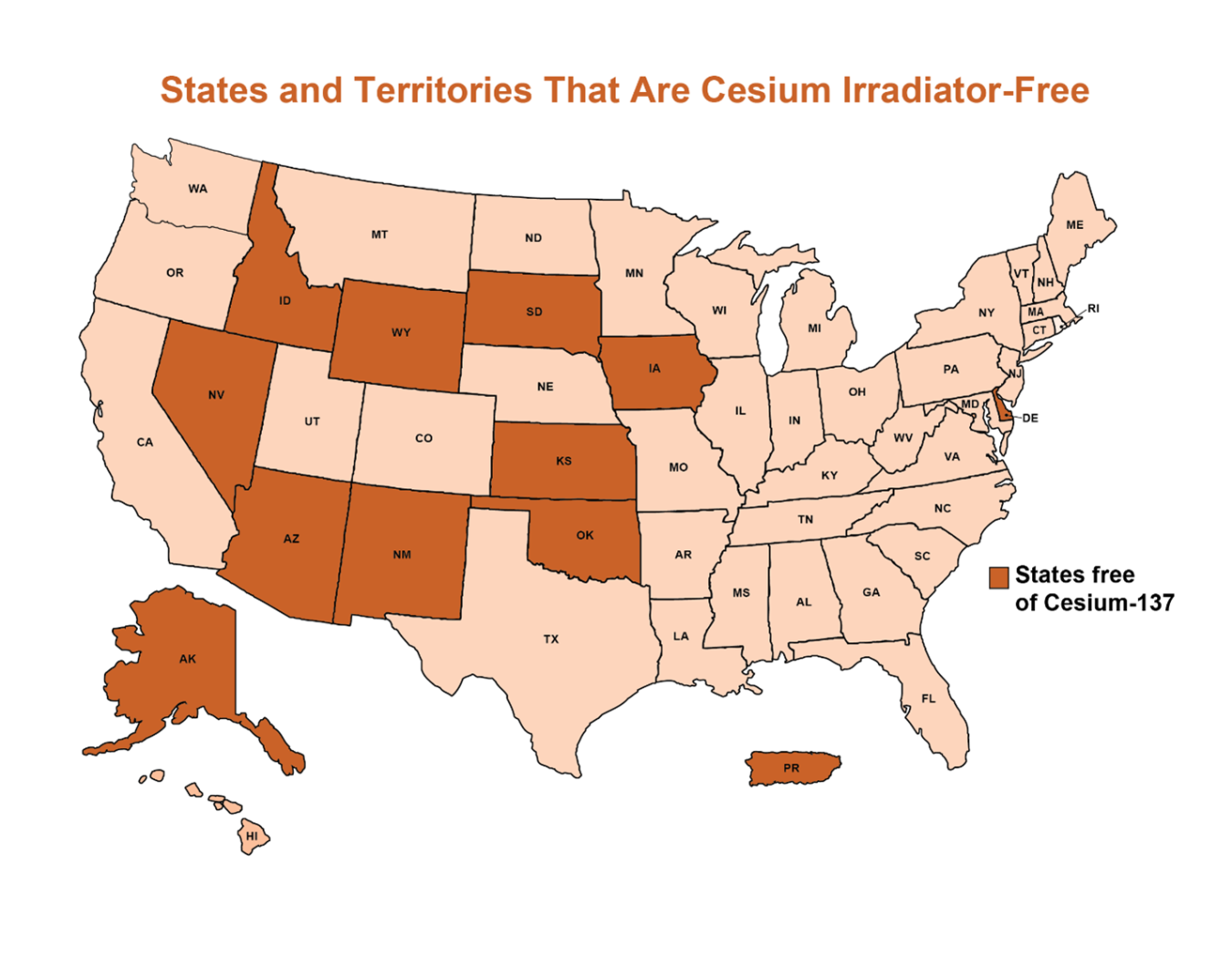
In 2025, NNSA achieved a remarkable accomplishment with several statewide cleanouts that eliminated all cesium irradiators in Iowa, Kansas, Nevada, and Oklahoma, marking a significant milestone in the fight against radiological threats.
“With every removal, NNSA lays another stone in the foundation of a safer, more secure America,” said Matthew Napoli, Deputy Administrator for NNSA’s Office of Defense Nuclear Nonproliferation. “The milestones achieved through CIRP and OSRP are testaments to our role in strengthening radiological security and building safer communities.”
In 2025, NNSA collaborated with numerous sites, including the University of Nevada, Reno (UNR).
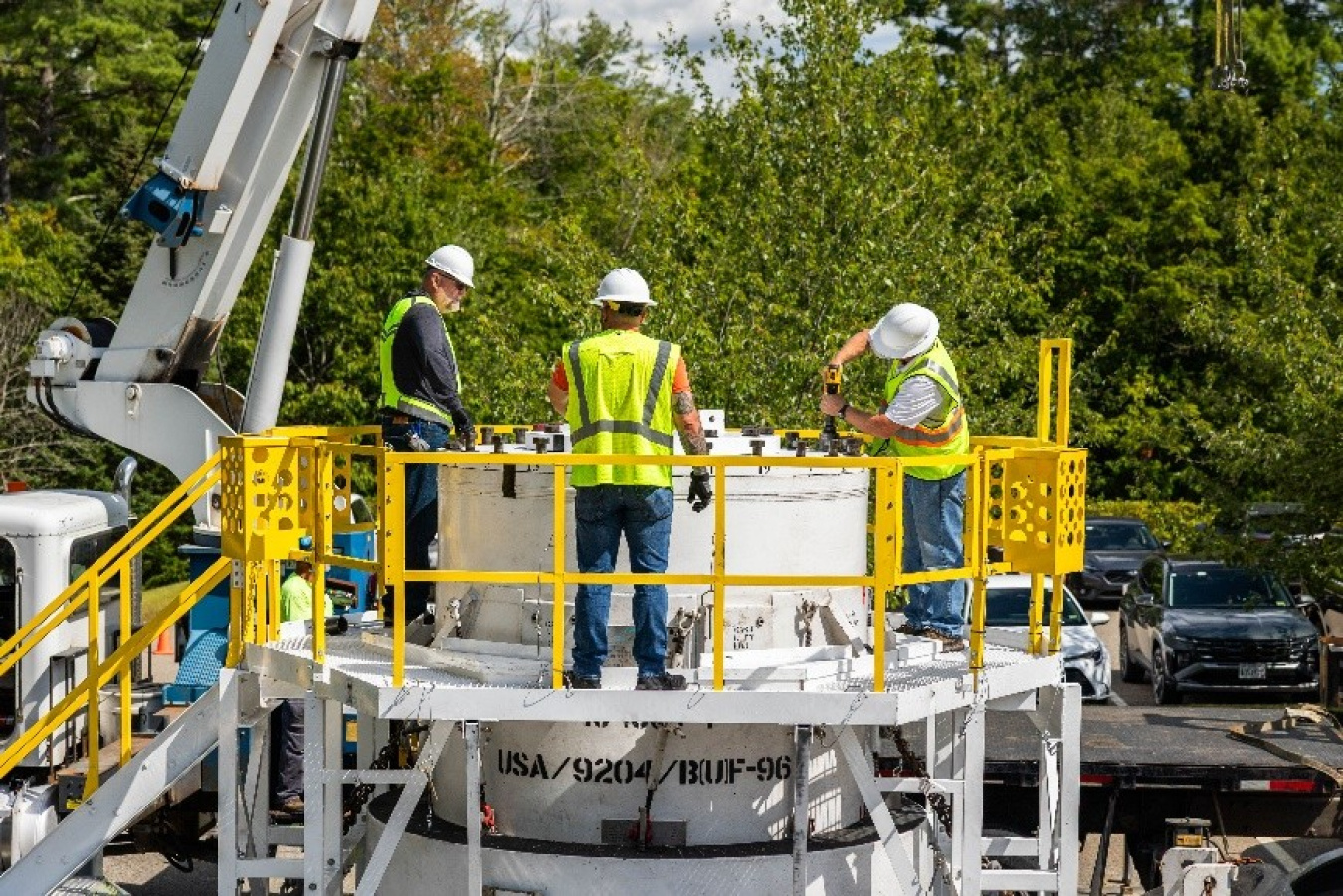
"We value our partnership with NNSA and are proud to protect our university, our state, and our country,” said Mridul Gautam, UNR’s Vice President for Research and Innovation.
During the year, ORS worked with 60 volunteer sites across 30 states to plan for these complex removals, a feat that required extensive coordination with partner facilities, state radiation regulators, U.S. National Laboratories, local law enforcement, and other key stakeholders. Each operation involved months to years of meticulous planning to ensure the safe and secure removal and transport of the radioactive sources.
“NNSA could not have achieved this key part of our national security mission without local governments, businesses, and law enforcement partners,” said Christine Bent, Assistant Deputy Administrator for Global Material Security. “These partnerships have allowed us to reduce radiological risks across the country.”
So far, 94% of U.S. cesium-137-based blood irradiators have been removed or are under contract for removal. NNSA is on track to fulfill the congressional mandate set in the 2019 John S. McCain National Defense Authorization Act to voluntarily dispose of every cesium-137 blood irradiator in the United States by the end of 2027. As NNSA nears this deadline, it continues to explore ways to reduce risk, including through the replacement of cesium-137 research irradiators and other high-risk radioisotopes.
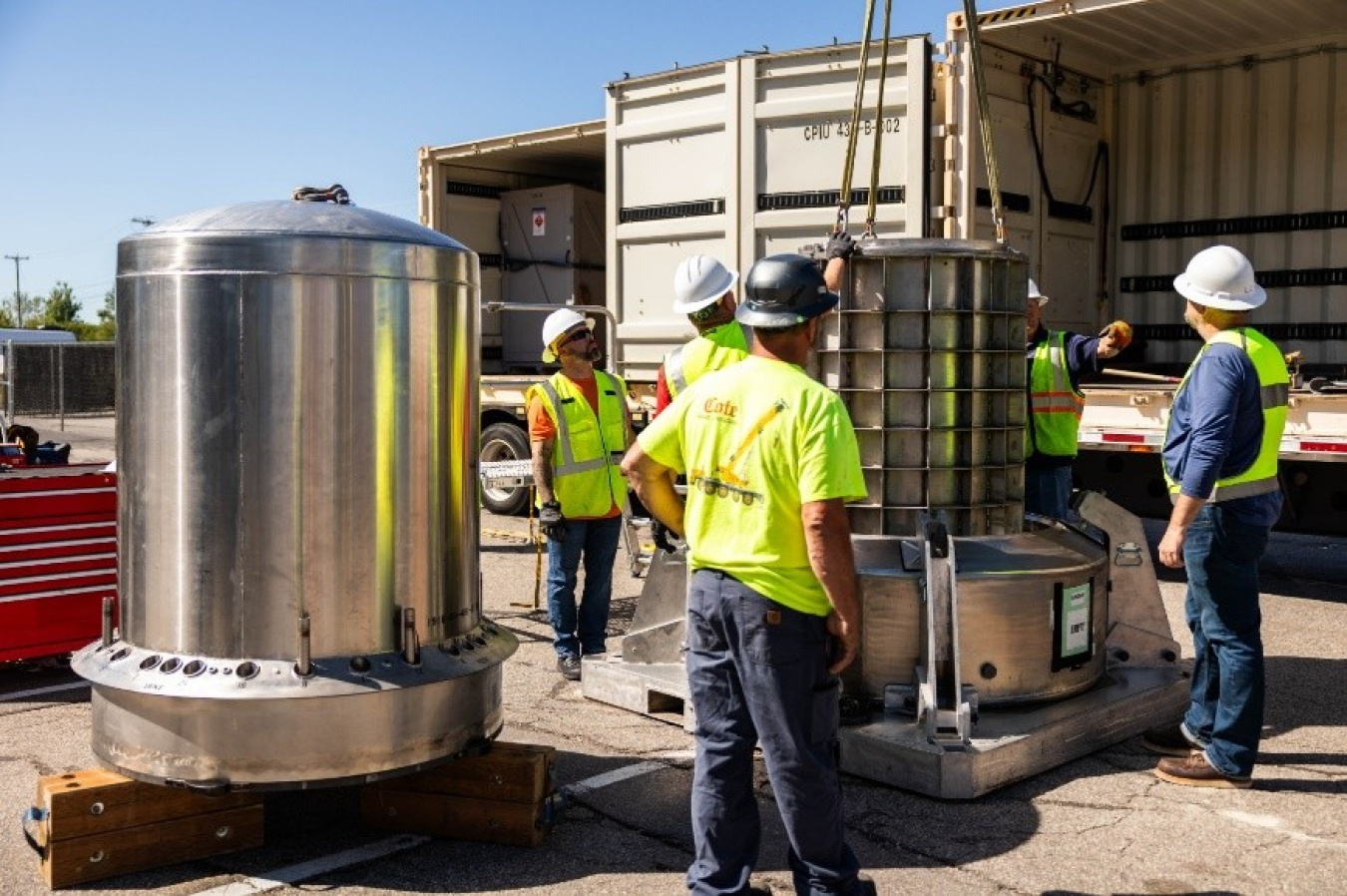
As of December 31, NNSA had successfully completed 800 removals of radioactive source-based devices nationwide, paving the way for more secure communities and a safer America.
Licensees of radioactive sealed sources are encouraged to register all sources with OSRP at http://osrp.lanl.gov. For inquiries regarding source registration, please contact: osrp@lanl.gov or call 877-676-1749. To learn more about CIRP and start your transition away from cesium-137 or cobalt-60 irradiation devices and toward alternative technologies, please contact: ORSinfo@nnsa.doe.gov.
*Registration with OSRP does not guarantee recovery or disposition of all radioactive materials. If recovery occurs, there is no charge.
NNSA’s Office of Radiological Security enhances U.S. and global security through a two-pronged approach of eliminating risk by removing high-activity radioactive material and preventing adversaries from acquiring this material through strong industry, law enforcement, and government partnerships. These efforts safeguard American interests and promote a safer and more secure America.