



As Idaho Cleanup Project demolition crews prepared to demolish the building over the defueled Submarine 1st Generation Westinghouse naval nuclear propulsion prototype reactor plant earlier this year, a nest of ravens was discovered atop the 100-foot structure. December 9, 2025
Office of Environmental Management
December 9, 2025 Estimated Read Time min
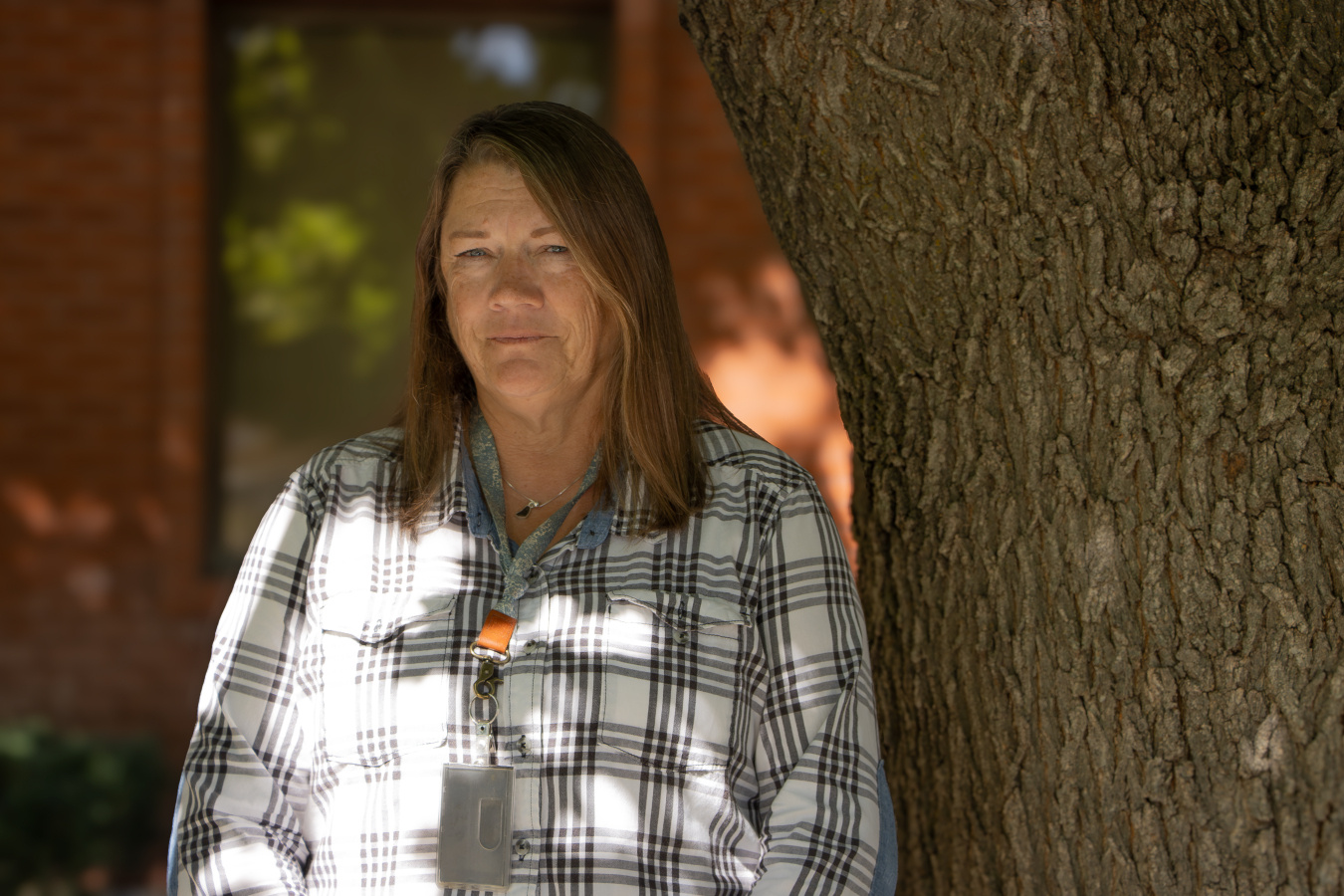
Sue Vilord is a program environmental lead for Idaho Cleanup Project contractor Idaho Environmental Coalition and supports the incorporation of sound environmental policies and practices into all phases of work.
IDAHO FALLS, Idaho — As Idaho Cleanup Project (ICP) demolition crews prepared to demolish the building over the defueled Submarine 1st Generation Westinghouse naval nuclear propulsion prototype reactor plant earlier this year, a nest of ravens was discovered atop the 100-foot structure.
As required by the U.S. Migratory Bird Treaty Act and other federal and state wildlife management laws, the U.S. Department of Energy Office of Environmental Management crews called ICP Program Environmental Lead Sue Vilord, who serves as the resident expert on bird species found on the Idaho National Laboratory (INL) Site.
Vilord worked closely with project crews to ensure the work could continue safely. Later, the birds flew away before the scheduled event, and the demolition proceeded without delay.
Vilord's expertise is crucial to ensuring ICP contractor Idaho Environmental Coalition (IEC) meets its legal wildlife management obligations, and her role with the projects involves monitoring bird populations and advising ICP staff on measures to protect them during project activities.
When wildlife appear within project boundaries it can disrupt work, highlighting the importance of collaboration between operational staff and the environmental programs team.
"These are people who care about wildlife and take steps to follow training and the law,” Vilord said. “That allows me to do my job.”
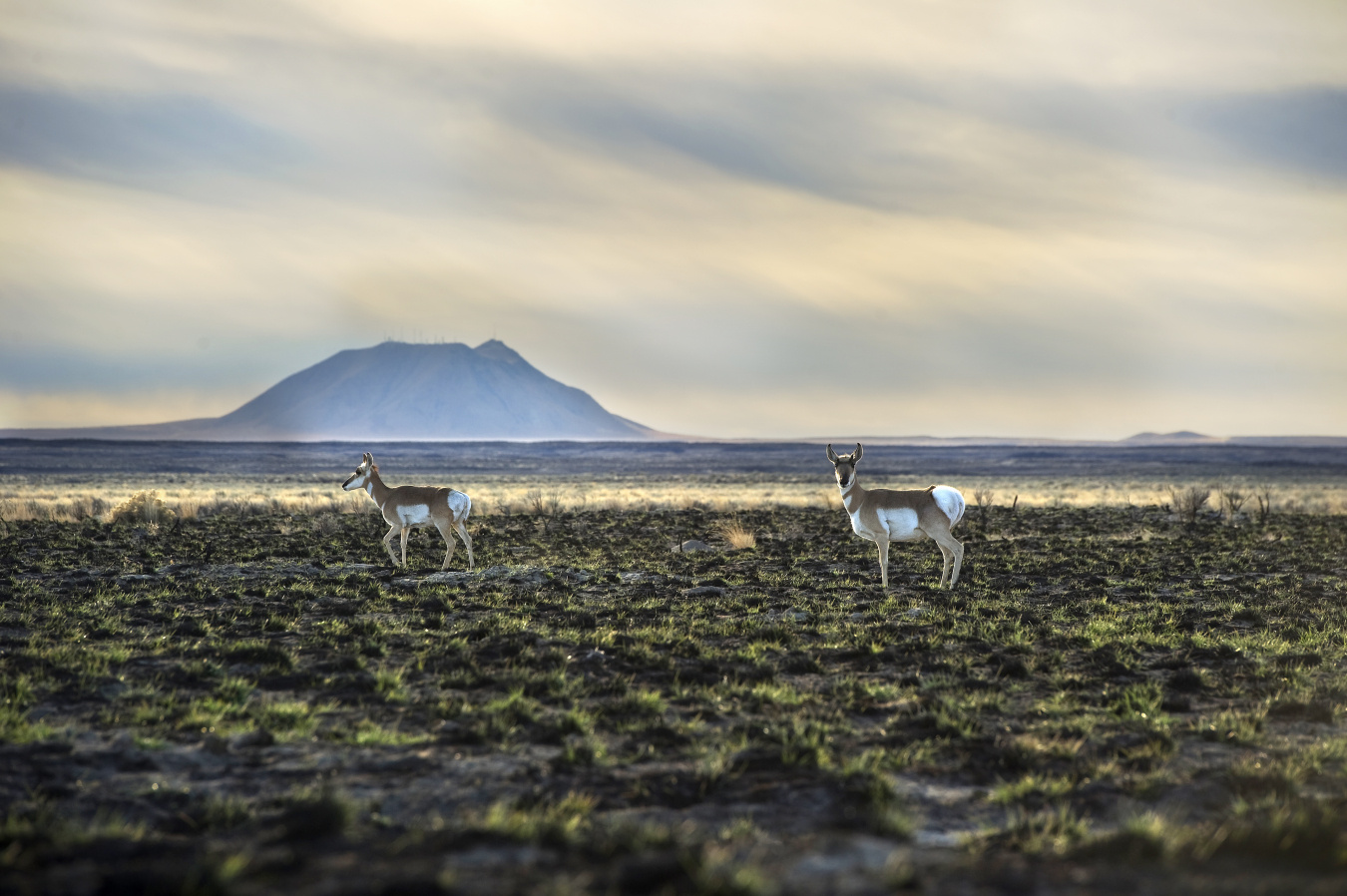
Pronghorn are among the big-game mammals that find the desert surrounding the Idaho National Laboratory Site suitable habitat.
A pair of great horned owlets recently took shelter at the Idaho Nuclear Technology and Engineering Center, where they accidentally set off alarms. Crews called Vilord for assistance. After safely encouraging the owlets, they flew off on their own.
Vilord has roots in the Environmental Surveillance, Education, and Research group, whose mission was to manage ecological and environmental research, offsite environmental surveillance and environmental education for the INL Site.
Vilord's passion for the outdoors led her to pursue a degree in wildlife management from Utah State University. She has since grown knowledge of the diverse species of the INL Site, from sage grouse and big-game animals, like elk, moose and pronghorn, to rabbits and snakes. Vilord has also participated in studies and surveys on the diverse missions of the INL Site and its relationship with the natural world.
-Contributor: Carter Harrison
To receive the latest news and updates about the Office of Environmental Management, submit your e-mail address.