



Savannah River National Laboratory took the first step towards recovery of rare and valuable plutonium-244 and heavy curium isotopes from Mark-18A targets. January 13, 2026
Office of Environmental Management
January 13, 2026 Estimated Read Time min
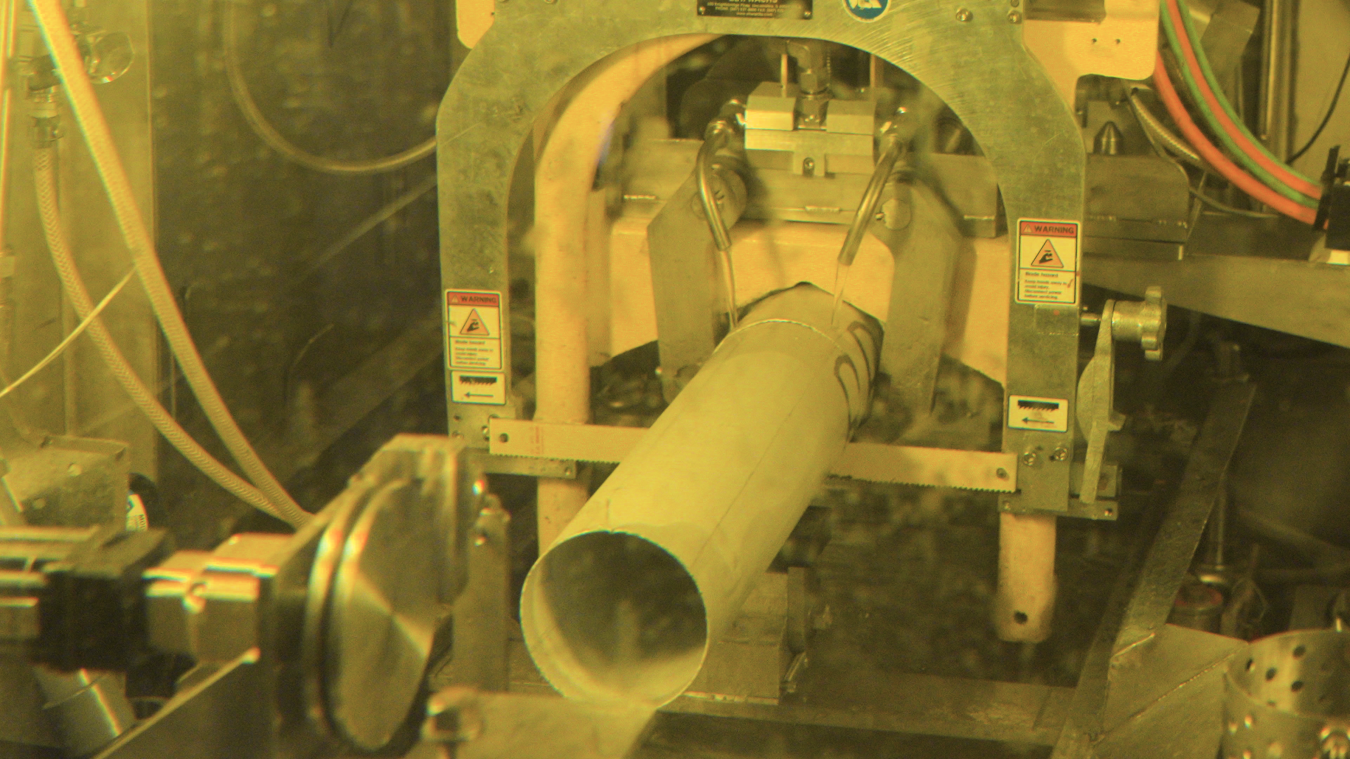
Cutting the first Mark-18A target inside a Savannah River National Laboratory (SRNL) shielded cell. The photo was taken through a 3-foot-thick leaded glass window. Photo by SRNL.
Retrieval of key isotopes advances President Trump’s goal of reinvigorating nuclear industrial base
AIKEN, S.C. — Savannah River National Laboratory (SRNL) took the first step towards recovery of rare and valuable plutonium-244 and heavy curium isotopes from Mark-18A targets.
The Savannah River Site (SRS) stored irradiated Mark-18A target assemblies for several decades in the SRS L Basin. In 2014, a collaboration between SRNL and Oak Ridge National Laboratory, sponsored by the National Nuclear Security Administration (NNSA), brought a renewed focus on the Mark-18A targets as a valuable resource to benefit future research and analysis efforts.
“The Mark-18A Target Recovery Program is a monumental step forward in advancing our nation’s nuclear capabilities,” said SRNL Director Johney Green. “Recovering rare isotopes not only strengthens U.S. nuclear nonproliferation efforts and critical scientific research but also exemplifies the transformative power of innovation. By turning legacy nuclear materials into indispensable resources, this program showcases the vital role SRNL plays in supporting national security, fostering technological leadership and preparing the next generation of scientists and engineers to tackle the challenges of tomorrow.”
SRNL is the sole national laboratory sponsored by the U.S. Department of Energy Office of Environmental Management (EM).
“EM’s role in this endeavor goes beyond safe storage; it’s about proactive stewardship and unlocking the inherent value within our legacy materials,” said Edwin Deshong, Savannah River Operations Office manager. “The transfer of this first target is a testament to the seamless integration of our environmental cleanup mission, while turning historical waste materials into strategic resources for the nation.”
“Startup of this project is a giant leap forward for our lab,” said Chris Armstrong, program manager for the Mark-18A Program. “This is the culmination of many years of effort involving scores of talented and dedicated staff. We have launched a new nuclear recovery capability at SRNL as a first step to providing high-value isotopes to meet critical U.S. government missions.”
Following is the full NNSA announcement on the Mark-18A Target Recovery Program.
To receive the latest news and updates about the Office of Environmental Management, submit your e-mail address.