



DOE launches Genesis Mission. SRNL Supports Effort.
Office of Environmental Management
December 23, 2025 Estimated Read Time min
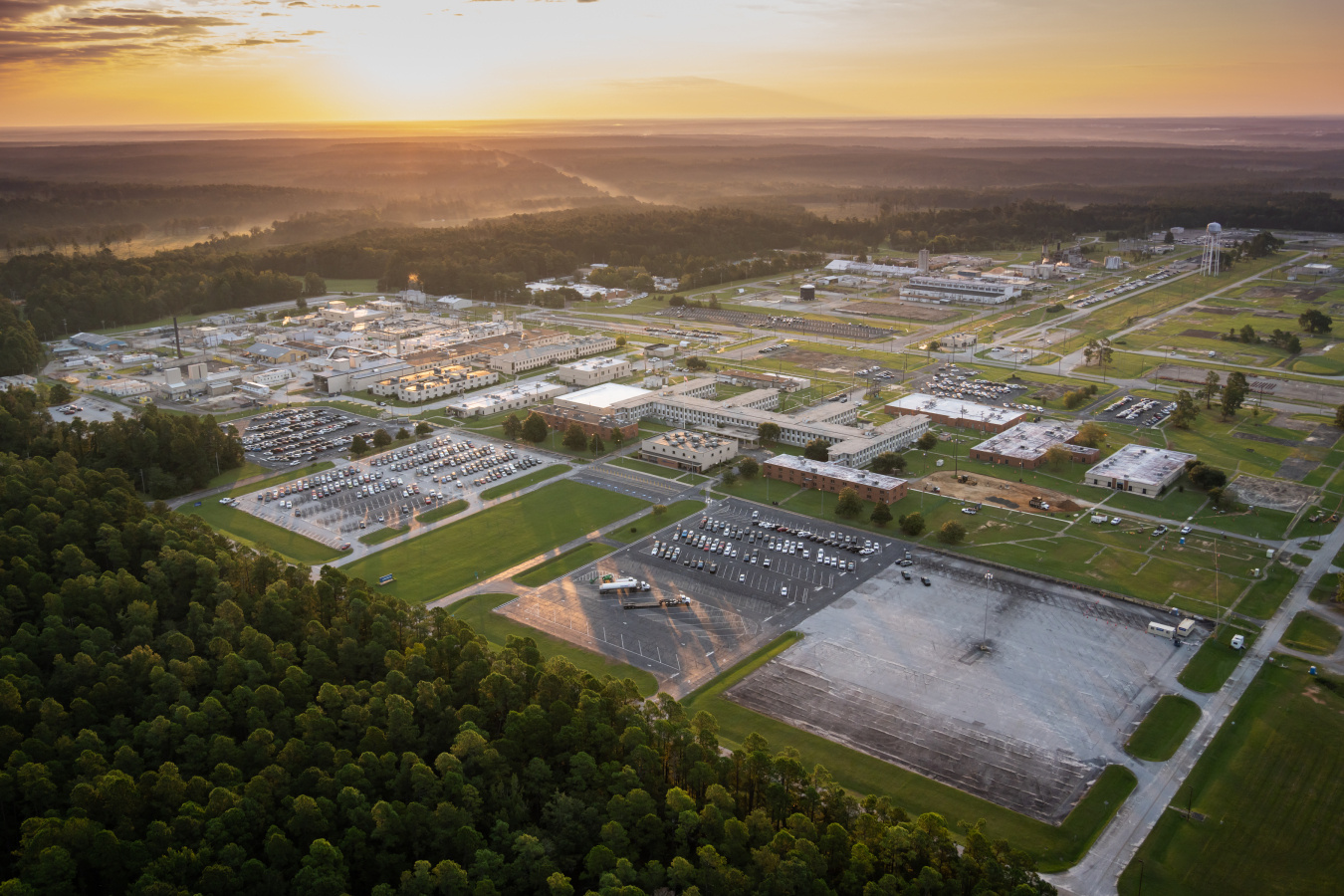
An aerial view of the Savannah River National Laboratory in Aiken, South Carolina.
AIKEN, S.C. — As the U.S. Department of Energy (DOE) moves forward with its recently launched Genesis Mission — a national effort to use artificial intelligence (AI) and advanced computing to accelerate American discovery — Savannah River National Laboratory (SRNL) is set to play a unique and critical role alongside its fellow national laboratories.
Highlighting the mission's momentum, DOE Under Secretary for Science Darío Gil testified on its objectives and impact during a hearing of the House Science, Space and Technology Committee. SRNL Director Johney Green, alongside directors from the other 16 national laboratories, demonstrated a unified commitment to transforming scientific discovery and problem-solving through Genesis.
The Genesis Mission, a top DOE priority, unites national labs, private industry and academia to develop a discovery platform aimed at doubling the productivity and impact of U.S. science and engineering over the next decade. This mission aims to accelerate solutions to some of the world’s most consequential grand challenges in energy, scientific discovery and national security.
Collaborative Efforts and Innovative Approaches
“The Genesis Mission represents a bold shift in how the nation approaches discovery,” Green said. “By applying modern AI and advanced analytics to the vast data already generated across DOE, we can uncover insights that dramatically improve how we tackle legacy waste and support environmental cleanup. SRNL is excited to contribute our expertise and advanced capabilities to the mission’s overall success.”
In line with this vision, SRNL has developed a concept using AI to accelerate the cleanup at the Savannah River Site (SRS) and across the DOE complex, potentially saving billions of dollars. By leveraging subsurface characterization data collected at federal sites like SRS and Hanford, SRNL aims to use this data as a national asset to fast-track environmental cleanups, enhance domestic energy production and boost the extraction of critical minerals and materials.
Advanced Manufacturing and Integrated AI
Using SRNL’s Advanced Manufacturing Collaborative facility, the lab is uniquely positioned to integrate cutting-edge AI technologies, enhancing the efficiency of defense-ready material production. SRNL’s leadership in chemical processing, nuclear materials management and computing underscores its significance in ensuring the mission’s success, particularly in closing the fuel cycle.
As the sole EM-sponsored national laboratory, SRNL has access to extensive data from decades of cleanup of former nuclear weapons production sites, offering invaluable insights for novel materials development, isotope recovery, advanced manufacturing and subsurface sciences. By combining this data with AI tools, SRNL, in collaboration with other labs, aims to significantly improve DOE’s cleanup efforts of legacy waste from the Cold War and Manhattan Project eras, thereby supporting the Genesis Mission’s research objectives.
The Genesis Mission will launch a set of inaugural Model Teams, spanning the national laboratories in collaboration with industry partners, to begin developing AI models that will accelerate discovery and innovation, advance American energy dominance and bolster national security. SRNL will support teams focused on:
- Using vast amounts of grid data to incorporate AI and autonomous systems into power system planning and operations
- Securing the domestic supply chain of critical minerals and materials through new discovery, extraction and processing methods
- Reducing timelines for design and engineering studies in magnetic confinement fusion
- Advancing next-generation nuclear fission technologies
Together, these collaborative efforts will drive groundbreaking discoveries and expedite solutions to national priorities, reinforcing SRNL’s crucial role in advancing scientific frontiers and ensuring national security.
To receive the latest news and updates about the Office of Environmental Management, submit your e-mail address.