



The Moab Uranium Mill Tailings Remedial Action Project recently finished installing another interim cover on a section of its disposal cell, moving the cleanup closer to completion. January 13, 2026
Office of Environmental Management
January 13, 2026 Estimated Read Time min
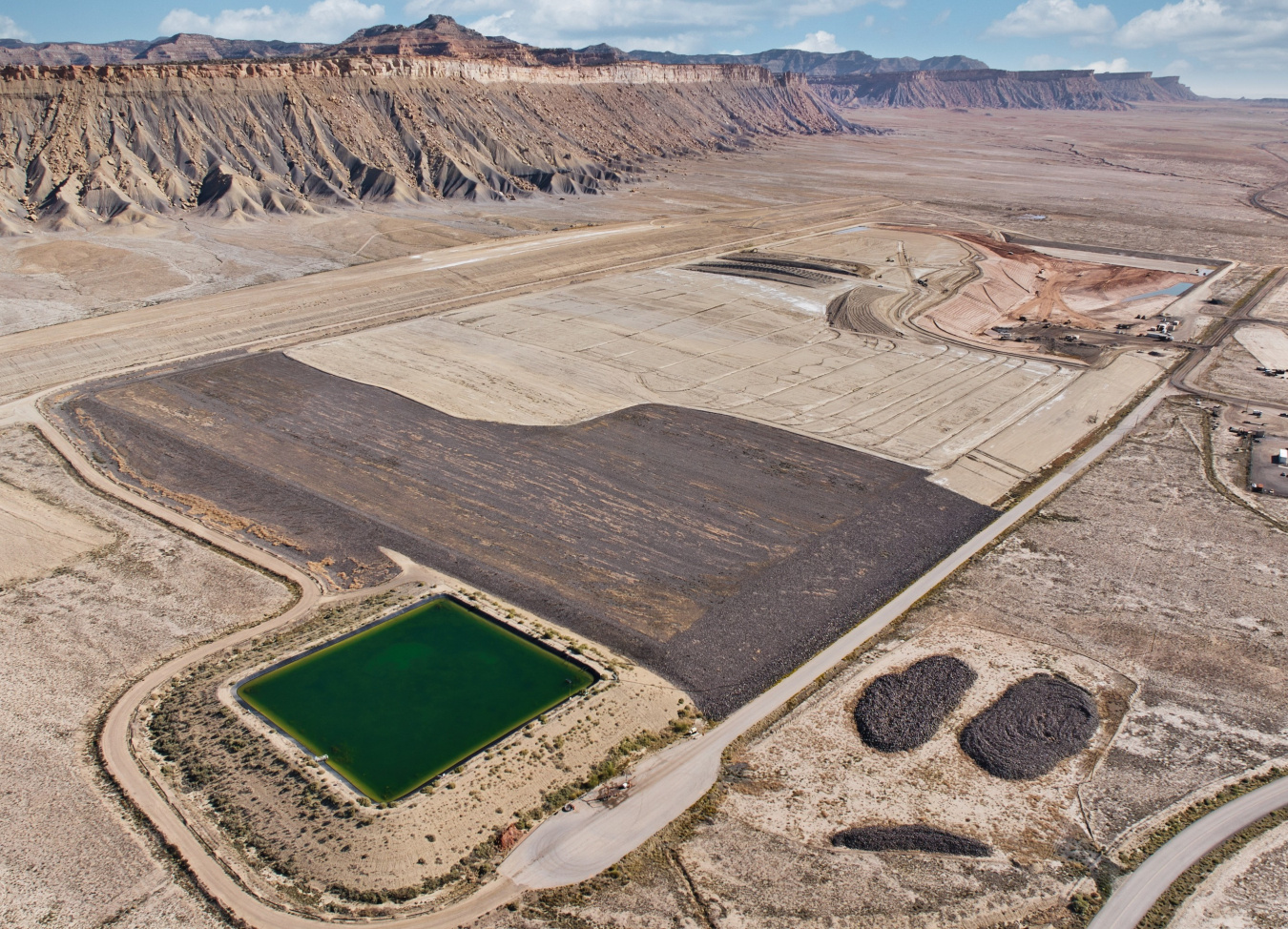
A view of the Moab Uranium Mill Tailings Remedial Action Project disposal cell at the Crescent Junction site, near the Book Cliff mountains.
MOAB, Utah — The Moab Uranium Mill Tailings Remedial Action Project recently finished installing another interim cover on a section of its disposal cell, moving the cleanup closer to completion.
The U.S. Department of Energy (DOE) Office of Environmental Management (EM) oversees cleanup activities at the Moab site, located along the Colorado River, near Moab, Utah. Since 2009, EM crews have been transporting uranium mill tailings by rail from the Moab site to the Crescent Junction site, where the engineered disposal cell is being constructed.
Made of clean, noncontaminated soil, the interim cover protects the compacted tailings in the disposal cell from erosion and disturbance, reduces water infiltration and provides a stable working surface while additional portions of the cell are filled. It serves as a temporary protective layer until the permanent engineered cover, or cap, is built.
This past fall, EM marked a significant priority, removing a cumulative 16 million tons of the tailings and other contaminated material from the Moab site for disposal at the Crescent Junction site.
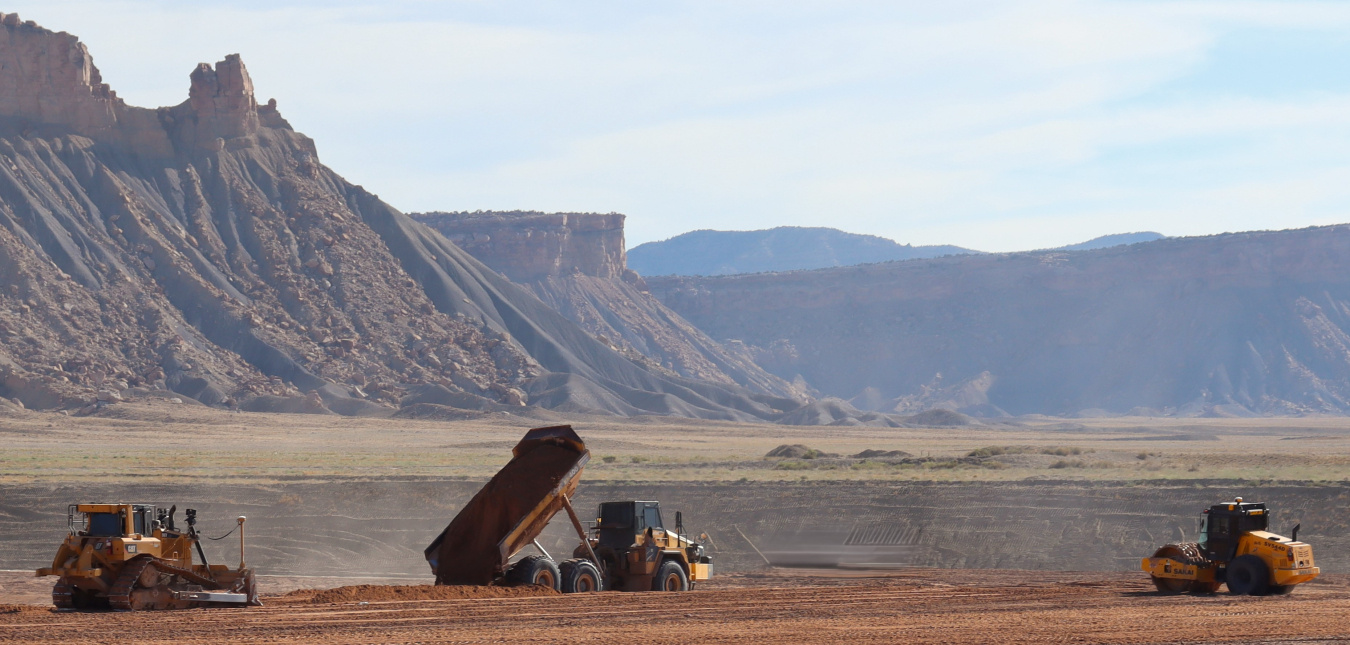
Crews use construction equipment to create a controlled lift inside the Crescent Junction disposal cell.
The disposal cell is designed to isolate radioactive tailings for centuries. Its effectiveness depends on rigorous quality assurance and control practices throughout the entire lifecycle of the cell, from design and construction to long term monitoring. As the cell is filled, the Moab Project conducts continuous testing to ensure all design specifications are met.
Before the tailings leave the Moab site, they are dried and blended to meet the disposal cell specifications. Once transported and deposited at Crescent Junction, the tailings are hauled to a designated area, placed in a uniform layer, moisture-conditioned as needed, and compacted.
Each placement area within the cell is known as a controlled lift. Every aspect of the lift — it’s thickness, moisture content and degree of compaction — is carefully managed to achieve the required density and stability. Once a section of controlled lifts is complete, the interim cover of clean, noncontaminated soil is placed over it.
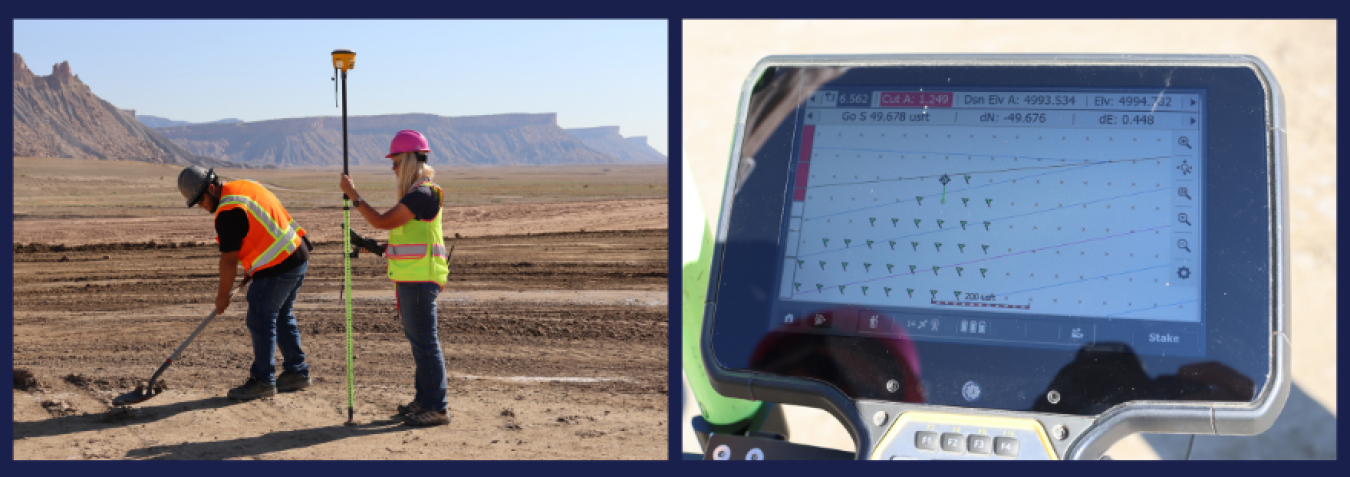
Moab Uranium Mill Tailings Remedial Action Project staff members perform compliance testing of the newly installed interim cover.
Automated sensors on haul trucks, dozers and other equipment assist operators in building each lift to specification. Personnel then perform geotechnical testing to verify density and moisture content. Proper compaction is essential because it reduces settlement, improves structural stability and minimizes water infiltration, among other things.
The Moab Project anticipates completing the disposal cell in 2029. EM will then transfer responsibility for the site to DOE’s Office of Legacy Management for long term stewardship and monitoring.
-Contributor: Barbara Michel
To receive the latest news and updates about the Office of Environmental Management, submit your e-mail address.