



Idaho Cleanup Project workers capitalized on innovative robotic technology to complete surveys of approximately 4,400 legacy transuranic waste drums, ensuring they meet safety requirements for shipment to the Waste Isolation Pilot Plant in New Mexico for permanent disposal. February 3, 2026
Office of Environmental Management
February 3, 2026 Estimated Read Time min
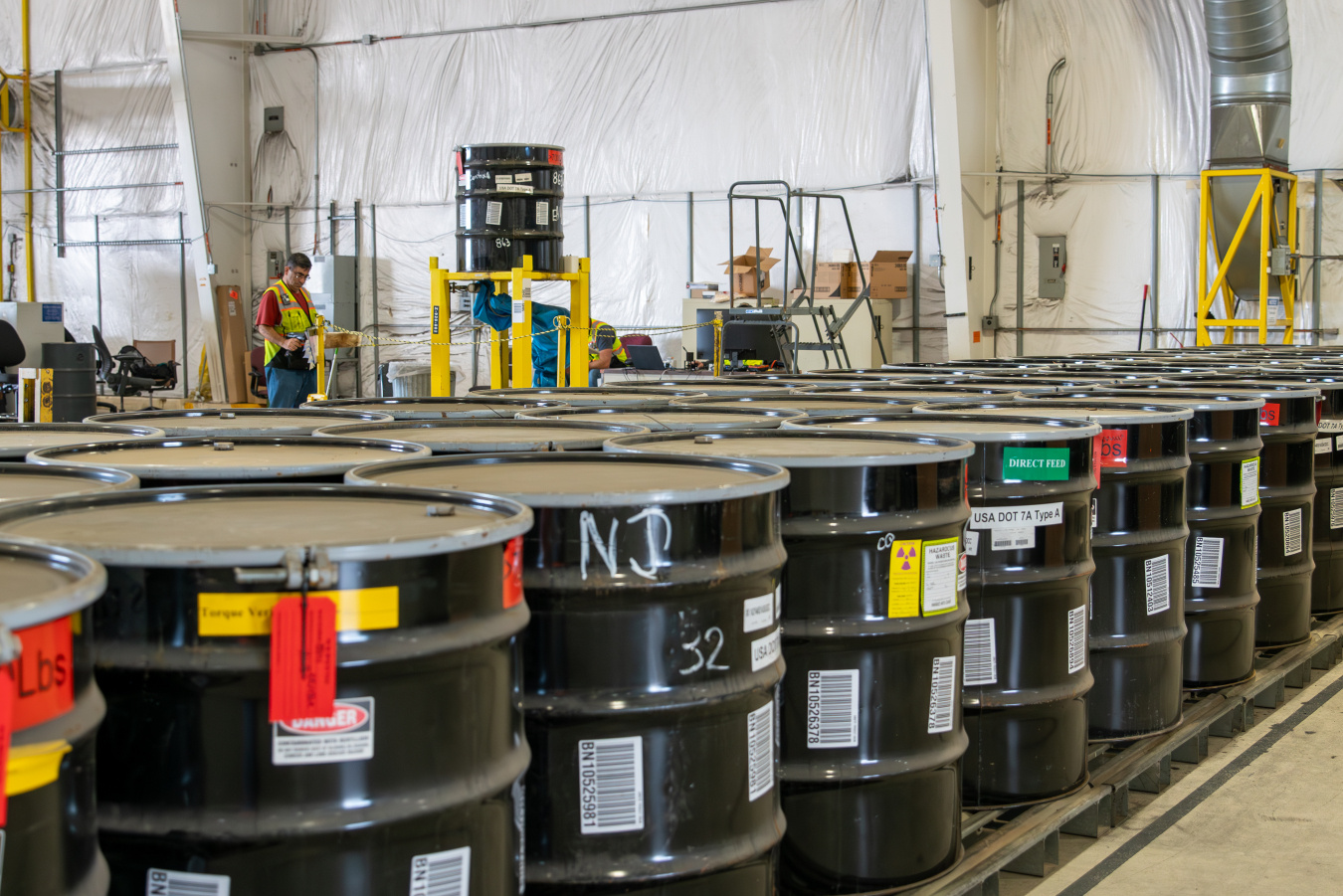
Transuranic waste drums await ultrasonic testing at the Advanced Mixed Waste Treatment Project at the Idaho Cleanup Project. All drums at the facility have now been scanned and cleared for safe shipment to the Waste Isolation Pilot Plant.
Use of robotic technology highlights EM's drive for innovation and efficiency, focusing on priorities and reining in costs without sacrificing safety or effectiveness
IDAHO FALLS, Idaho — Idaho Cleanup Project workers capitalized on innovative robotic technology to complete surveys of approximately 4,400 legacy transuranic waste drums, ensuring they meet safety requirements for shipment to the Waste Isolation Pilot Plant (WIPP) in New Mexico for permanent disposal.
Cleanup contractor Idaho Environmental Coalition (IEC) used robotic ultrasonic technology at the Advanced Mixed Waste Treatment Project (AMWTP) to scan 100-gallon transuranic waste drums that had been stored onsite and exposed to harsh weather conditions for an extended period, with the goal of confirming their integrity for shipment.
The process confirmed that 86% of the drums met U.S. Department of Transportation (DOT) thickness requirements — comparable to the width of automotive sheet metal. Only 14% of them required overpacking with an additional container for added protection.
“Completing this effort gives IEC greater confidence that our product drums are structurally sound and meet DOT requirements,” IEC Production Planning Manager Mark Henderson said.
The scanning effort, initiated in response to two 2022 incidents in which older drums developed leaks during transit, marks a key step in meeting DOT standards for shipment to WIPP. Henderson noted the process offered lessons for potential future campaigns, suggesting that the use of a drum rotator for future scans could improve efficiency when handling large quantities of waste. The equipment includes a robotic arm with an affixed scanner and high-tech software.
Drum rotation equipment could allow drums to be securely held and rotated during scanning, increasing the efficiency of scanning time and ensuring a higher level of precision in identifying any structural concerns.
With all drums now scanned, shipments to WIPP are expected to occur over the next several years. Over time, the effort is projected to save taxpayers approximately $20 million by reducing the need to overpack the drums, while maintaining the highest safety standards.
“I’m really proud of this team at AMWTP for how quickly they worked through this important project,” said IEC President and Program Manager Dan Coyne. “Thanks to their efforts, we are able to continue meeting our cleanup commitments by shipping waste out of Idaho.”
Watch this video about the robotic ultrasonic drum inspection demonstration at the Idaho National Laboratory Site.
-Contributor: Ryan Christensen
To receive the latest news and updates about the Office of Environmental Management, submit your e-mail address.