



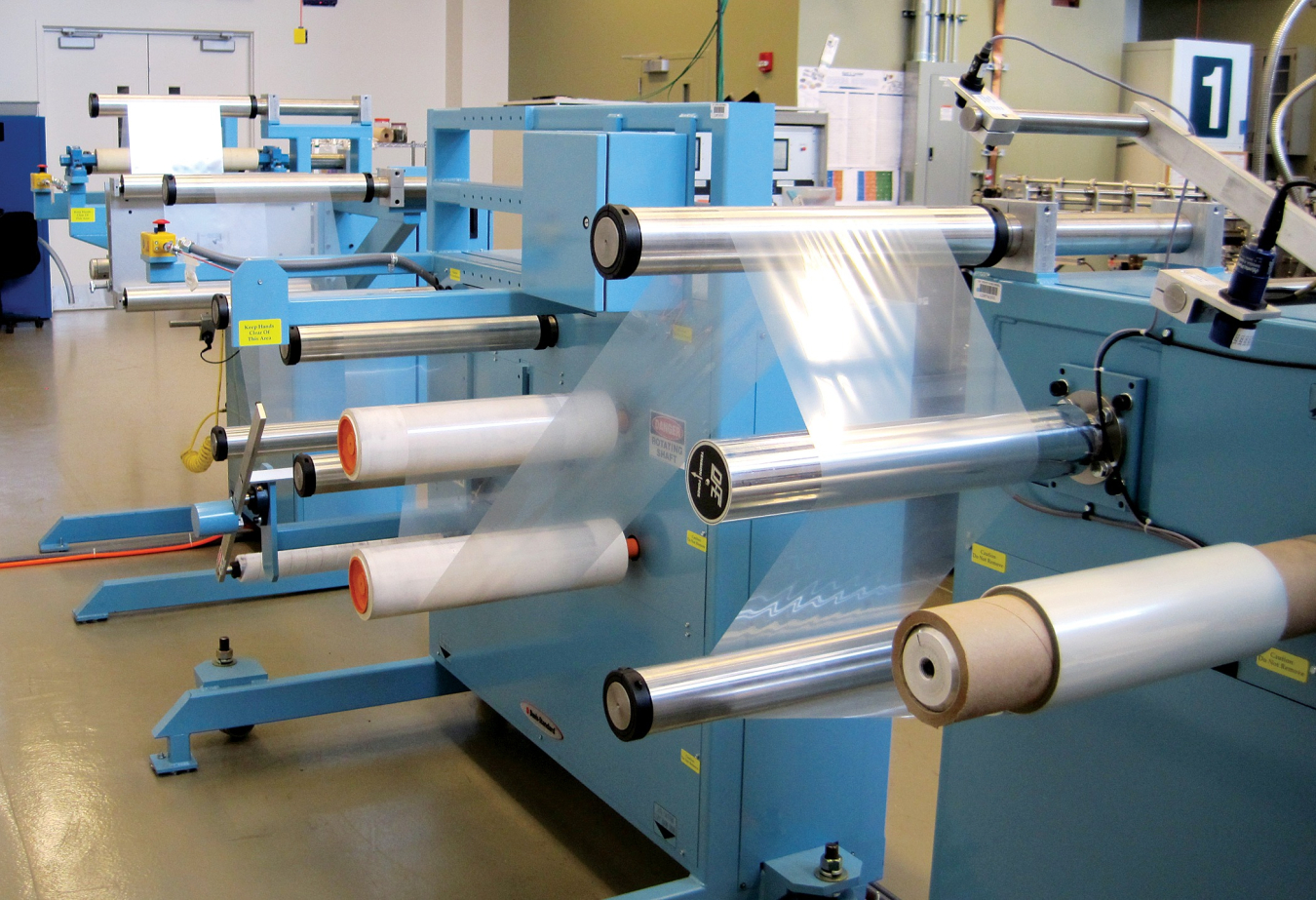
Within the Office of Critical Minerals and Energy Innovation (CMEI), the Alternative Fuels and Feedstocks Office (AFFO) supports manufacturing research and development (R&D) activities to improve processes and reduce the cost of components and systems for hydrogen production, delivery, and storage over the range of fuel cell application areas, including stationary, portable, and transportation.
Why Study Manufacturing?
Increasing production of today's hydrogen and fuel cell components and systems from laboratory-scale fabrication technologies to high-volume products can have significant challenges. AFFO addresses the challenge of moving today’s technologies from the laboratory to high-volume, pre-commercial manufacturing and works to drive down the cost of hydrogen and fuel cell systems.
Research is underway to reduce the cost of components currently used or planned for use, as well as overall processing times. Progress toward targets is measured in terms of reducing the cost to produce fuel cells and electrolyzers, increasing manufacturing processing rates, and growing manufacturing capacity.
Research and Development Goals
AFFO funds R&D projects to enable development of manufacturing technologies and processes of hydrogen and fuel cell components in parallel with technology development while fostering a strong domestic supplier base. Specific manufacturing R&D goals are to:
- Develop manufacturing techniques to reduce the cost of fuel cell stacks at high volume (500,000 units per year) to meet key targets. For Class 8 long-haul trucks the key metrics include fuel cell lifetime durability (i.e., 25,000–35,000 hours), fuel cell system cost ($60–$80/kWh), fuel cell efficiency (68%–72%), and hydrogen fill rate (8–10 kg/min average). See Hydrogen Program Record 19006, Technical Targets for Hydrogen-Fueled Long-Haul Tractor-Trailer Trucks.
- Support efforts to reduce the cost of manufacturing components and systems to reduce the cost of producing hydrogen to $1 per 1 kilogram by 2032, and delivering and dispensing hydrogen for <$2/kg (untaxed, delivered, and dispensed).
Additional information about current manufacturing R&D activities can be found in the Multi-Year Program Plan and through other related links.
CMEI Activities
Multiple initiatives within CMEI strategically focus CMEI's energy technology offices around the urgent competitive opportunity for the United States to be the leader in the energy manufacturing industries and jobs of today and tomorrow.
Advanced Materials and Manufacturing Technologies Office (AMMTO)
AMMTO partners with industry, small business, universities, and other stakeholders to identify and develop emerging technologies with the potential to create high-quality domestic manufacturing jobs and enhance the global competitiveness of the United States.
Manufacturing Demonstration Facilities (MDF)
MDFs are collaborative manufacturing communities that share a common R&D infrastructure. Oak Ridge National Laboratory is home to AMMTO's first MDF focused on additive manufacturing and low-cost carbon fiber.
Federal Activities
This site is a “one-stop-shop” for news and information on advanced manufacturing programs and related activities underway in federal agencies with science and technology missions.
Advanced Manufacturing National Program Office
The Advanced Manufacturing National Program Office coordinates federal resources and programs to enhance technology transfer in U.S. manufacturing industries and help companies overcome technical obstacles to scaling up production of new technologies.
Manufacturing USA, previously known as the National Network for Manufacturing Innovation, brings together industry, academia and federal partners within a growing network of advanced manufacturing institutes to increase U.S. manufacturing competitiveness and promote a robust national manufacturing R&D infrastructure.