



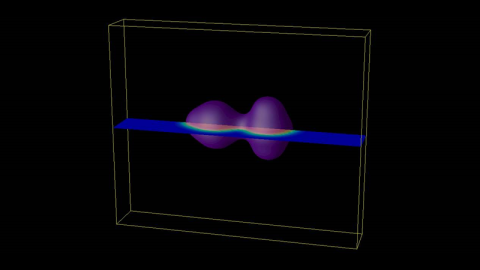
Following in the footsteps of supernovas, a new approach offers a more natural way to make new extremely heavy elements.
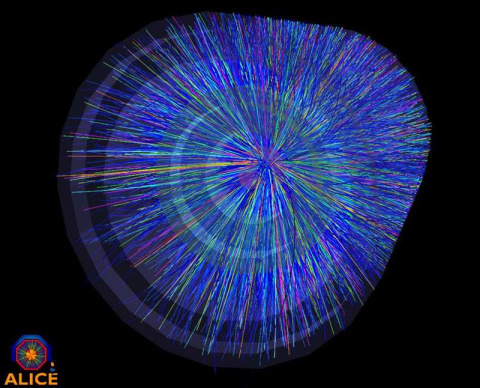
Pairs of sub-atomic particles may catalyze reactions that happened moments after the Big Bang.
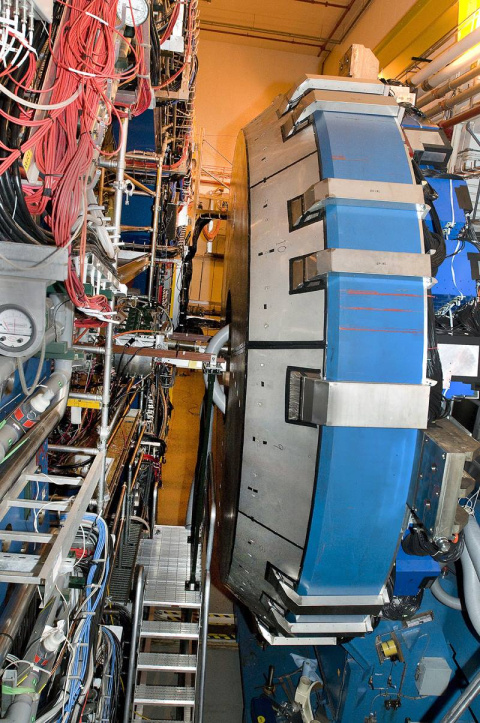
Low-momentum (wimpy) quarks and gluons contribute to proton spin, offering insights into protons’ behavior in all visible matter.

Production of actinium-227 ramps up for use in a drug to fight prostate cancer that has spread to bone.
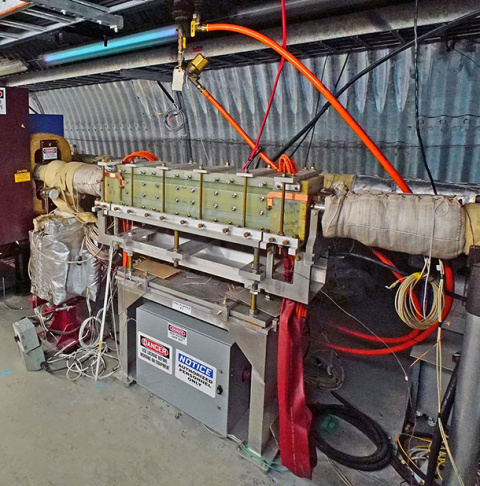
The spin direction of protons was reversed, for the first time, using a nine-magnet device, potentially helping tease out details about protons.
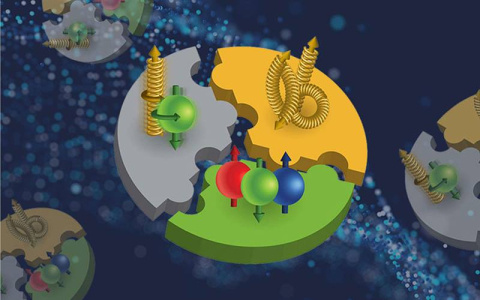
Since the 1980s, scientists have known that quark and antiquark spins within a proton account for, at best, a quarter of the overall proton spin.
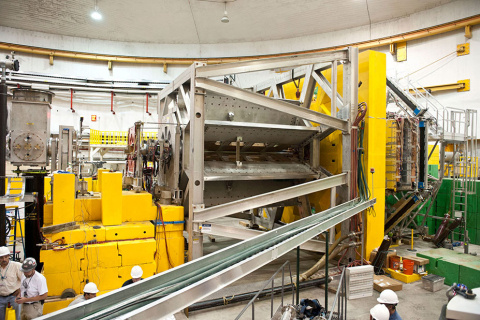
A precision measurement of the proton’s weak charge narrows the search for new physics.
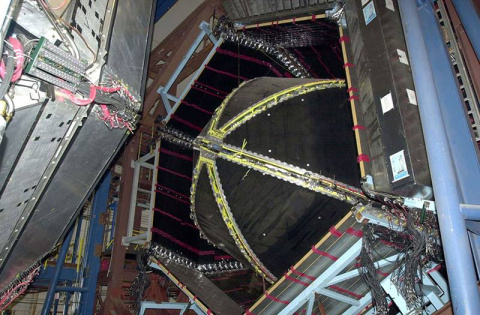
A re-analysis of data suggests that proton-neutron pairs in a nucleus may explain why their quarks have lower average momenta than predicted.
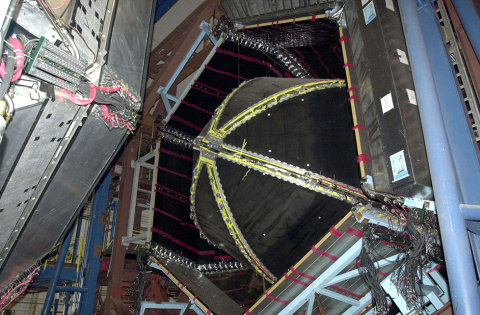
Inside every proton in every atom in the universe is a pressure cooker environment that surpasses the atom-crushing heart of a neutron star. That
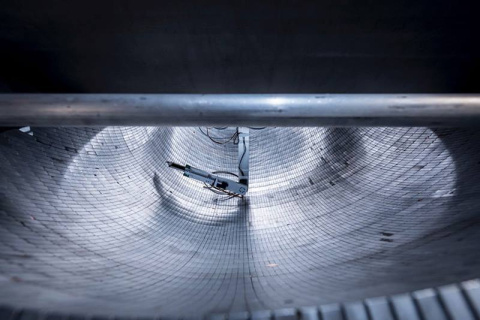
Storing extremely slow neutrons in a novel trap enables precise measurement of a basic property of particle physics.