



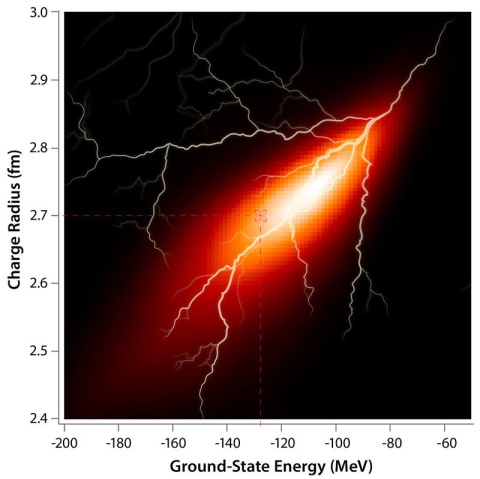
A fast, new approach to complex theoretical analysis of the bulk properties of atomic nuclei brings analysis to personal computers.
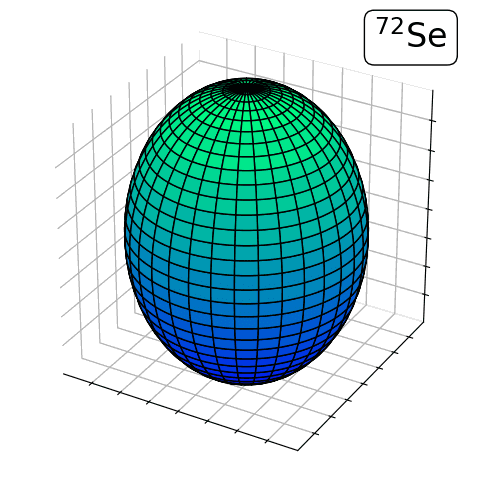
Scientists find the radioactive nucleus selenium-72 is football-shaped, answering a longstanding question about the nuclear shape of selenium isotopes
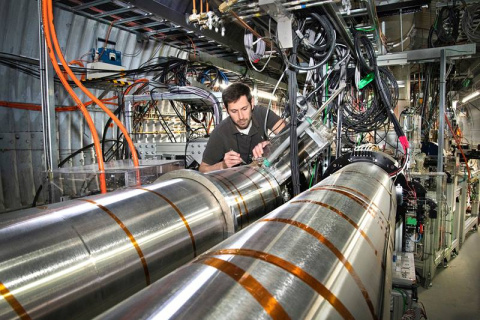
Team combines many innovative accelerator accomplishments to keep gold ions cold and advance nuclear physics research.

Diagnostic test will improve performance of collider as physicists explore sources of proton spin.
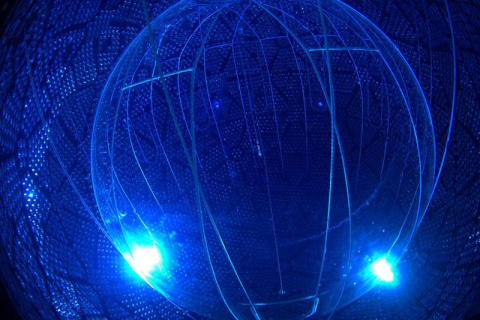
The SNO+ Experiment, over a mile underground, places new limits on grand unified theories and studies neutrinos from the Sun.
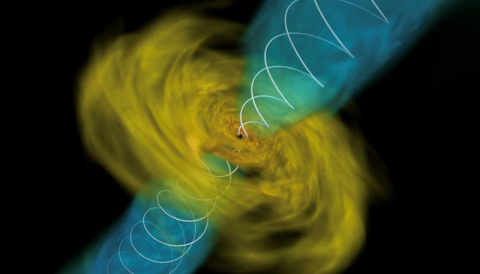
New computer simulations reveal the explosive scene after ultra-dense stars collide, as well as where heavy elements may have originally formed.
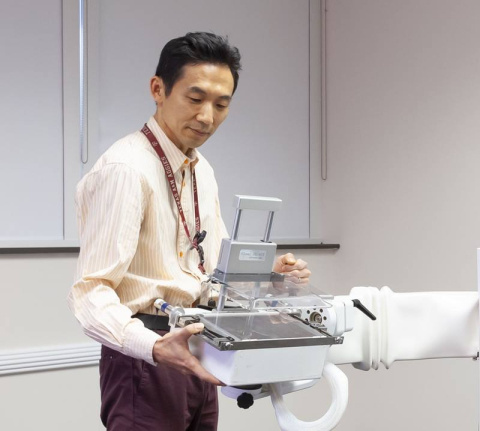
A new device may provide up to six times better contrast of tumors in the breast, while halving the radiation dose to patients.
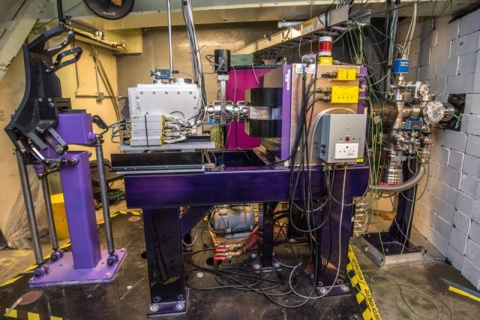
Expanding our understanding of the structure and decay properties of some of the most exotic elements.

Built with detector technologies used in nuclear physics experiments, the system monitors radiation treatments in hard-to-reach areas.
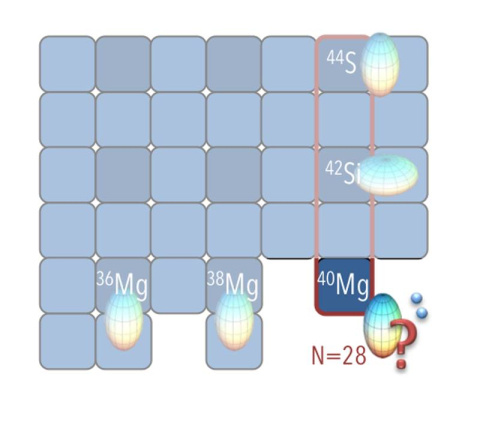
The recently observed “fingerprints” of neutron-rich magnesium-40 suggest an unexpected change in nuclear structure.