



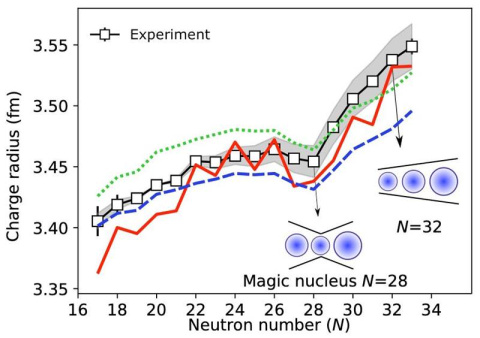
Measurements of nuclear charge radii and state-of-the-art nuclear models challenge the magic of neutron number 32 in potassium isotopes.

A team studied some of the smallest particles in the Universe on the nation’s fastest computer, Summit at Oak Ridge National Laboratory.
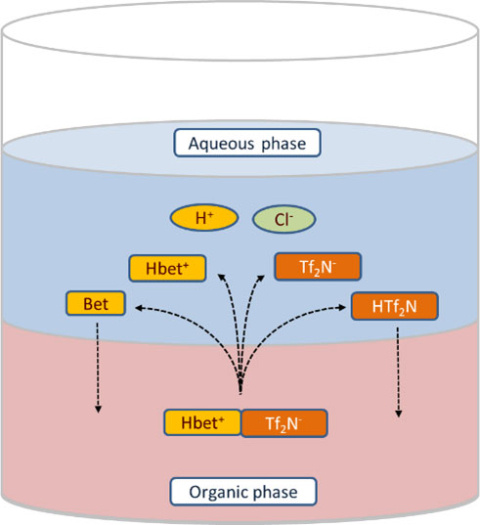
Research on techniques for studying the chemical properties of superheavy elements might also help recover a strategically important metal.
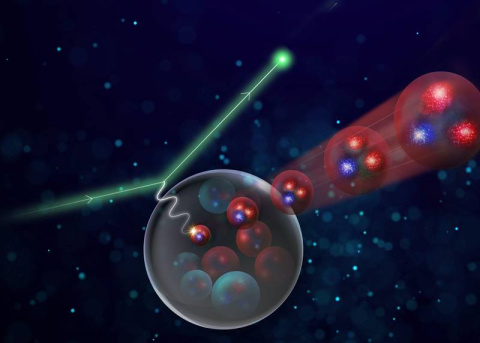
If physicists can find it, color transparency in protons could offer new insight into the particles that build our universe.
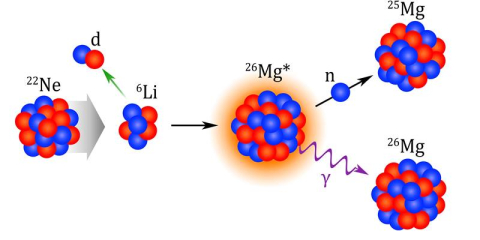
A key reaction in the slow neutron-capture process that forms elements occurs less frequently than previously thought.

Scientists explore the origin of Aluminum-26 in stars with a nuclear reaction that exploits the fact that neutrons and protons are stunningly similar.
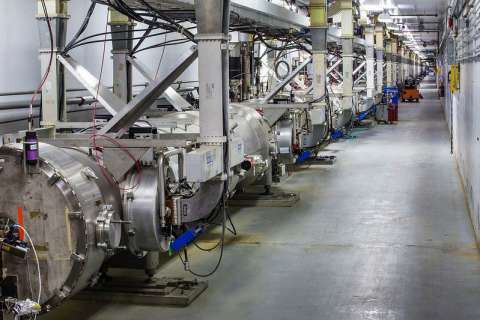
A new machine learning system diagnoses particle accelerator component issues in real-time.
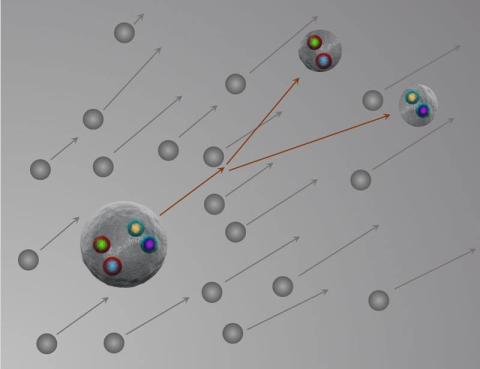
Scientists start studying the structure of exotic hadrons by looking how they interact with nearby particles.
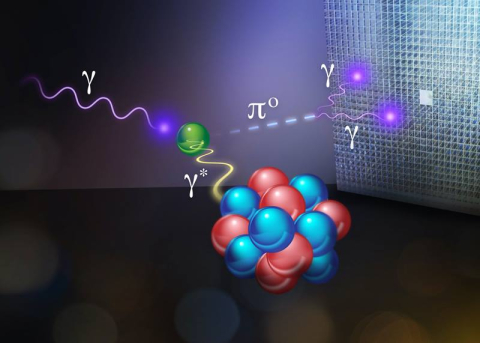
A result 20 years in the making: Most precise measurement yet of the lifetime of the charge-neutral pion that keeps protons and neutrons together.
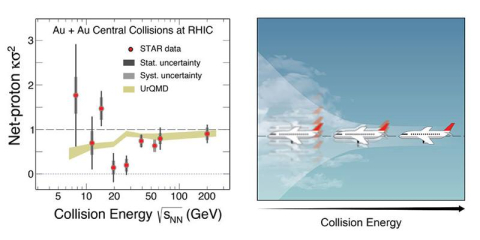
Fluctuations in data from collisions of gold nuclei hint at a possible ‘critical point’ in how nuclei melt.