



New plasma escape mechanism could protect fusion vessels from excessive heat.
February 17, 2026 Estimated Read Time min
Choongseok (C.S.) Chang has spent decades focused on the region where one of the hottest types of matter in the universe brushes up against the machine designed to hold it. In his laboratory at the Department of Energy’s (DOE) Princeton Plasma Physics Laboratory, he’s dedicated his career to achieving fusion energy.
Fusion energy promises a future of abundant, reliable power by essentially recreating the process that powers the sun. To do this, scientists use magnetic fields to trap a hot, charged gas called plasma. Special devices produce these magnetic fields to hold this plasma steady. This allows the plasma to keep producing energy while safely managing the intense heat it constantly releases.
One of the most promising fusion technologies is the tokamak, a machine often compared to an artificial sun. Inside its donut-shaped chamber, plasma swirls at temperatures hotter than the center of a star. The edge of this plasma is especially crucial. It helps maintain heat, but is also the source of escaping energy and particles that can wear down the reactor’s walls. These plasma edges pose two of fusion’s toughest engineering challenges: protecting reactor walls from extreme heat and preventing damaging eruptions of plasma.
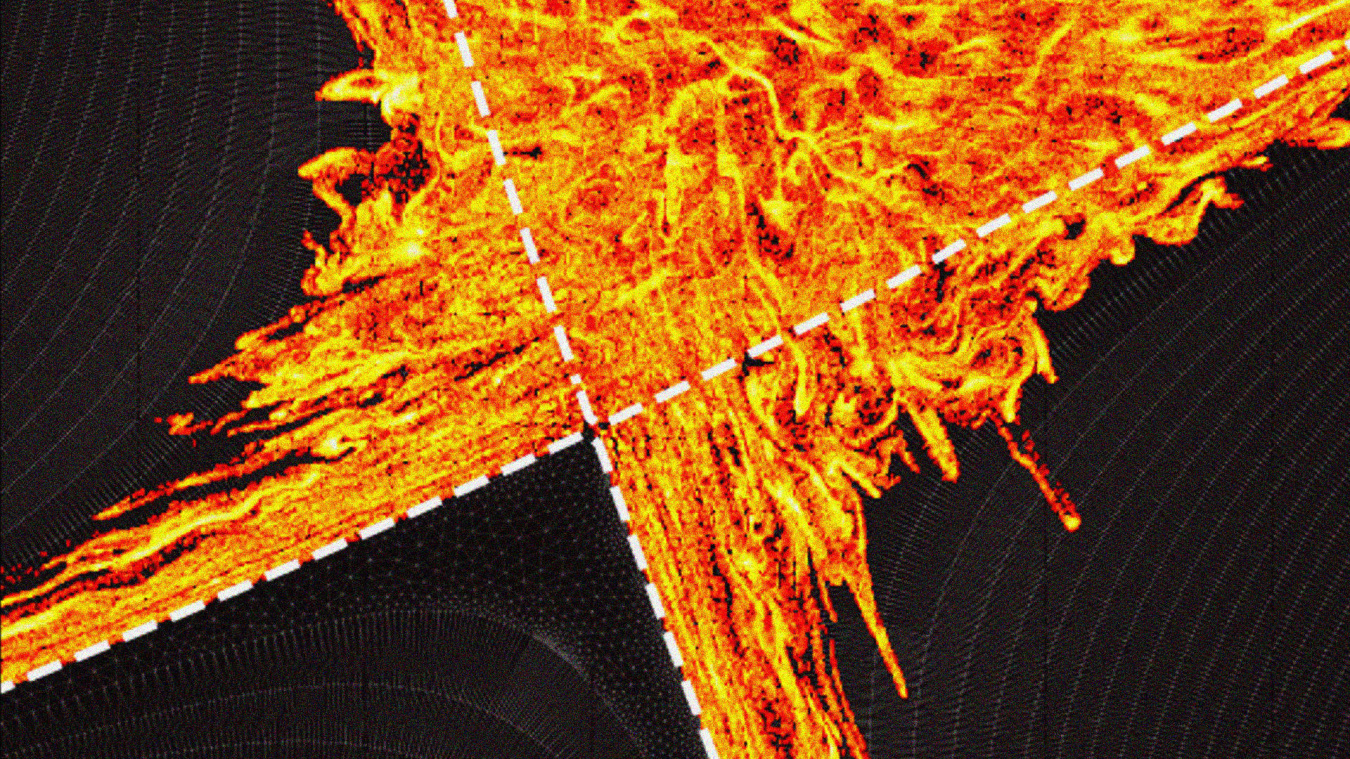
To tackle these challenges, Chang and his team used a supercomputing tool called XGC1. This study – conducted a few years ago – discovered something surprising. Older formulas predicted that heat channels would be too dangerously narrow to handle exhaust from the plasma. Instead, they found that tiny natural swirls in the plasma, called micro-turbulence, help spread escaping heat over a wider area than scientists expected.
More recently, Chang’s team found something even more astonishing near the tokamak’s X-point. This is where magnetic fields split and guide heat out of the plasma. Magnetic fields are made up of field lines that are supposed to stay neatly closed, but these weren’t. Instead, they were twisting into delicate and structured forms of magnetic chaos. Unexpectedly, these tangles even appeared during steady, normal operation without any disturbances from abrupt plasma instabilities.
This new finding shows that micro-turbulence doesn’t just spread heat. It also subtly reshapes the magnetic boundary itself. These natural twists create hidden pathways linking the plasma edge to the exhaust region. They may potentially make tokamak reactors better at handling heat and less vulnerable to sudden bursts of energy.
In Chang’s words: “A good last confinement surface does not exist… but ironically, this may raise fusion performance by lowering divertor damage and eliminating transient bursts of plasma energy.”
Even with these promising discoveries, fusion scientists still face the challenge of designing tokamaks that can manage intense heat loads, maintain stable plasma for long periods, and keep magnetic fields precisely controlled. Now that scientists have seen these effects in simulations, researchers now need to confirm whether these turbulence-driven magnetic effects show up in existing machines and can be measured directly. Future simulations must also account for a wider range of plasma conditions and reactor sizes than these do. Lastly, researchers need to explore whether they can strengthen, control, or even design these natural tangles into future tokamak reactors.
If this emerging picture holds true, it suggests something remarkable: the path to practical fusion power may rely not on eliminating chaos, but on learning how to use it.
Author Credit: Tiffany Win