



New field investigations are improving understanding of groundwater contaminant behavior and strengthening the scientific basis for future remediation decisions, the Moab Uranium Mill Tailings Remedial Action Project noted during a recent presentation at the Pacific Northwest National Laboratory RemPlex Seminar series. February 10, 2026
Office of Environmental Management
February 10, 2026 Estimated Read Time min
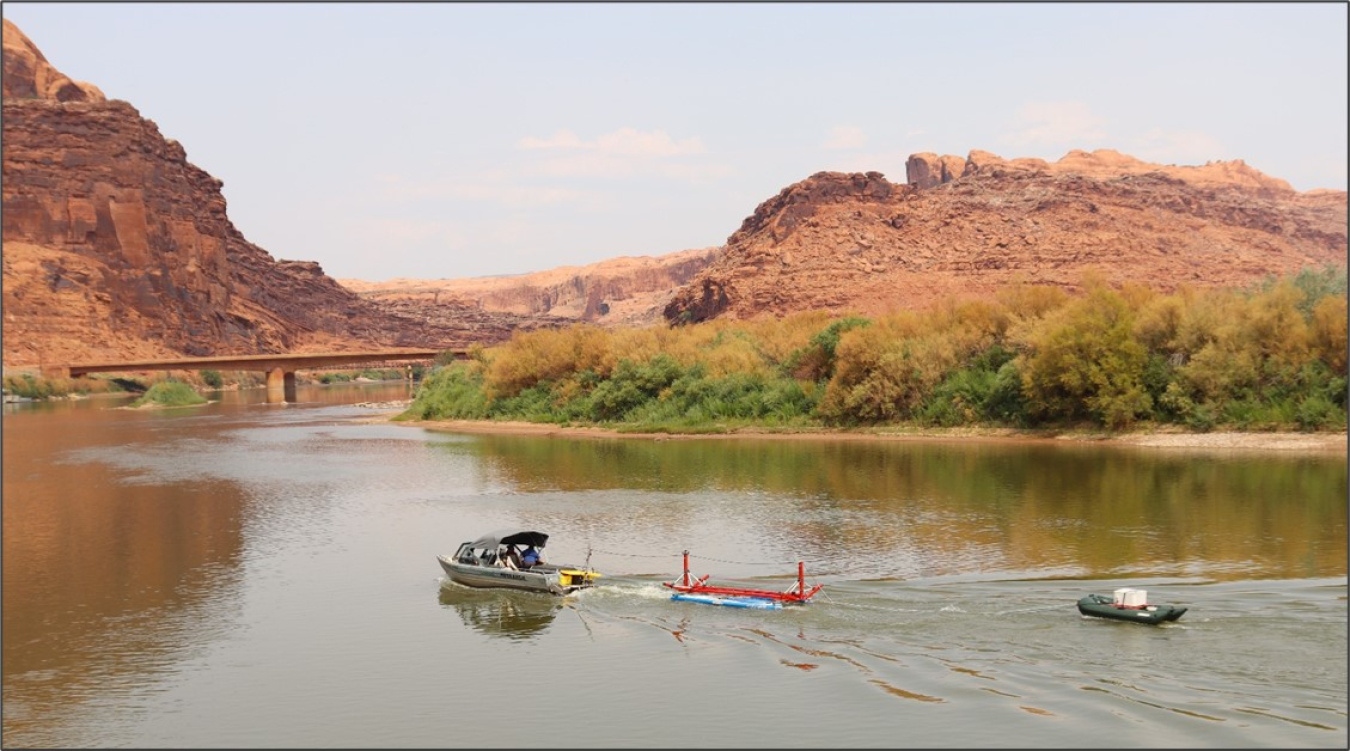
Pacific Northwest National Laboratory uses boat-towed electromagnetic equipment to conduct a geophysical survey in the Colorado River near the Moab Uranium Mill Tailings Remedial Action Project’s Moab site, which is adjacent to the river.
New field investigations are improving understanding of groundwater contaminant behavior and strengthening the scientific basis for future remediation decisions, the Moab Uranium Mill Tailings Remedial Action Project noted during a recent presentation at the Pacific Northwest National Laboratory (PNNL) RemPlex Seminar series.
To help the Moab Project identify data gaps in a study on corrective measures and inform development of a groundwater compliance action plan, the Network of National Laboratories for Environmental Management and Stewardship partnered with the Moab Project. The collaboration led to field investigations to refine the site’s conceptual model and fill in data gaps.
With new data, improved models and strengthened cross-laboratory collaboration, the Moab Project is well positioned to finalize its groundwater compliance action plan and move closer to site closure.
“It has been fascinating to see all the data come together to support the Moab Project’s final groundwater remedy, and we are grateful for the ongoing support from our national lab partners,” said Moab Project Environmental Manager Elizabeth Moran, who presented at the seminar.
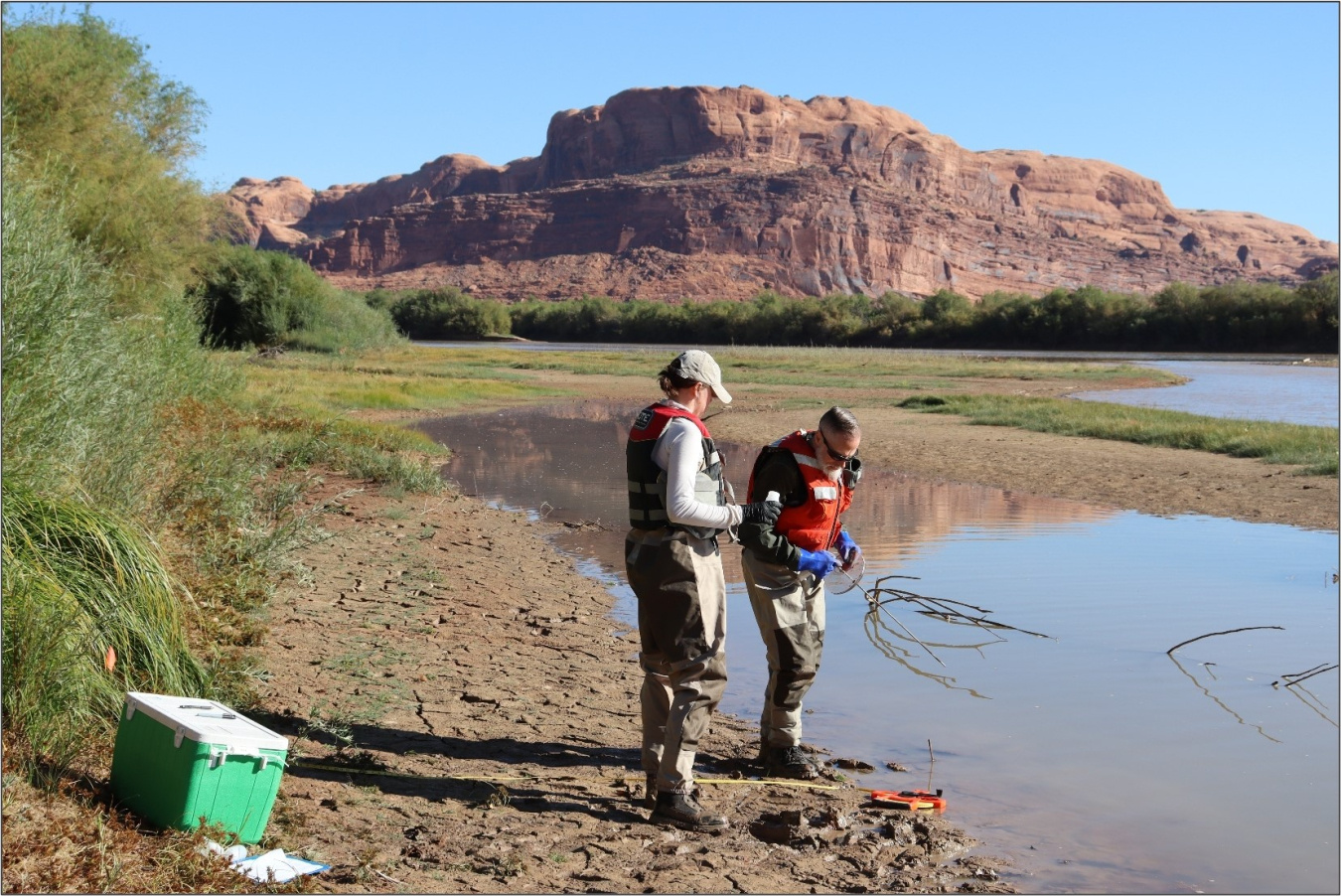
Pacific Northwest National Laboratory researchers conduct riverbed characterization analysis on the banks of the Colorado River, adjacent to the Moab Uranium Mill Tailings Remedial Action Project’s Moab site in southeastern Utah.
The seminar highlighted results from a diverse suite of studies conducted over a three year period by national laboratories, universities and technical partners, including PNNL, Savannah River National Laboratory (SRNL), Lawrence Berkley National Laboratory, Florida International University and the companies Geosyntec and Vista Clara. SRNL is the sole national laboratory sponsored by the U.S. Department of Energy Office of Environmental Management, which oversees the Moab Project.
Those studies provide clearer insight into subsurface conditions, plume dynamics and groundwater-river interactions — all critical factors for selecting and optimizing long term remedies.
The Regulatory Center of Excellence at SRNL continues to support the Moab Project in its development of a successful remediation strategy. The Moab Project is also considering using the SRNL-led Advanced Long-Term Environmental Monitoring System as a modern framework for long term monitoring.
-Contributor: Barbara Michel
To receive the latest news and updates about the Office of Environmental Management, submit your e-mail address.