



A U.S. Department of Energy collaboration led by the Office of Environment Management has saved $250,000 by empowering federal and contractor team members at program offices and field sites across the complex to share excess materials and equipment among themselves, reducing costs for new projects, maintenance and disposition. January 13, 2026
Office of Environmental Management
January 13, 2026 Estimated Read Time min
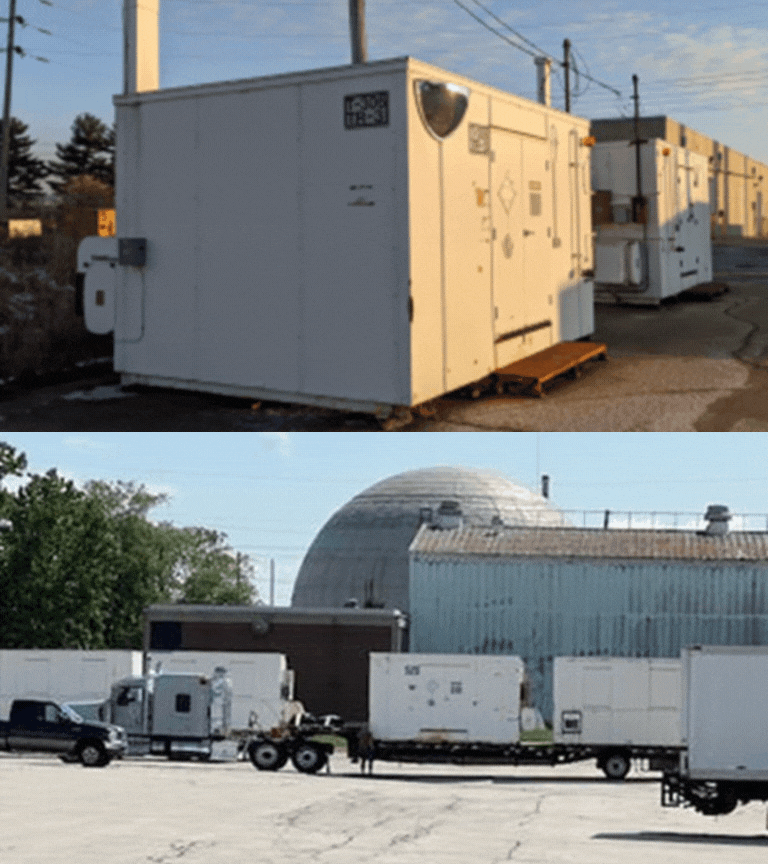
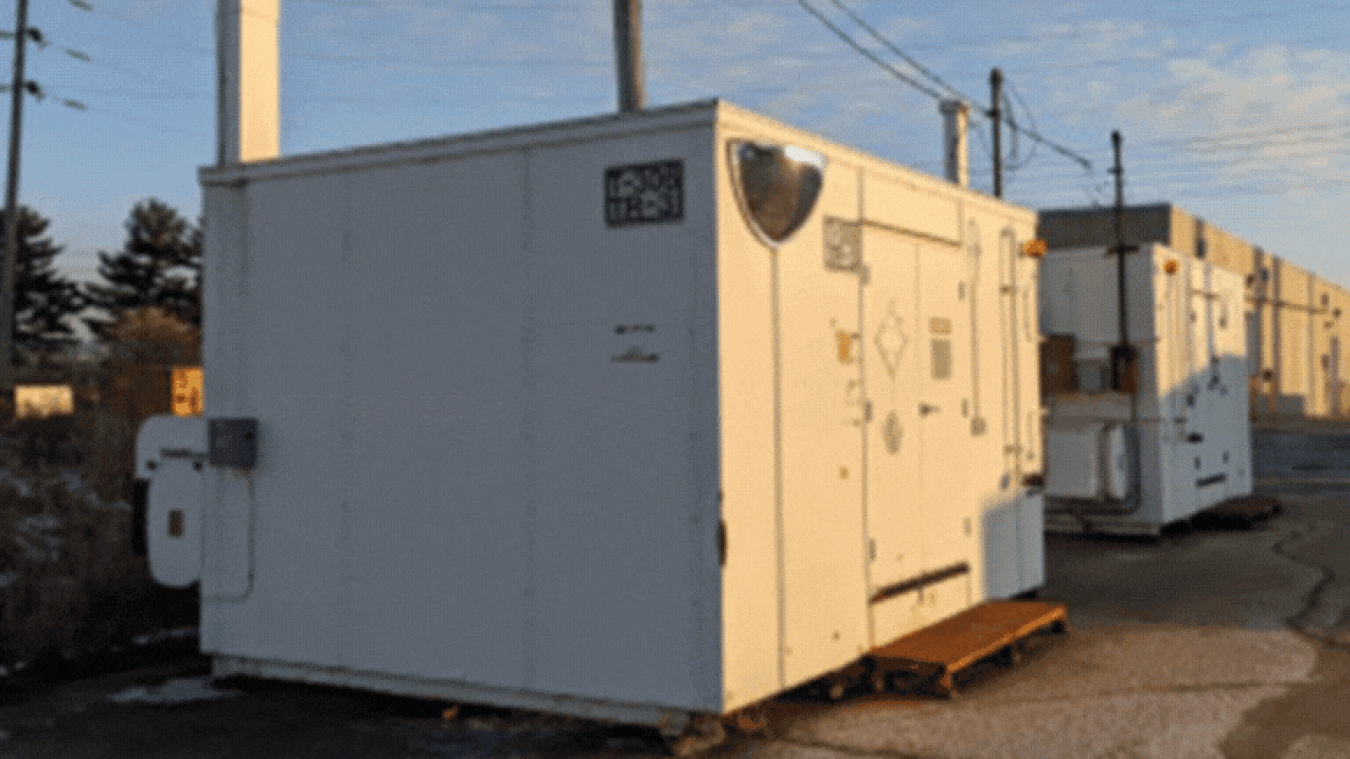
Through the Reuse and Recycle Community of Practice, Argonne National Laboratory in Illinois transferred four clean portable units for the safe storage of chemical and radiological hazardous waste to Brookhaven National Laboratory in New York for reuse, saving the U.S. Department of Energy $250,000.
A U.S. Department of Energy (DOE) collaboration led by the Office of Environment Management (EM) has saved $250,000 by empowering federal and contractor team members at program offices and field sites across the complex to share excess materials and equipment among themselves, reducing costs for new projects, maintenance and disposition.
“First and foremost, everyone across DOE is passionate about reusing the equipment and materials we have to the best extent possible to cut overhead costs and focus on the mission,” said Shannon Chester, with EM’s Office Infrastructure and D&D, which leads the collaboration known as the Reuse and Recycle Community of Practice.
In this voluntary effort, members seek cost-saving opportunities to benefit the Department’s mission projects. Among the collaboration’s success stories was the transfer of four clean portable units for the safe storage of chemical and radiological hazardous waste from Argonne National Laboratory in Illinois to Brookhaven National Laboratory in New York.
Brookhaven requested the units — which feature exhaust systems, an alarm, fire suppression, spill containment and explosion-proof lighting — due to costly storage space shortages. The national laboratory now stores chemicals in centralized areas, has additional space for future storage and can increase efficiency while reducing chemical exposure risks, saving DOE $250,000.
“It’s easy to buy new items and throw them away when you are done. But if you look at the pathways of disposing of materials, it’s the same process you would need to go through for reuse or recycling,” Chester said. “Reuse is cheaper, and with recycling, you get money back. You cut long term project costs for acquisition and disposal and save precious landfill space at the same time.”
To receive the latest news and updates about the Office of Environmental Management, submit your e-mail address.