



America’s nuclear energy workforce is poised for rapid growth as the nation enters a nuclear renaissance guided by President Trump’s executive orders.
December 17, 2025 Estimated Read Time min

America’s nuclear energy workforce is poised for rapid growth as the nation enters a nuclear renaissance guided by President Trump’s executive orders.
That’s just one of the findings in the 2025 U.S. Energy & Employment Report (USEER), an annual report published by the U.S. Department of Energy (DOE) that breaks down statistics across the energy industry including employment numbers, workforce demographics, and salary data for all fuel sources and electric power generation sectors.
The 2025 report revealed several key trends in nuclear energy, from consistently high wages to new optimism around industry growth.
1. Nuclear energy employment stayed level in 2024, but more jobs are on the horizon.
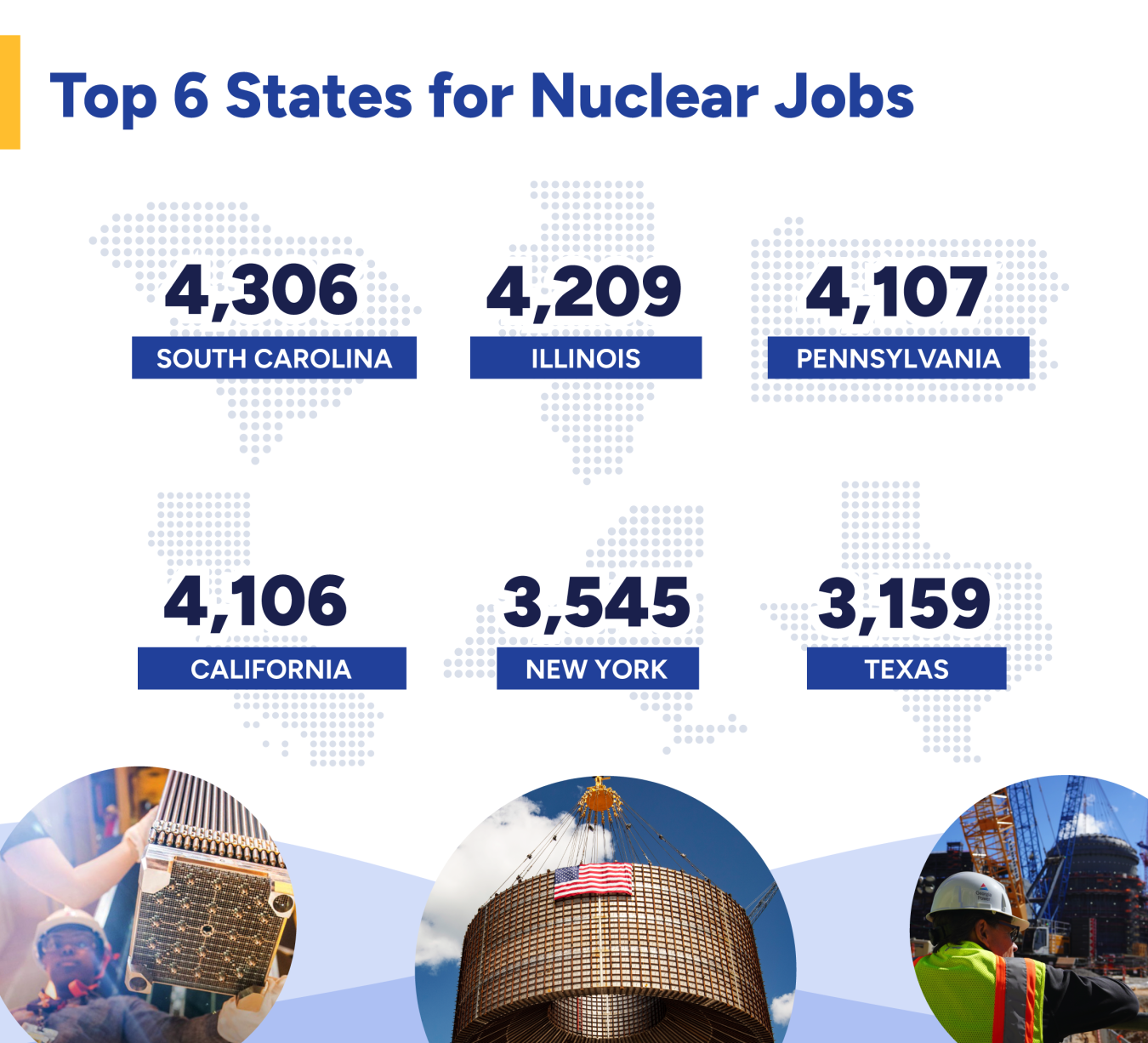
The nuclear energy sector employed 67,900 workers in 2024 across fuels and electric power generation according to the USEER, nearly identical to 2023 employment data. Eighty-five percent of those jobs were in electric power generation.
However, employers surveyed in 2024 expressed more optimism about growing the nuclear energy workforce than in previous years and predict a 9.2% increase in the nuclear construction industry, with similar gains expected in other industries.
Nuclear fuels employers anticipated a 5.7% increase, the highest of any fuel source.
That’s without taking into account President Trump’s four executive orders on nuclear energy, issued in May, which aim to reestablish the U.S. as a global leader in nuclear energy by quadrupling U.S. nuclear capacity and creating tens of thousands more high-paying jobs.
2. Nuclear jobs are high paying.
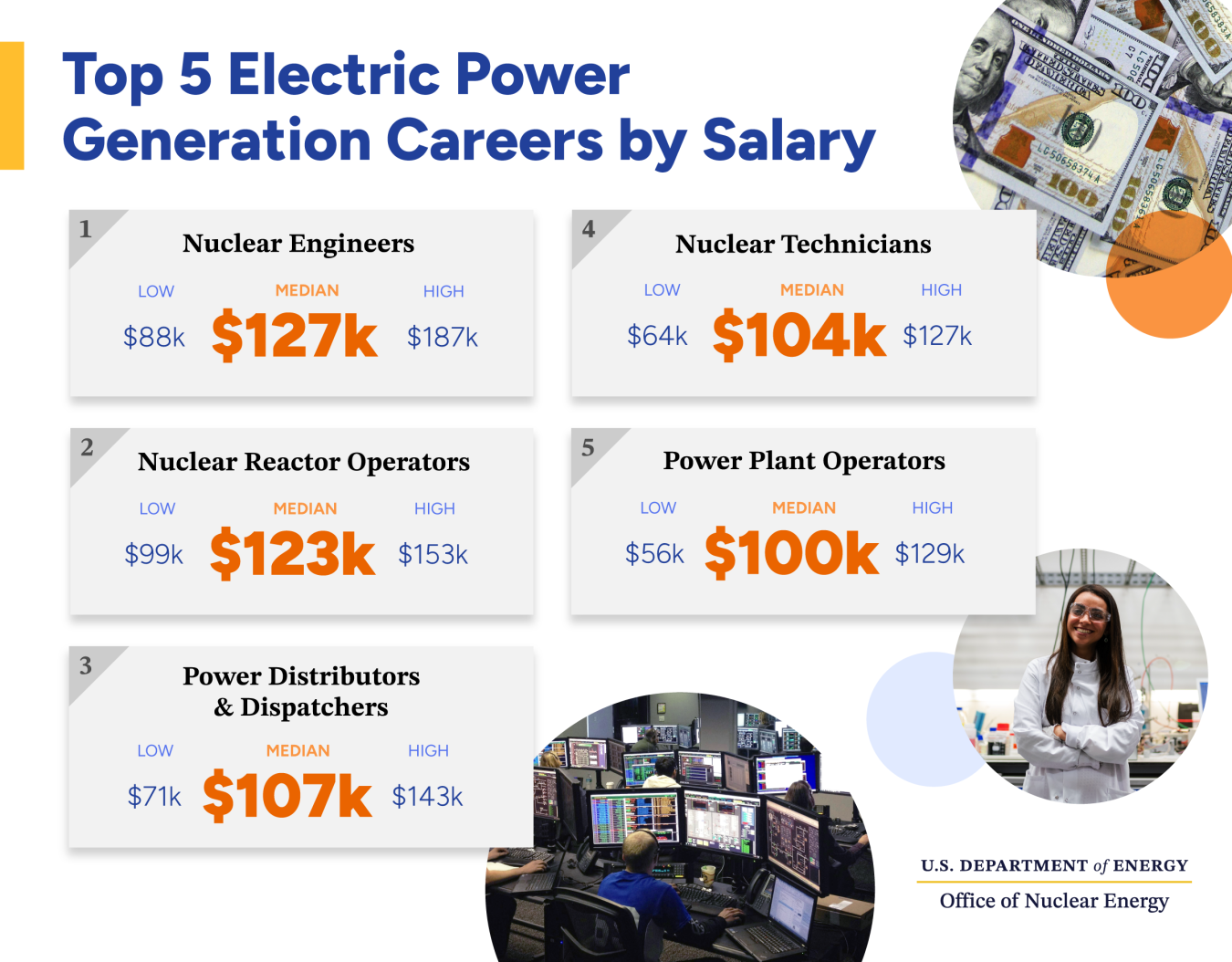
The USEER report surveyed salaries and benefits across the U.S. energy sector, and several nuclear careers came out near the top.
Of 101 surveyed occupations in electric power generation, three of the top five careers by median salary were in nuclear energy: nuclear engineer ($127,520), nuclear power reactor operator ($122,610), and nuclear technician ($104,240).
Several other careers commonly hired by nuclear power plants (although not nuclear-specific) are also ranked highly on pay, such as power plant operators and electricians.
Many of these jobs don’t require a four-year advanced STEM degree.
3. The nuclear energy sector needs more qualified employees.
A pipeline of young talent will be essential as the U.S. nuclear sector seeks to commercialize and deploy next-generation advanced reactors in the coming decades.
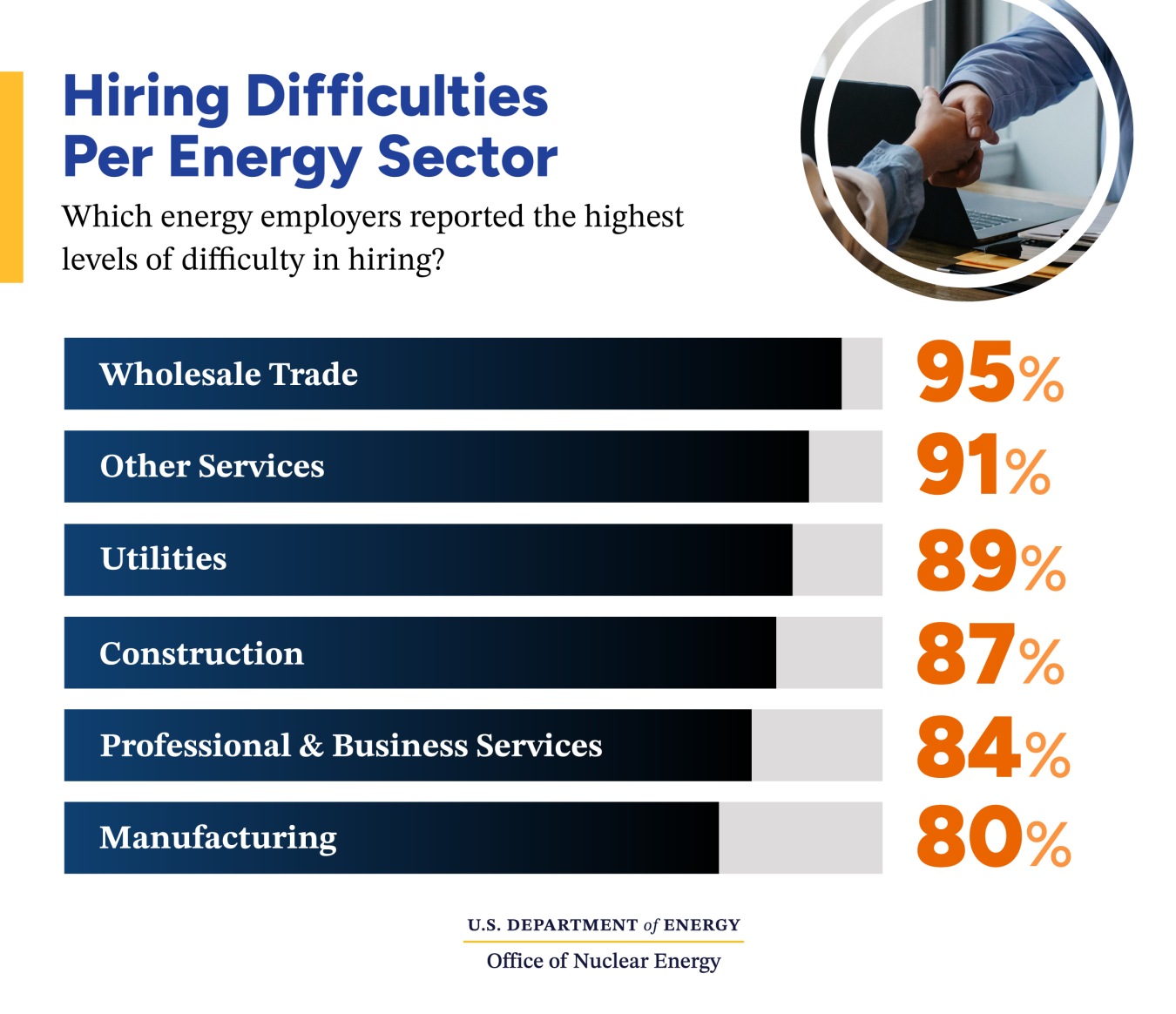
All industries of the U.S. nuclear sector experienced difficulties finding enough qualified workers in 2024, with 63% of manufacturing employers in nuclear power generation reporting that hiring was “very difficult” — more than any other single electric power generation sector.
Over 80% of employers across nuclear construction, manufacturing, wholesale trade, professional & business services, and utilities said they experienced at least “some” hiring difficulty.
Our University Nuclear Leadership Program seeks to bolster our nuclear workforce by offering fellowships and scholarships to students studying in nuclear energy related fields. Additionally, the Nuclear Energy University Program funds nuclear energy research and equipment upgrades at U.S. colleges and universities and provides students with training and mentorship in preparation for nuclear careers.
President Trump’s executive order on Reinvigorating the Nuclear Industrial Base aims to go even further, bringing more Americans into the nuclear energy workforce through expanded technical education and apprenticeship programs.
Read the full report for more insights into the U.S. energy workforce.